The best research peptide suppliers share verifiable characteristics that you can check before placing an order. Purity figures, named testing labs, US cGMP manufacturing, transparent documentation—these aren’t marketing talking points. They’re facts that either appear on a COA or they don’t.
Researchers who skip evaluation often discover the gap after a study produces anomalous results, or after a vendor cannot produce documentation that a protocol requires. A structured checklist run before the first order costs twenty minutes and can save weeks of repeated work.
Eight Points to Check Before Ordering
1. Third-party testing with named labs
The COA needs to come from an independent facility—not an in-house lab. In-house documentation can be written by anyone; it isn’t externally auditable. Freedom Diagnostics and Horizon Analytical are examples of legitimate independent testing labs used in the US peptide research supply chain. If a vendor’s COA doesn’t name the facility, that’s a problem.
2. HPLC purity at >99%
Research-grade peptides should carry >99% purity confirmed by HPLC. Some vendors advertise “research grade” at 95–98%; for work that depends on receptor binding accuracy, cell viability assays, or in vivo dose calibration, that margin of impurity is not trivial. It introduces noise that can be difficult to disentangle from the compound’s actual activity.
3. Mass spectrometry alongside the HPLC
HPLC measures what fraction of the sample matches the target’s retention time. It doesn’t confirm identity. A structurally similar impurity can share a retention time and inflate the purity reading while the compound you actually want is a smaller portion of the vial. Mass spec confirms molecular weight and catches this. For complex peptides—long sequences, modified analogs—mass confirmation should be non-negotiable.
4. Bacterial endotoxin testing documented on the COA
Endotoxin testing is frequently omitted by lower-tier suppliers. A COA without it doesn’t mean the product passed; it means no one checked. For any in vivo application, the absence of endotoxin documentation is a meaningful unknown. Labs that skip this validation introduce a confounding variable they cannot control for after the fact.
5. US cGMP manufacturing
US-manufactured peptides produced under current good manufacturing practice guidelines sit under quality systems that address facility conditions, batch documentation, and testing protocols. Overseas production may be cheaper but rarely offers equivalent traceability. Several US-presented vendors source internationally; the COA’s manufacturing section, or a direct question, resolves this quickly.
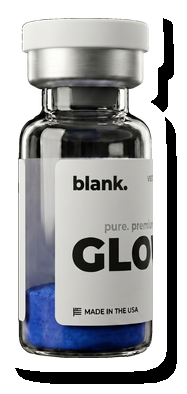
Blank Peptides sources from US cGMP labs. Products like KLOW and GHK-Cu carry third-party COAs from Freedom Diagnostics and Horizon Analytical alongside US manufacturing documentation.
6. Batch-specific purity data—not generic specs
A product specification sheet that lists “99% typical purity” is not a COA. A COA is batch-specific: it names the batch, includes the test date, and provides actual measured values. A vendor that only publishes a generic spec is telling you what the target is, not what you’re actually receiving.
If a vendor’s published purity is uniform and perfect across every compound in their catalog—99.9% on everything—that uniformity is itself a yellow flag. Real batch-level testing produces variation. Perfect uniform figures suggest aspirational rather than measured claims.
7. Catalog stability for multi-order protocols
A long-running study may require the same compound across several order cycles. A vendor whose catalog rotates frequently, or who routinely lists compounds as out of stock, introduces planning uncertainty. The best research peptide suppliers maintain stable, consistently stocked catalogs. For compounds like retatrutide that are used in multi-month metabolic research protocols, catalog consistency matters.
8. Transparent order and shipping timelines
Processing time should be clearly stated on the site. Blank Peptides processes orders within 1 business day from US-based facilities. Vendors who leave shipping timelines vague or who consistently miss stated windows create planning problems for time-sensitive research schedules.
How to Request Documentation Before Ordering
Email the vendor before placing a first order and request the current batch COA for the specific compound you’re evaluating. A vendor with nothing to hide sends it immediately.
Compare the batch test date to the current date. A COA dated more than six months before your order on an actively sold product may indicate stale stock or infrequent testing. Either scenario is worth following up on directly.
For blended products, request per-component purity data rather than an aggregate figure. A single purity percentage for a two-compound vial tells you less than you need to know.
Applying the Checklist to a New Vendor
Most legitimate US research peptide suppliers pass all eight points without issue. For vendors that fail on two or more—especially on third-party testing or endotoxin documentation—the question becomes whether the lower cost offsets the research risk. For most labs running protocols that depend on interpretable results, it doesn’t.
FAQ
What’s the difference between a COA and a product specification sheet?
A product specification sheet lists target values—what the compound should be. A COA is batch-specific documentation of what it actually was, as measured by an independent lab. Only the COA tells you about the vials you’re receiving.
How do I know if a vendor is actually manufacturing in the US?
Ask directly and request the COA to show the manufacturing facility. US cGMP labs are registered facilities. If a vendor hedges or the COA doesn’t name a US facility, that’s informative.
Can I use a vendor’s published COA from a different batch than what I’m ordering?
Published COAs show what one batch measured. They don’t guarantee the current batch matches. For critical protocols, request the COA for the specific batch being shipped, or confirm the published document matches the batch date.
All products discussed are for laboratory research use only and are not for human or veterinary use.