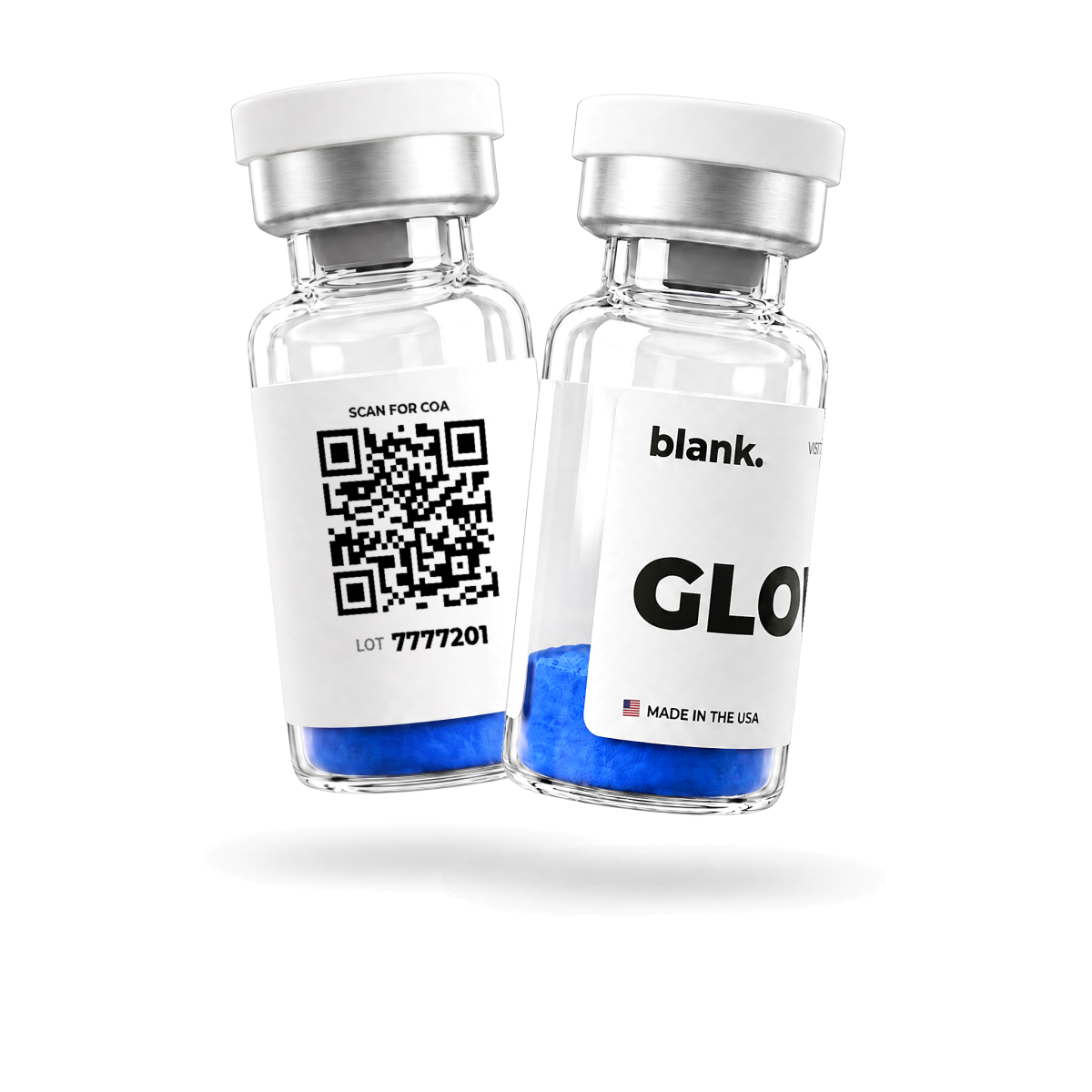
GLOW nothing more. nothing less.
GLOW is a research peptide blend combining GHK-Cu, BPC-157, and TB-500. Studied in research involving synergistic tissue signaling, extracellular matrix remodeling, and regenerative biology pathways.
Purity >99.73%Form Lyophilized BlendNo Endotoxins
Notify me when back in stock
For research use only — not for human consumption, therapeutic, or diagnostic use. By adding to cart you acknowledge these terms.
Blank. Credentials
Institutional-grade credentials you can verify
About This Compound
Deep technical insights for clinical research
Synthesis & Purity Overview
Form: Lyophilized powder
Storage: −20°C, desiccated
Reconstitution: Bacteriostatic water
Individual peptide components maintain intra-batch variance below 0.2% with blend homogeneity tested across samples.
Zero detection of endotoxins, heavy metals, residual solvents, and microbial contaminants.
Chemical Architecture
N/A (Proprietary Blend)
N/A (Blend)
N/A (Proprietary Blend)
Proprietary combination of collagen-stimulating and angiogenic peptides optimized for dermal research applications
Primary Research Applications
This compound is supplied strictly for in-vitro and preclinical research use only. Primary applications include the areas below.
Targets multiple pathways of collagen synthesis, elastin production, and dermal remodeling for cosmetic and aesthetic research.
Supports follicular activity through promotion of dermal papilla microcirculation and follicle-associated stem cell signaling.
Research Community Feedback
"Consistency is paramount in our cellular model testing. Blank's peptides have maintained the tightest purity specs of any RUO vendor we've audited."
Dr. Julian Kessler
Lead Investigator, Biomatrix Labs
"The availability of detailed MS and HPLC data on the product page saved us two days of redundant internal verification. Professional grade synthesis."
Anika S. Singh
Synthetics Quality Control
"Finally, a supplier that doesn't hide behind consumer marketing. Stark, clear, and high-purity. Exactly what a modern lab needs."
Prof. David Emmerich
Applied Peptide Research
Peer-Reviewed Literature
Related Studies
Emerging Use of BPC-157 in Orthopaedic Sports Medicine: A Systematic Review
HSS Journal
Analysis of 36 studies (1993–2024) found BPC-157 enhanced growth hormone receptor expression, angiogenic pathways, and reduced inflammatory cytokines with improved biomechanical outcomes in musculoskeletal injuries.
Gastric Pentadecapeptide Body Protection Compound BPC 157 and Its Role in Accelerating Musculoskeletal Soft Tissue Healing
Cell and Tissue Research
Comprehensive review concluding that all BPC-157 studies demonstrate consistently positive and prompt healing effects for various traumatic and systemic soft tissue injuries including tendons, ligaments, and skeletal muscle.
The Promoting Effect of Pentadecapeptide BPC 157 on Tendon Healing Involves Tendon Outgrowth, Cell Survival, and Cell Migration
Journal of Applied Physiology
BPC 157 significantly accelerated tendon explant outgrowth, increased cell survival under oxidative stress, and markedly increased in vitro migration of tendon fibroblasts in a dose-dependent manner.
Gastric Pentadecapeptide BPC 157 Accelerates Healing of Transected Rat Achilles Tendon and In Vitro Stimulates Tendocytes Growth
Journal of Orthopaedic Research
BPC 157 improved tendon healing biomechanically (increased load-to-failure and elasticity), functionally, and microscopically — achieving superior fibroblast formation and collagen deposition.
BPC 157 Rescued NSAID-Cytotoxicity Via Stabilizing Intestinal Permeability and Enhancing Cytoprotection
Current Pharmaceutical Design
BPC-157 counteracted NSAID-induced intestinal damage by stabilizing intestinal permeability, restoring cytoprotective prostaglandin systems, and recovering leaky-gut syndrome pathways.
Thymosin β4 Activates Integrin-Linked Kinase and Promotes Cardiac Cell Migration, Survival and Cardiac Repair
Nature
Thymosin β4 activated epicardial progenitor cells, inhibited myocardial cell death, stimulated vessel growth, and reduced cardiac scarring through integrin-linked kinase activation.
From the Lab
Related Blog Posts
Mar 16, 2026
What Is Thymosin Alpha-1? The Immune-Modulating Peptide Redefining Infection and Inflammation Research
Thymosin Alpha-1 (Tα1) is a 28-amino acid thymic peptide driving renewed research interest in T-cell modulation, TLR signaling, infectious disease…
Mar 9, 2026
What Is AOD-9604? The Growth Hormone Fragment Reshaping Lipid Metabolism Research
RESEARCH DISCLAIMERThis article reviews published scientific literature for educational purposes only. All compounds referenced are sold by Blank Peptides exclusively…
Mar 2, 2026
What Is TB-500? Thymosin Beta-4 Research for Tissue Repair and Recovery
TB-500 is a synthetic peptide fragment of Thymosin Beta-4, one of the most extensively studied compounds in regenerative research. Published…