Research Disclaimer
This article reviews published scientific literature for educational purposes only. All compounds referenced are sold by Blank Peptides exclusively for in-vitro research and laboratory use. Nothing in this article constitutes medical advice, a treatment recommendation, or an endorsement of human use.
Body Protection Compound 157 (BPC-157) has been studied since the late 1990s and is now one of the most heavily investigated peptides in regenerative medicine research. Originally isolated from gastric juice, the compound’s initial characterization focused on cytoprotective effects in the GI tract. What transformed it into a laboratory staple was a series of observations across multiple tissue systems suggesting broader reparative properties than its origins implied.
The Research Surge: Why BPC-157 Became a Laboratory Staple
Interest picked up around the mid-2000s, when independent research groups began documenting BPC-157’s effects on musculoskeletal tissues. The consistency of results across different laboratories, animal models, and tissue types triggered a wave of interest driven by several converging factors:
- Cross-system activity: a molecule that works across multiple biological systems is unusual and calls for a mechanistic explanation
- Conventional approaches often fail to achieve complete tissue restoration in musculoskeletal injuries
- Accessibility: a relatively simple structure makes independent verification feasible for labs worldwide
Mechanism of Action: Growth Factors and the NO System
Understanding how BPC-157 produces its effects requires examining two interconnected physiological systems: growth factor signaling and nitric oxide (NO) homeostasis.
Growth Factor Modulation
Multiple studies document that BPC-157 administration correlates with elevated expression of key regenerative cytokines:
- VEGF (Vascular Endothelial Growth Factor): drives new blood vessel formation at injury sites
- FGF (Fibroblast Growth Factor) promotes fibroblast proliferation and tissue rebuilding
- Other regenerative cytokines: confirmed across independent labs in South Korea, Japan, and Europe
Nitric Oxide Pathway
NO, produced by endothelial nitric oxide synthase (eNOS), is both a direct signaling molecule and a regulator of vascular permeability, platelet aggregation, and inflammatory cell recruitment. Studies show elevated nitrite and nitrate levels in serum and tissue following BPC-157 administration.
Musculoskeletal Applications: Tendons, Ligaments, and Bone
Tendon Repair
Tendons present a particular research focus because their limited vascularity and slow intrinsic healing create a genuine clinical problem. Multiple studies in rat Achilles tendon injury models revealed:
- Accelerated collagen organization: histology showed earlier structural remodeling
- Blood vessel formation at the injury site occurred sooner
- Enhanced mechanical strength: treated tendons recovered 70–80% of baseline strength at three weeks vs. 50–60% in controls
Ligament Repair
ACL and LCL studies in rodent models showed similar acceleration through enhanced vascularization, increased growth factor expression, and improved mechanical properties.
Bone Healing
Fracture healing studies documented accelerated callus formation and earlier mineralization in rodent femurs, though this evidence remains more preliminary.
Neurological Frontiers: Nerve Regeneration and Neuroprotection
A substantial literature has emerged examining BPC-157’s effects on nerve tissue:
- Peripheral nerve injury: crush and transection models show accelerated functional recovery, more rapid axonal regeneration, and improved electrophysiology
- Pretreatment reduced neuron loss and attenuated motor deficits in 6-hydroxydopamine lesion models
- Cerebral ischemia: reduced infarct volume documented in focal ischemia models
Limitations and the Case for Rigorous Methodology
Current Limitations
- Rodent reliance: most evidence comes from animal models
- Variability across studies complicates synthesis
- No identified molecular targets: mechanistic understanding remains incomplete
- Pharmacokinetic and pharmacodynamic data in humans are sparse
- What’s needed: large RCTs, molecular target identification, PK studies, and long-term safety surveillance
For researchers considering BPC-157, the consistency of findings across multiple independent laboratories lends credibility to core observations. The mechanistic threads involving growth factors and NO signaling provide plausible biological frameworks for continued investigation.
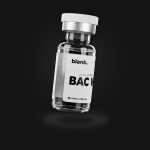
We carry research-grade BPC-157 at Blank Peptides with >99% purity, verified by independent HPLC and mass spectrometry analysis. Every batch ships with a third-party COA.
Browse These Compounds
Written by Blank Peptides Research Team
Peptide science researchers with 5+ years in US-based peptide manufacturing, independent HPLC and mass spectrometry testing, and research education. All content is reviewed for scientific accuracy before publication.
REVIEWED BY
Dr. Tobias S — PhD Chemist, Peptide and Unnatural Amino Acid Synthesis
Dr. Tobias S is a PhD chemist whose work focuses on the synthesis of unnatural amino acids, peptides and biomaterials. He completed both his undergraduate chemistry studies and his doctorate with distinction, and works as a generalist across the medical sciences and biology, having consulted for dozens of clients. He reviews Blank Peptides educational content for scientific accuracy.
Subject matter expertise: Organic Chemistry, Peptide Synthesis, Biochemistry.