Research Disclaimer
This article reviews published scientific literature for educational purposes only. All compounds referenced are sold by Blank Peptides exclusively for in-vitro research and laboratory use. Nothing in this article constitutes medical advice, a treatment recommendation, or an endorsement of human use.
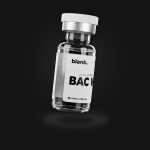
The BPC-157 and TB-500 combination, nicknamed the “Wolverine stack,” emerged as a popular research pairing because mechanistic evidence suggests complementary repair pathways. BPC-157 works primarily through vascular signaling. TB-500 operates through cytoskeletal mechanisms involving actin and cell migration. If both pathways are needed for complete tissue repair, combining them might produce superior results.
Why Two Peptides Together? The Logic Behind Stacking
The concept of stacking peptides is based on a simple biological principle: different molecules often work through different mechanisms. If two molecules both promote tissue repair but through distinct pathways, combining them might create additive or even synergistic effects, where the combined result exceeds what each component produces alone.
BPC-157: The Gastric Peptide That Repairs More Than Guts
BPC stands for Body Protection Compound. BPC-157 is a 15-amino-acid peptide originally discovered in gastric juice, which makes biological sense: stomach acid is corrosive, and the body needs mechanisms to protect the lining.
Mechanisms of Action
- Angiogenesis: promotes new blood vessel formation at injury sites
- Cell migration, enhancing fibroblast proliferation and movement into damaged tissue
- Growth factor signaling, upregulating VEGF and FGF expression
- Nitric oxide modulation: influences the NO system for vascular and inflammatory regulation
- Anti-inflammatory properties, reducing inflammatory markers in preclinical models
What Generated Excitement
Animal studies showed BPC-157 wasn’t just beneficial for the gut. It appeared to accelerate healing in muscle, tendon, bone, and even nervous tissue, which pointed to regenerative potential well beyond its site of origin.
TB-500: Thymosin Beta-4’s Healing Fragment
TB-500 is a synthetic peptide derived from thymosin beta-4, a naturally occurring protein found in virtually every cell type. It operates through different mechanisms than BPC-157.
Mechanisms of Action
- Actin binding: influences cell shape and movement by binding structural actin proteins
- Cell migration, which gets new cells into damaged tissue to rebuild it
- Independent angiogenesis, supporting blood vessel formation through pathways distinct from BPC-157
- Collagen deposition: promotes extracellular matrix rebuilding
- Systemic effects, since it appears to circulate and influence healing throughout the body rather than only at the injury site
The Synergy Hypothesis: Complementary Pathways
The logic rests on mechanistic complementarity. If tissue repair requires vascular support, growth factor signaling, cell migration, and extracellular matrix deposition, then targeting multiple steps simultaneously should outperform targeting one step alone.
Why “Wolverine”?
- BPC-157 pathway: vascular signaling, blood vessel formation, growth factor activity
- TB-500 pathway: cytoskeletal mechanisms, cell migration via actin binding, collagen deposition
- Combined hypothesis: multi-pathway activation may accelerate healing more than either peptide alone
Current Evidence and Honest Limitations
The honest assessment: we have compelling preclinical evidence but limited human data.
What We Know
- Animal studies: consistently show tissue repair benefits for both compounds individually
- Cell culture experiments demonstrate plausible, distinct mechanisms for each peptide
- Mechanistic reasoning, where complementary pathways give the combination a theoretical foundation
What We Don’t Know
- Long-term safety in humans: no data on chronic use, tissue accumulation, or off-target effects
- Optimal dosing, since ideal ratios, timing, and administration routes remain undetermined
- Tissue specificity, meaning whether the combination suits certain tissue types better than others
- Human clinical evidence: no large-scale trials have compared the combination against either peptide alone or placebo
At Blank Peptides, we offer both BPC-157 and TB-500 individually as well as our pre-formulated Wolverine stack, all at research-grade purity with batch-specific third-party COAs.
Browse These Compounds
Written by Blank Peptides Research Team
Peptide science researchers with 5+ years in US-based peptide manufacturing, independent HPLC and mass spectrometry testing, and research education. All content is reviewed for scientific accuracy before publication.
REVIEWED BY
Dr. Tobias S — PhD Chemist, Peptide and Unnatural Amino Acid Synthesis
Dr. Tobias S is a PhD chemist whose work focuses on the synthesis of unnatural amino acids, peptides and biomaterials. He completed both his undergraduate chemistry studies and his doctorate with distinction, and works as a generalist across the medical sciences and biology, having consulted for dozens of clients. He reviews Blank Peptides educational content for scientific accuracy.
Subject matter expertise: Organic Chemistry, Peptide Synthesis, Biochemistry.