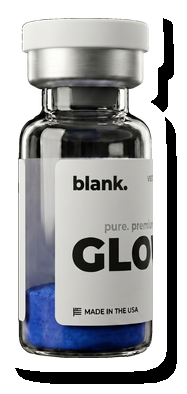
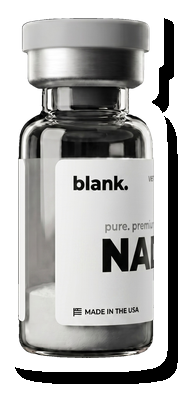
Yes, institutional-grade, USA-manufactured research peptides are readily available, and domestic supply has expanded enough that sourcing shouldn’t be the bottleneck in your project timeline. Before you commit budget, confirm the supplier provides a lot-matched Certificate of Analysis showing HPLC purity and mass spectrometry identity, plus endotoxin testing if the compound is headed for cell culture or animal work. That single check separates a compliant vendor from a catalog page with nice photography.
TL;DR:
- Choosing US-manufactured peptides reduces transit variability, improves chain-of-custody documentation, and enhances reproducibility of research results.
- A valid Certificate of Analysis must include lot number, production date, HPLC purity, mass spectrometry identity, and, for biological work, endotoxin and sterility testing.
- Verify the vendor’s US manufacturing presence through explicit facility details, accreditation language, and a detailed COA naming the analysis lab.
- Institutional ordering requires an account with proof of affiliation, clear lead times for stock or custom orders, and proper packaging matching peptide stability needs.
- International sourcing demands additional verification steps like independent identity confirmation and quarantine to avoid contamination and ensure data integrity.
Table of Contents
- What “USA-Made Peptides” Actually Means for Lab Procurement
- What Should Be on Every Peptide COA?
- How Institutional Purchasing and Shipping Actually Work
- Matching Peptide Categories to Your Experimental Design
- A Practical Checklist for Vetting a US Peptide Supplier
- Why Domestic Documentation Changes the Research Timeline
- When Domestic Sourcing Is Non-Negotiable and When It Isn’t
- Ready to Order US-Manufactured Research Peptides?
- Sources
What “USA-Made Peptides” Actually Means for Lab Procurement
“Made in the USA” gets used loosely in this industry, so it’s worth being precise about what it should mean before you put it on a purchase order. Domestic manufacturing means the peptide is synthesized, purified, and often lyophilized inside a US-based facility, typically a contract development and manufacturing organization (CDMO) or a custom synthesis lab, rather than bulk powder imported and repackaged under a US label. That distinction matters more than most catalog copy lets on.
Why it matters for your work specifically:
- Shorter supply chains mean less transit variability. Domestic shipping cuts the time a peptide spends in unregulated conditions, which matters for temperature-sensitive compounds.
- Chain-of-custody is easier to document. A peptide synthesized and tested in one facility has a shorter, more traceable paper trail than one that changes hands across borders.
- Reproducibility improves. Institutional reporting standards for research resources increasingly expect traceable lot data, and a domestic manufacturer can usually produce that history faster than an importer relying on a supplier three steps removed.
- Catalog listings should show scale and purity tier together, not purity alone. A 5 mg vial rated above 99% purity tells you less without a batch number tying it to an actual COA.
To confirm a vendor genuinely manufactures domestically, check for a stated US facility address, cGMP or FDA-registration language tied to that facility, and a COA that names the lab performing the analysis, not just the brand reselling the product.
What Should Be on Every Peptide COA?
A Certificate of Analysis is the single most important document in a peptide order, and most researchers scan it too quickly. Every legitimate COA should show the lot number, production date, the analyst or lab of record, the HPLC purity percentage, and a mass spectrometry result confirming molecular identity, not just purity.
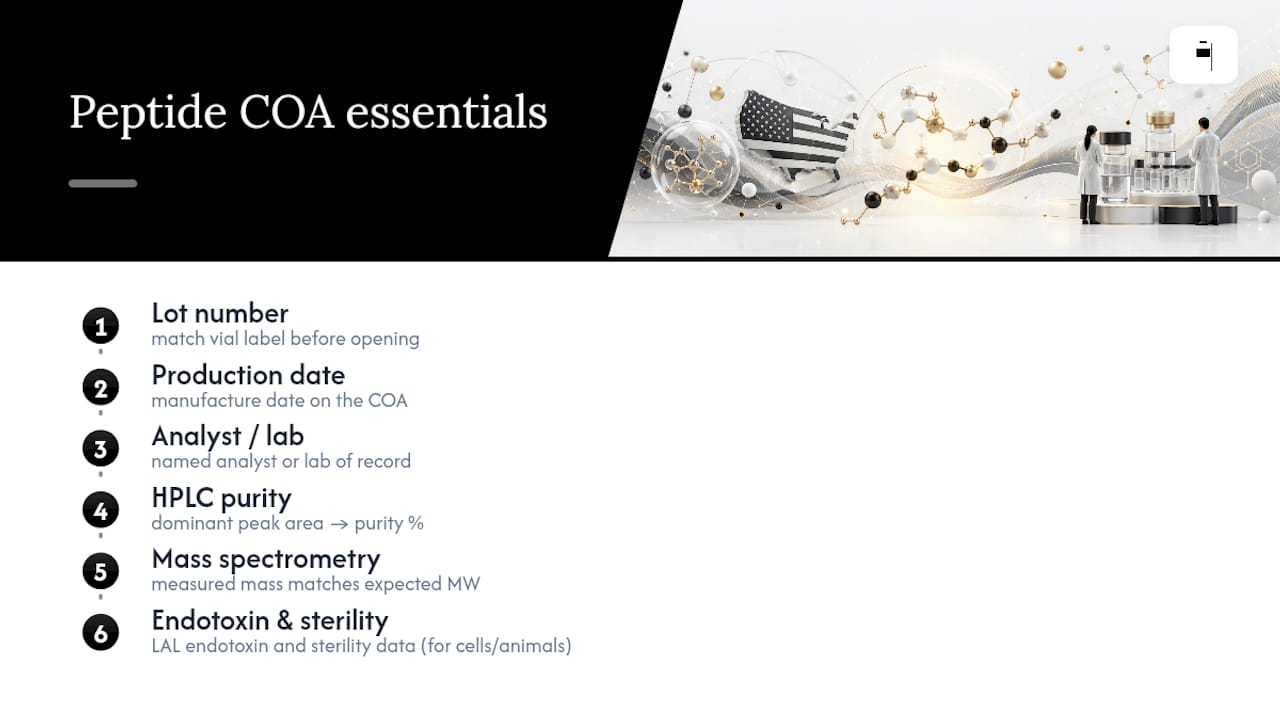
Pro Tip: Match the lot number on the vial label to the lot number on the COA before you open the vial. A mismatched lot is the most common (and most overlooked) red flag in peptide procurement.
HPLC separates a sample into its component peaks, and the dominant peak’s area relative to the total tells you purity. A COA reporting purity means a small fraction of the sample is something other than the target peptide, whether that’s a synthesis byproduct or a truncated sequence. Mass spectrometry then confirms that the dominant peak is actually the molecule you ordered, by matching its measured mass against the expected molecular weight.
For anything touching live cells or animal models, endotoxin testing (typically an LAL assay) and sterility data belong on the COA too. Bacterial endotoxin contamination can confound cytokine assays and inflammatory response models in ways that are easy to misattribute to your actual variable.
Accreditation language is worth reading closely. ISO/IEC 17025 accreditation for a testing lab signals independently verified competence in running these exact analyses, which carries more weight than a supplier simply stating “tested for purity” with no lab named. ISO 9001 speaks to quality management systems generally; cGMP and GLP-aligned language speaks to process control during manufacturing. None of these guarantee perfection, but their absence is a meaningful gap.
How Institutional Purchasing and Shipping Actually Work
Ordering research peptides through an institutional account looks different from a one-off retail purchase, and knowing the steps ahead of time saves a week of back-and-forth with procurement.
- Set up a verified account first. Most domestic suppliers require proof of institutional or commercial research affiliation, sometimes a lab address, an .edu or corporate email, or a signed research-use attestation, before releasing certain compounds.
- Expect different lead times for stock versus custom orders. Catalog peptides with existing inventory often ship within a few business days; custom synthesis or larger scale runs typically run several weeks depending on sequence complexity and batch size.
- Confirm packaging matches the compound’s stability needs. Lyophilized peptides generally ship at ambient or with minimal cold-chain support, while reconstituted or sensitive formulations may require gel packs and expedited domestic carriers.
- Get your PO number and expense coding sorted before checkout. Academic and corporate buyers save time by having cost-center codes and PO references ready, since many domestic suppliers can attach these directly to the invoice for grant reporting.
Domestic shipping timelines are one of the clearer advantages of buying US-made: no customs delays, no unpredictable international carrier handoffs, and no guessing when a shipment will actually clear.
Matching Peptide Categories to Your Experimental Design
Not every research peptide is built the same way, and the category you’re working in should dictate what you demand on the spec sheet.
- Metabolic and GLP-1 analog peptides are typically supplied lyophilized with strict purity thresholds above 99%, since even small impurities can skew receptor-binding or metabolic assay results.
- Growth-hormone analogs and secretagogues (compounds researchers group with GHRH-mimetic and growth-hormone-releasing peptide families) often require attention to amidation and acetylation status, since these modifications affect receptor activity and half-life in model systems.
- Signaling peptides, including short regulatory sequences studied for tissue and repair pathways, tend to be sold in smaller research quantities and depend heavily on accurate sequence verification via mass spec, since a single substituted residue changes the biology entirely.
- Labeled or modified peptides (fluorescent tags, biotinylation) need documentation confirming the label didn’t compromise the parent sequence’s purity, which a combined HPLC and MS readout should show clearly.
For anything going into cell culture or in vivo models, sterile-filtered or endotoxin-tested formulations aren’t optional. Lyophilized catalog stock intended purely for in vitro biochemical assays has more flexibility, but the moment live cells or animals enter the picture, sterility documentation should match the rigor of the purity data.
A Practical Checklist for Vetting a US Peptide Supplier
Qualifying a new vendor takes fifteen minutes if you know what to check, or it takes a failed experiment and a wasted grant cycle if you skip it. Work through this order:
- Confirm the COA is downloadable and lot-matched, not a generic PDF reused across every batch.
- Verify both HPLC purity and mass spec identity data appear together. Orthogonal testing using two independent methods is the standard combination for confirming both how pure and what a compound actually is.
- Check for endotoxin and sterility results if your application involves cells or animals.
- Look for explicit US manufacturing or finishing language, ideally naming the facility or state, not just a US mailing address.
- Ask about quality system claims. ISO 17025-accredited testing or cGMP-aligned manufacturing processes indicate a more mature operation than a supplier with no accreditation language at all.
- Test their institutional account and scientific support process. A vendor who can’t produce a Safety Data Sheet or answer a reconstitution question within a business day isn’t set up for serious lab work.
Pro Tip: Request a sample COA before placing your first order, even if you don’t need the product yet. A supplier’s willingness (or reluctance) to share one tells you almost everything about how they’ll handle you as a repeat customer.
Red flags worth walking away from: a missing or “available on request” COA that never arrives, lot numbers that don’t match between packaging and paperwork, and no clear process for institutional or bulk accounts. Any one of these should push you toward a different supplier.
Why Domestic Documentation Changes the Research Timeline
Blank Peptides builds its catalog around the exact standards this checklist describes: US manufacturing, greater than 99% purity across the product line, and a COA issued for every batch, independently verified rather than self-reported. That combination exists because reproducibility problems in published research trace back more often to unverified reagents than to flawed hypotheses, and peptide sourcing is one of the easiest points in that chain to get wrong.
One recurring pattern among labs switching to domestic, COA-backed sourcing: procurement delays that used to stretch for weeks while waiting on import paperwork or chasing a vendor for missing analytical data shrink to a few days, simply because the documentation ships with the order instead of arriving after multiple email requests.
When Domestic Sourcing Is Non-Negotiable and When It Isn’t
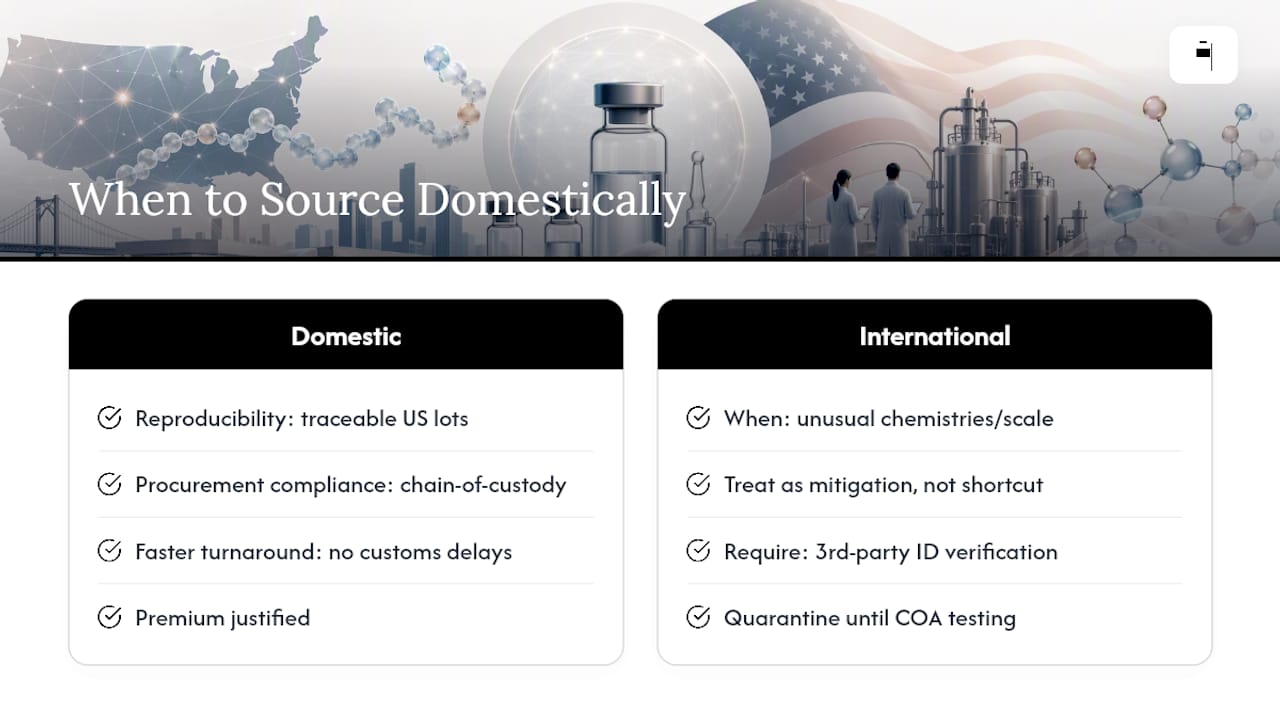
Domestic sourcing earns its premium in three areas: reproducibility, since traceable US lots simplify audit trails; procurement compliance, since institutional buyers increasingly expect documented chain-of-custody; and turnaround, since there’s no customs unpredictability.
That said, international sourcing can be reasonable for unusual chemistries or production scales that US suppliers don’t yet offer. If you go that route, treat it as a mitigation exercise, not a shortcut: require third-party identity verification on receipt, quarantine the material until testing confirms it matches the COA, and never assume an overseas vendor’s self-reported purity number without independent confirmation. The extra verification step costs a few days. A contaminated or misidentified lot costs a failed study.
— Blank Research Team
Ready to Order US-Manufactured Research Peptides?
Blank Peptides gives you what the checklist above demands: a batch-specific COA on every order, greater than 99% purity across the catalog, and manufacturing that happens inside US facilities instead of somewhere upstream you can’t verify.
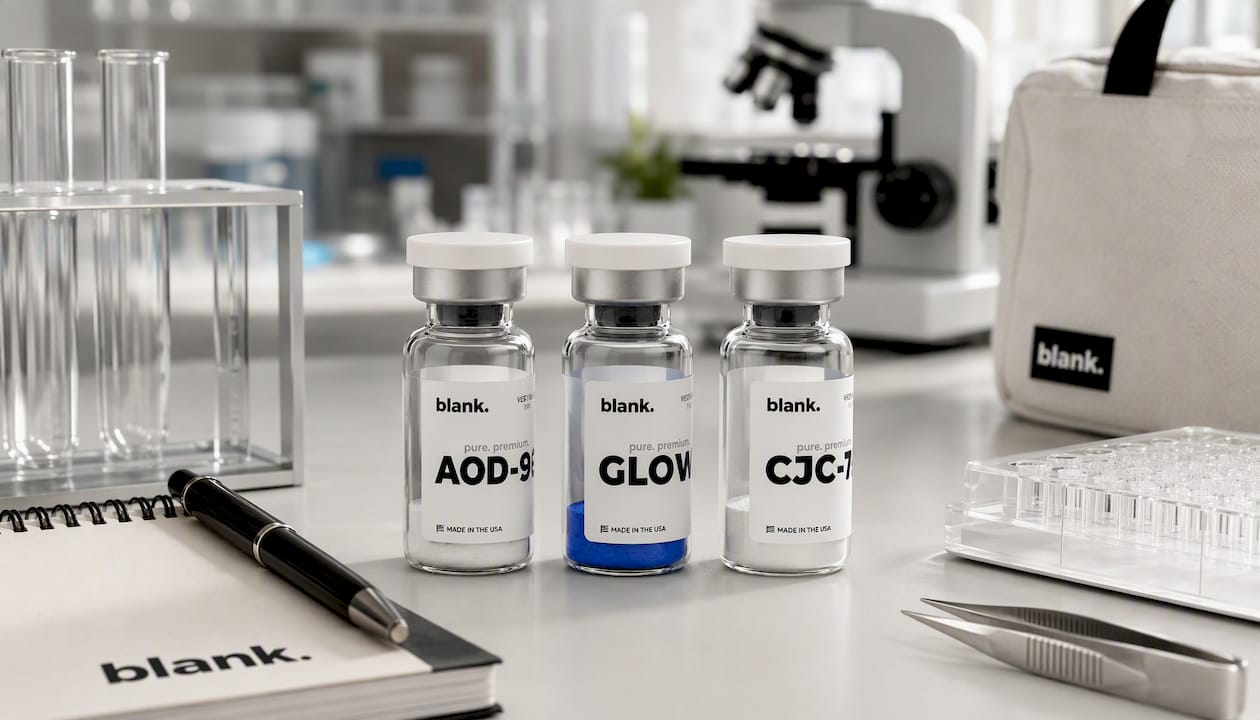
Three catalog entries see the most institutional traffic right now. AOD-9604 ships with full purity and identity documentation for metabolic research applications. GLOW carries the same analytical backing for labs working in dermal and regenerative research models. And CJC-1295 / IPAMORELIN comes with the technical specs and COA access that growth-hormone secretagogue studies typically require.
Setting up an institutional account takes a few minutes, and once verified, you can request batch-specific COAs or a custom synthesis quote directly through your account dashboard. If your lab needs a compound that’s not in the standard catalog, start with the main Blank Peptides catalog and reach out about custom synthesis options before your next order deadline.