Headspace gas chromatography under USP <467> is the accepted standard for detecting volatile residual solvents in synthetic peptides. Expect a COA that names the method, reports levels for solvents like DMF, DCM, NMP, acetonitrile, and ethanol, and documents the drying cycle used to remove them. Without that drying and validation record, a passing solvent number tells you less than it seems to.
TL;DR:
- Residual solvents like DMF, DCM, and acetonitrile are present inherently from synthesis and purification, making their detection complex yet critical.
- Proper drying and validation of the lyophilization process are essential because trapped solvents can cause false-negative results during headspace GC testing.
- Validated headspace GC methods should specify their LOQ, include solvent-specific limits, and be supported by thorough method validation for accurate results.
- HS-GC cannot detect nonvolatile residues or elemental impurities, which require supplementary methods such as LC-MS or ICP-MS for comprehensive testing.
- Trustworthy Certificates of Analysis must document specific testing methods, drying parameters, measured ppm values, and comparison against solvent class limits to verify purity claims.
Table of Contents
- Where Residual Solvents Enter Peptide Synthesis
- How USP <467> Headspace GC Actually Works
- Sample Prep and Drying: Where Results Go Wrong
- ICH Q3C and USP <467>: How Limits Get Set
- What Headspace GC Misses
- What a Trustworthy COA Should Actually Show
- Checking Solvent Documentation on Blank Peptides Products
- Where to Verify the Standards Yourself
- Sources
Where Residual Solvents Enter Peptide Synthesis
Most solvent contamination traces back to two stages: synthesis and purification. Solid-phase peptide synthesis (SPPS) runs on DMF and NMP as swelling and coupling solvents, and cleavage cocktails often bring in dichloromethane (DCM) alongside trifluoroacetic acid. These aren’t trace contaminants introduced by accident. They’re the working fluids of the entire process, present in gram quantities before purification even starts.
Purification adds its own layer. Reversed-phase HPLC and UPLC mobile phases lean heavily on acetonitrile, and purification chemistry choices at this stage directly shape downstream solvent burden. Workup, recrystallization, lyophilization, and even packaging materials contribute smaller but real amounts.
For routine testing, prioritize by volume and toxicity, not just by what’s easiest to detect:
- DMF and NMP: high-volume SPPS solvents, moderate toxicity concern
- DCM: cleavage-stage residue, Class 2 solvent under most schemes
- Acetonitrile: purification carryover, present in nearly every reversed-phase workflow
- Ethanol and isopropyl alcohol (IPA): lower-risk but worth confirming, especially after recrystallization steps
How USP <467> Headspace GC Actually Works
Static headspace GC exploits a simple physical principle: heat a sealed sample vial until volatile solvents partition out of the peptide matrix and into the vapor space above it, then sample that vapor directly. No liquid injection, no solvent extraction step to introduce error. The technique is why HS-GC has become the default choice for volatile organic impurities across the pharmacopeial world.
Two detector choices matter here, and they solve different problems:
- GC-FID (flame ionization detection) handles routine quantification. It’s fast, sensitive to organic compounds, and the workhorse for confirming a solvent falls under its specification limit.
- GC-MS (mass spectrometry detection) earns its place when identity is in question. If a peak shows up that doesn’t match a known reference standard, or a matrix is unusually complex, mass spectral confirmation removes the guesswork.
Method validation snapshot: A properly validated HS-GC method, built around ICH Q2 parameters, reports specificity, linearity, accuracy, precision, and a defined limit of quantitation, typically expressed in parts per million (ppm) or percent weight-by-weight. Results below that reported LOQ should be stated as such, not left blank.
Escalate to GC-MS or a custom method when volatility is borderline, when a solvent isn’t on the standard reference list, or when the sample matrix (a capsule formulation, for instance, rather than a lyophilized cake) behaves unpredictably during headspace equilibration. A lab that can’t tell you its LOQ for a specific solvent hasn’t finished validating the method.
Sample Prep and Drying: Where Results Go Wrong
Lyophilized cakes and reconstituted solutions behave differently under headspace analysis, and that difference matters more than most researchers assume. A porous, poorly characterized cake can trap solvent unevenly throughout its structure. Sampling from one spot instead of a representative subsample can understate the true residual level by a meaningful margin.
Drying cycle design drives the outcome just as much as the analytical method does:
- Shelf temperature and ramp rate during primary and secondary drying
- Vacuum level maintained throughout the cycle
- Hold time at final drying temperature
- Endpoint verification, not just a fixed clock time
Pro Tip: Ask any supplier for the actual drying cycle parameters, not just a statement that the product was “lyophilized.” A cycle that hits temperature but skips a defined hold time at low vacuum is the single most common reason a peptide passes visually but carries elevated trapped solvent.
Interpreting a trace HS-GC readout also means knowing your LOQ. A “not detected” result only means the solvent fell below the method’s sensitivity floor, not that it’s absent.
ICH Q3C and USP <467>: How Limits Get Set
ICH Q3C sorts solvents into three classes based on known toxicity, and that classification drives everything downstream. Class 1 solvents (benzene, carbon tetrachloride, and similar compounds) should be avoided entirely in synthesis where feasible. Class 2 solvents, including DMF, DCM, and NMP, carry defined permitted daily exposure (PDE) limits and need quantitative controls. Class 3 solvents, ethanol and IPA among them, carry low toxicity concern and get simpler treatment.
USP <467> structures the actual workflow: identify which solvents are plausibly present based on the manufacturing process, then quantify each against its class-appropriate limit. The PDE concept ties a numeric limit to a real toxicological endpoint and expected route of administration, which is why a specification written for an injectable drug substance differs from one written for a topical formulation.
The practical takeaway for research peptide specifications:
- Specify testing for solvents actually used in that specific synthesis route, not a generic panel
- Weight limits toward Class 2 solvents present at the cleavage and coupling stages
- Treat Class 3 solvents as lower priority but don’t skip them entirely
- Align limits with process capability so a spec is achievable, not just aspirational
This risk-based logic beats a one-size-fits-all solvent panel because it tests for what’s actually there.
What Headspace GC Misses
HS-GC is excellent at its job and blind to everything outside it. It doesn’t detect nonvolatile scavengers used in cleavage cocktails, many cleavage reagent byproducts, or elemental impurities from catalysts and reagents. Agilent’s technical guidance on peptide analysis makes clear that LC and LC-MS methods are required to catch these nonvolatile residues, since they never partition into a headspace vial no matter how long you heat it.
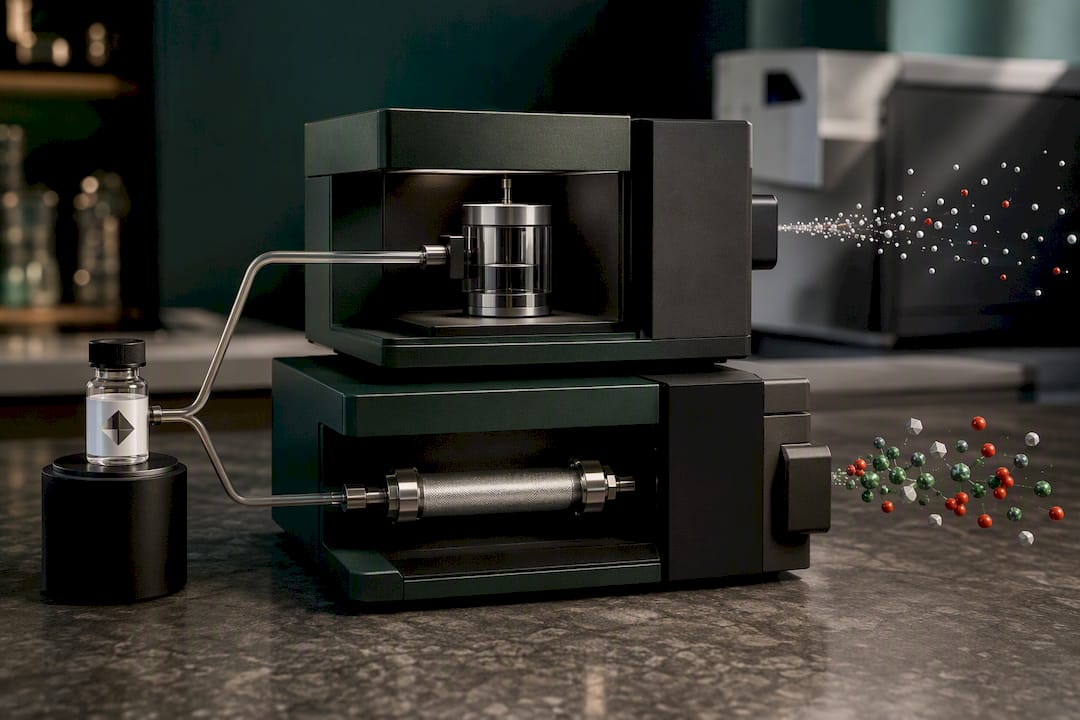
For elemental impurities, ICP-MS is the method of choice under ICH Q3D logic, picking up trace metals that HS-GC simply cannot see.
A defensible minimum panel for research peptides combines three approaches:
- HS-GC (USP <467>) for volatile organic solvents
- HPLC/UPLC or LC-MS for nonvolatile scavengers and reagent residues
- ICP-MS for elemental impurities, especially when metal catalysts were part of the synthesis
Trigger expanded testing when a new synthesis route, a new scavenger reagent, or an unusual raw material lot enters the process.
What a Trustworthy COA Should Actually Show
We’re the Blank Research Team, and after reviewing how solvent data gets reported across the industry, a few documentation gaps show up repeatedly. A COA worth trusting names the validated HS-GC method used, states drying cycle parameters from the batch record, and reports measured ppm values against the solvent’s class-appropriate limit, not just a pass/fail checkmark. Independent batch testing, rather than in-house-only verification, adds a layer of confidence that self-reported numbers can’t match on their own.
— Blank Research Team
Checking Solvent Documentation on Blank Peptides Products
Blankpeptides posts a certificate of analysis for every batch, targeting high purity across its catalog. That’s the baseline. What matters for your protocol is what’s actually printed on that COA.

When you pull up a batch record, look for the HS-GC method reference, the specific solvent panel tested (not a generic “residual solvents: pass” line), the measured ppm values against each solvent’s limit, and a note on drying or lyophilization parameters. If a supplier can’t produce that level of detail on request, treat the purity claim with skepticism regardless of the number on the label.
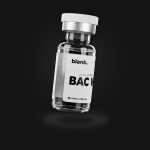
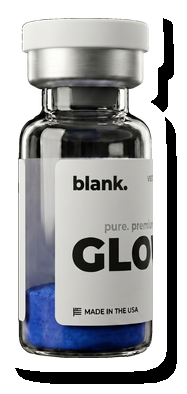
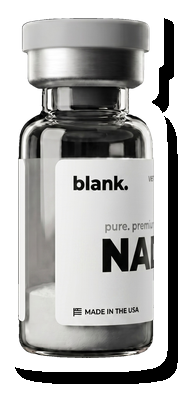
Several product pages are worth checking directly for this documentation. Start with KISSPEPTIN and SEMAX, both of which list batch-specific COA access. The CJC-1295 / Ipamorelin blend page shows similar documentation for a combination product, where solvent tracking gets more complex. GLOW, BPC-157 capsules, Selank, and Hospira Bacteriostatic Water round out the catalog for researchers building out a full protocol. Pull the COA before you order, compare it against the method expectations covered above, and you’ll know within minutes whether the documentation matches the purity claim.
Where to Verify the Standards Yourself
- USP <467> FAQ, for the official headspace GC workflow
- Separations (2024) review on peptide purification, for emerging purification methods and solvent profile shifts
Consult the full monograph text before validating a transfer method. These summaries orient you; they don’t replace the primary documents.