Metabolic research compounds are peptides and small molecules labeled for laboratory use that target incretin, amylin, or mitochondrial signaling to study weight, glucose, and energy pathways. The main classes include GLP‑1/GIP/glucagon multi‑agonists, amylin analogs, mitochondrial peptides, and enzyme modulators. None of them belong in a human or animal body outside an approved trial, and none belong on your bench without a batch-specific Certificate of Analysis and independent third-party testing behind them.
TL;DR:
- Multi-agonists like retatrutide, which target three receptors simultaneously, are the most studied and show the highest weight loss, with up to 24 kg at 52 weeks.
- Purity claims must be backed by chromatograms and verified by independent third-party testing, as a 1% contaminant can affect sensitive assays.
- Only research-labeled compounds obtained from FDA-registered facilities and with proper COAs are legally appropriate for laboratory use in the US.
- Suppliers should provide lot-specific COAs, third-party purity verification, and clear manufacturing details, with hesitations indicating lower product credibility.
- Combining compounds, such as GLP‑1 agonists with amylin analogs, is common to study additive effects, but always confirm molecular form and purity before testing.
Table of Contents
- What Are the Main Classes of Metabolic Research Compounds?
- Which Named Compounds Do Researchers Actually Use?
- How Do You Verify a Compound’s Purity and Identity?
- Are Metabolic Research Compounds Legal to Buy in the US?
- What Should You Ask a Supplier Before You Order?
- What Researchers Get Wrong About Sourcing Metabolic Compounds
- Where to Source Lab-Grade Metabolic Compounds
- Sources
- FAQ
What Are the Main Classes of Metabolic Research Compounds?
Most metabolic research compounds fall into four functional buckets. Knowing which one you’re working with determines your assay design before you ever open the vial.
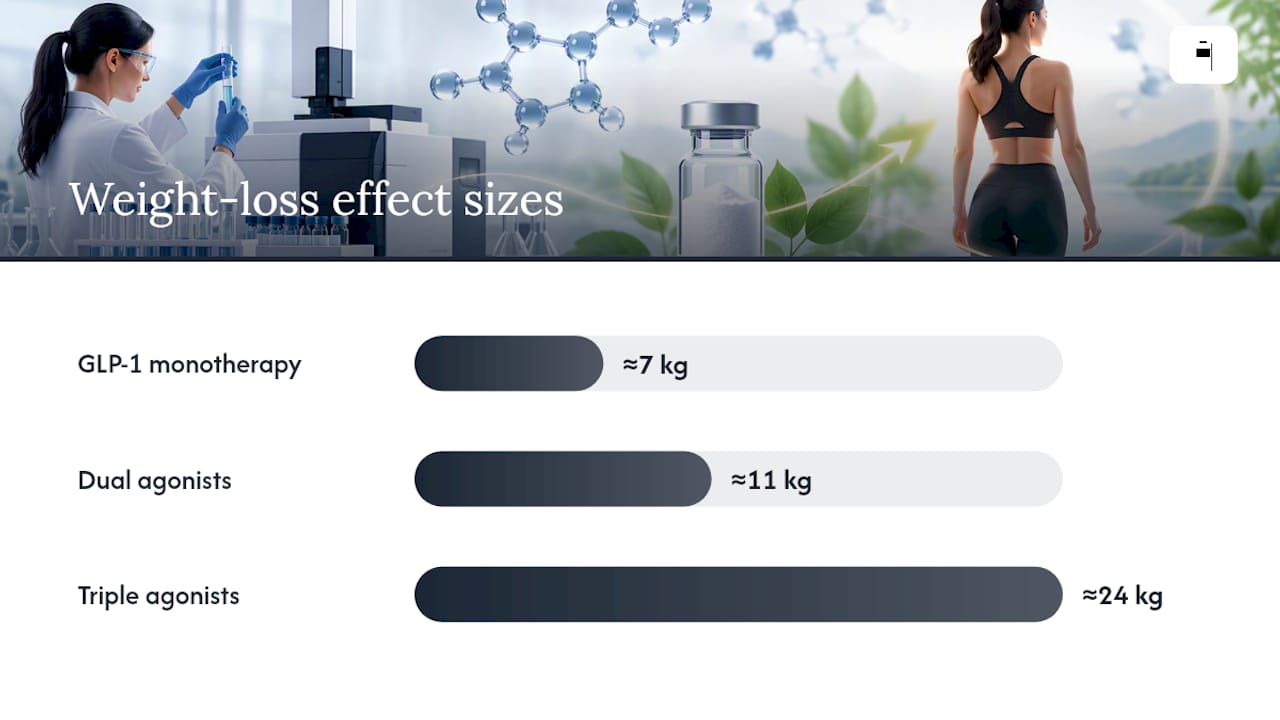
GLP‑1/GIP/glucagon multi‑agonists dominate current metabolic research because they hit more than one receptor at once, and the pharmacology backs that focus: systematic reviews show weight-loss effect sizes climbing from roughly 7 kg with GLP‑1 monotherapy to around 11 kg with dual agonists and up to 24 kg with triple agonists at 52 weeks, according to a 2025 evidence review. Amylin analogs modulate satiety and gastric emptying through a separate receptor pathway, often studied alongside incretin agents rather than in isolation. Mitochondrial peptides influence biogenesis, respiration, and energy expenditure at the organelle level. Enzyme modulators work further downstream, altering substrate metabolism or fat storage enzymatically.
Typical readouts researchers pair with these classes include:
- Body weight and food intake tracking over a defined dosing window
- Glucose tolerance tests (GTT) and insulin sensitivity indices
- Hepatic fat quantification via imaging or histology
- Mitochondrial respiration assays (oxygen consumption rate, ATP output)
GLP‑1 receptor agonists carry pleiotropic effects worth flagging in study design. Beyond glycemic control, they influence mitochondrial function and autophagy, meaning a glucose-focused protocol may still pick up off-target signals in energy metabolism markers you didn’t set out to measure.
Which Named Compounds Do Researchers Actually Use?
A short list of compounds accounts for most of the citations in current metabolic literature. Here’s how they break down by mechanism and typical research context.
- Retatrutide. A triple agonist targeting GLP‑1, GIP, and glucagon receptors simultaneously. Phase 2 clinical data recorded a substantial mean weight loss at 48 weeks alongside a sharp reduction in hepatic fat, making it the reference compound for researchers studying multi-receptor metabolic effects.
- Tirzepatide and semaglutide. Dual and single-receptor GLP‑1 compounds used extensively in receptor-binding studies and adipocyte differentiation models, where researchers isolate incretin signaling from the confounding variables multi-agonists introduce.
- Cagrilintide. An amylin analog frequently studied in combination with GLP‑1 agents. Preclinical work in obese rats found that cagrilintide paired with retatrutide produced additive effects on weight and metabolic markers beyond either compound alone, which is exactly why combination protocols are gaining traction in mechanistic research.
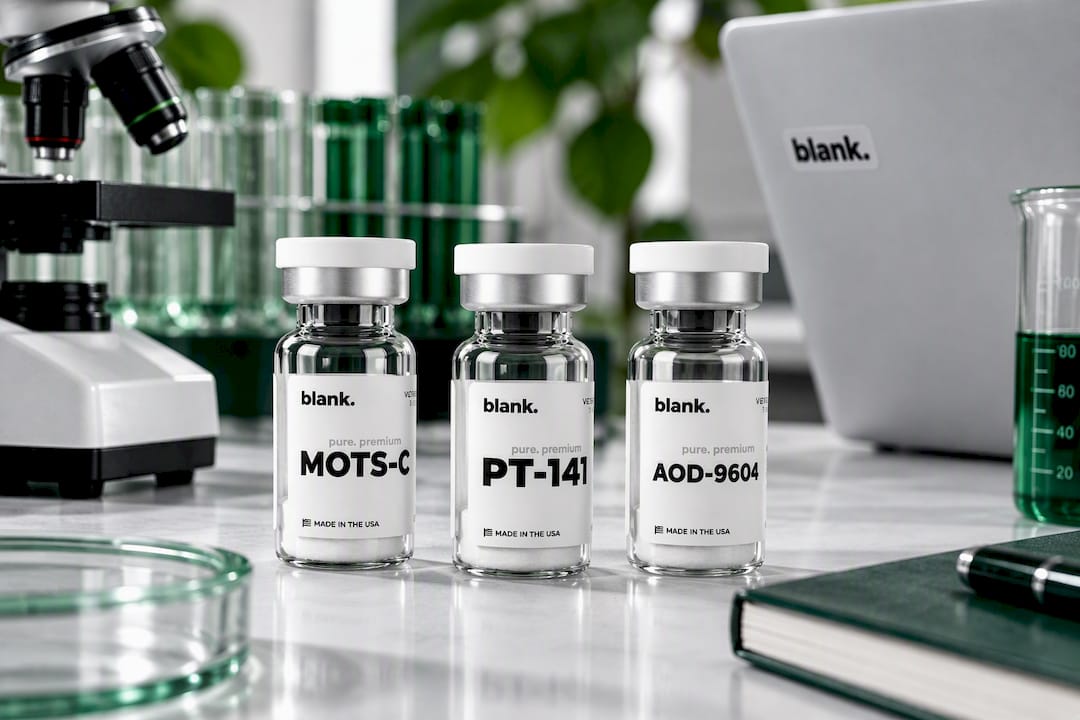
- MOTS‑C. A mitochondrial-derived peptide studied for its role in cellular energy sensing and insulin signaling, common in mitochondrial dysfunction models.
- AOD‑9604. A modified fragment used in lipid metabolism research, particularly fat oxidation assays.
- 5‑Amino‑1MQ. An enzyme modulator that inhibits NNMT, studied in the context of adipocyte metabolism and cellular energy expenditure.
Preclinical dosing for these compounds varies widely by model and route of administration, so treat published dose ranges as a starting point for your own pilot titration rather than a fixed protocol.
Not every metabolic compound of interest is a peptide. Threonic acid combined with intermittent fasting produced greater weight and food-intake reduction than either intervention alone in diet-induced obese mice, a reminder that small-molecule and behavioral combination studies remain an active corner of this field.
How Do You Verify a Compound’s Purity and Identity?
A Certificate of Analysis is only useful if it actually tells you what you need to know. A complete COA should show:
- An HPLC or LC‑MS purity chromatogram with visible peak resolution, not just a summary number
- Mass spectrometry confirmation of identity, not purity alone
- Water content and residual solvent levels
- The assay date, method, and lot number tied to your specific shipment
The gap between ≥98% and ≥99% purity sounds trivial until you’re running a sensitive receptor-binding or mitochondrial respiration assay, where a 1% contaminant load can shift baseline noise enough to mask a real effect. For any assay where signal-to-noise is already tight, insist on >99% purity documentation rather than accepting a general-purpose threshold.
Before you run a single sample, request the raw chromatogram data rather than a one-line purity claim, confirm the lot number on your COA matches the lot number on your vial, and, where your lab has the capacity, run your own LC‑MS identity check against an authenticated standard.
Pro Tip: Degradation products are the silent variable in peptide research. A peptide that tested at 99% purity on manufacture can still develop breakdown byproducts in transit or storage, and those metabolites can confound both analytical readouts and biological interpretation if you don’t rerun identity checks on arrival.

Are Metabolic Research Compounds Legal to Buy in the US?
Metabolic research compounds occupy a distinct regulatory lane from FDA-approved drugs, and conflating the two is the most common compliance mistake in this field. Semaglutide, tirzepatide, and liraglutide are approved therapeutics when prescribed and dispensed through normal clinical channels. The FDA has separately proposed excluding certain GLP‑1 bulk substances from its 503B bulks list and has warned that unapproved GLP‑1 products marketed directly to consumers for weight loss lack standard regulatory review.
Buying these compounds for legitimate laboratory research is a different transaction entirely, provided the product is labeled and used strictly for research purposes. Keep these institutional basics in view:
- Confirm your institution’s IRB or IACUC protocols cover the compound and intended use before ordering
- Follow your procurement policy’s documentation requirements for research-only materials
- Never repurpose research-labeled material for off-label human or veterinary use
- Store compounds per the supplier’s stability guidance, typically lyophilized at freezer temperature until reconstitution
What Should You Ask a Supplier Before You Order?
Supplier due diligence takes ten minutes and saves you a ruined data set. Before you commit to a vendor, confirm the following:
- Where the compound is manufactured, and whether that facility operates under cGMP or FDA-registered conditions
- Whether a batch-specific COA is available for the exact lot you’d be receiving, not a generic template
- Whether purity and identity testing was performed by an independent third-party lab, not just in-house
- The stated purity threshold, and whether it’s backed by a chromatogram you can actually review
- Lot traceability, so you can request a retest if your own identity check doesn’t match
A supplier that hesitates on any of these is telling you something. Blankpeptides publishes lot-specific COAs before purchase and manufactures in FDA-registered US facilities, and its products carry a stated purity standard above 99% verified through independent lab testing, the kind of documentation trail that lets a retest request actually go somewhere.
What Researchers Get Wrong About Sourcing Metabolic Compounds
The recurring mistake in this field isn’t sourcing from a bad vendor. It’s skipping the chromatogram review because a purity number on a label feels sufficient, or assuming labeled purity guarantees correct identity when the two are separate tests entirely.
When a shipment arrives, run an identity check against a known standard and store aliquots at low temperature immediately rather than after your first experiment. If your protocol depends on matching a specific molecular form, whether acylated or unmodified, contact technical support before you commit a full study to material that might not match your exposure model.
— Blank Research Team
Where to Source Lab-Grade Metabolic Compounds
Blankpeptides exists for exactly the problem this article just walked through: researchers who need documentation they can actually verify, not a purity claim they have to take on faith. Every batch ships with a lot-specific Certificate of Analysis, manufacturing happens in FDA-registered US facilities, and third-party testing backs a purity standard above 99% across the catalog.
If your protocol calls for a GLP‑1 or growth-hormone-pathway peptide, the CJC-1295 / Ipamorelin combination and kisspeptin listings include full COA access for review before you buy. Researchers building out reconstitution protocols can also source bacteriostatic water and other research supplies from the same catalog, and the full research peptides shop organizes compounds by class for faster protocol matching. Pull the COA for your specific lot before you order, and reach out to technical support if you need help matching a compound’s molecular form to your assay’s exposure requirements.
This article is general information, not a substitute for advice from a qualified doctor. Consult a qualified healthcare professional about your own circumstances before acting on anything here.
Sources
- Triple–Hormone‑Receptor Agonist Retatrutide for Obesity — A Phase 2 Trial (NEJM / PubMed entry)
- Emerging frontiers in GLP-1 therapeutics: a comprehensive evidence base (2025 review, PMC)
- FDA: Concerns about unapproved GLP-1 drugs used for weight loss
FAQ
What compound is most studied for fat loss in preclinical research?
Retatrutide draws the most attention among current metabolic research compounds because its triple-agonist mechanism produced substantial mean weight loss at 48 weeks in phase 2 data, alongside a marked drop in hepatic fat. Researchers often pair it with cagrilintide in combination studies for additive metabolic effects.
Can you legally buy peptides for research purposes in the US?
Yes, provided the product is labeled and used strictly for laboratory research, not human or veterinary consumption. The FDA distinguishes approved therapeutics from unapproved substances marketed for research use only, and legitimate purchases should always include institutional compliance checks and a verifiable COA.
What is the strongest compound studied for weight-related metabolic research?
Among multi-agonists, retatrutide shows the largest effect size recorded in trial data, with efficacy climbing progressively from GLP‑1 monotherapy to dual and triple agonists across systematic reviews. “Strongest” depends heavily on the endpoint and model you’re measuring, though, not just headline weight-loss figures.
What is a compound blend used in metabolic research?
A research blend combines two or more compounds, such as a GLP‑1 agonist with an amylin analog, to study additive or synergistic effects on shared metabolic pathways. Blankpeptides’ research blends catalog lists combination products with COAs available for each component lot.
How do I know if a peptide supplier’s purity claim is real?
Request the raw HPLC or LC‑MS chromatogram tied to your specific lot number, not just a summary purity percentage on a label. A credible supplier will also disclose which independent lab performed testing, since mislabeling and quality issues remain a documented problem in this market.