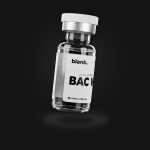
Structure and class comparison · research use only
BPC-157 vs TB-500
BPC-157 and TB-500 get ordered together so often that we stock them as a pair in the Wolverine blend, and yet they have almost nothing in common structurally. One is a fifteen-residue fragment of a gastric protein, the other a seven-residue slice of an actin-binding protein found in nearly every cell. This page sets the two side by side on sequence, origin, proposed mechanism and the shape of the published literature, so you can decide which one, or both, belongs in the study you're planning. Everything here concerns lyophilized research-use-only material handled in a lab.
| BPC-157 | TB-500 | Wolverine | |
|---|---|---|---|
| Class | Synthetic fragment of a protein found in gastric juice | Thymosin beta-4 fragment | Research peptide blend (20mg total) |
| CAS | 137525-51-0 | 885340-08-9 | Blend, no single CAS |
| Length | 15 amino acids (pentadecapeptide) | 7-amino-acid fragment (Ac-LKKTETQ, the 17-23 region of thymosin beta-4) | Two peptides in one vial: BPC-157 and TB-500 |
| Stocked | 10mg | 10mg | 20mg |
| Current lot | 99.40% purity, lot DPS-4605515 (COA) | 99.38% purity, lot DPS-2022011 (COA) | 99.12% purity, lot B-4339222-P (COA) |
| Reference page | BPC-157 research peptide | TB-500 research peptide | Wolverine research peptide |
How they differ structurally
BPC-157, CAS 137525-51-0, is a 15-amino-acid pentadecapeptide. The name stands for Body Protection Compound, and the sequence is a synthetic fragment of a larger protein that was originally isolated from human gastric juice by a research group in Zagreb. It’s a linear peptide with no disulfide bridges, no lipid modification and no unnatural residues. We stock it at 10mg, and the BPC-157 learn page covers the history of the parent protein.
TB-500, CAS 885340-08-9, is shorter still. It’s a 7-amino-acid fragment, Ac-LKKTETQ, corresponding to residues 17 through 23 of thymosin beta-4, with an acetyl group on the N-terminus. Thymosin beta-4 itself is a 43-residue protein that’s abundant in the cytoplasm of most cell types, and the 17-23 stretch is the part of it that binds actin. So TB-500 is a fragment of a fragment, in a sense: the actin-binding motif lifted out of a small protein and made on its own. Also 10mg from us, and the TB-500 learn page goes through the relationship to the full-length protein.
The two share nothing beyond being short, linear, synthetic and water-soluble. Different parent proteins, different tissues of origin, different lengths and, as far as anyone has shown, different targets. The Wolverine blend we stock puts them in one 20mg vial as a matter of convenience for labs that run them side by side, and it’s a stocked blend, not something we designed.
Receptor and mechanism differences
This is the section where we’d rather be honest than tidy. Neither compound has a cleanly identified receptor in the way that, say, a GLP-1 analogue does, and anyone who tells you the mechanism of either one is settled is ahead of the literature.
For BPC-157, the Zagreb group’s papers propose several overlapping mechanisms drawn from rodent models: interactions with the nitric oxide system, effects on angiogenesis-related signalling including VEGF expression, modulation of the dopamine and serotonin systems in the brain-gut axis, and a general stabilising effect on endothelium and on the gut lining that the authors relate to its origin in gastric protection. Most of that is inferred from tissue outcomes and from pharmacological blockade experiments rather than from binding studies, and there’s no receptor assay for BPC-157 the way there is for classical peptide hormones.
For TB-500, the mechanism story leans on what’s known about the parent protein. Thymosin beta-4 sequesters monomeric G-actin, and the LKKTETQ region is the actin-binding motif. The published work on the full-length protein describes effects on cell migration, on wound closure in models and on cardiac and corneal tissue, and the fragment is assumed to carry the actin-related activity because it carries the binding motif. That assumption is reasonable but it’s an assumption; direct comparative studies showing the isolated 17-23 fragment does what the whole protein does are far fewer than the studies on the whole protein. The literature is thin here, and when you read a claim about TB-500 you should check whether the underlying paper used the fragment or full-length thymosin beta-4, because a lot of secondary sources blur the two.
What the literature compares
The BPC-157 literature is large in paper count but narrow in source. Most of it comes from one academic group over roughly three decades, and it’s almost entirely rodent work: tendon and ligament transection models, muscle crush, gastric and colonic lesion models, vascular occlusion, and a long series of studies on interactions with other drugs. The tendon work, including a widely cited paper on tendon fibroblast outgrowth and migration, is the part most researchers ask us about. Independent replication from other groups exists but is limited, and there are no completed published human trials that we’re aware of.
The TB-500 literature has the opposite shape. The full-length thymosin beta-4 protein has been studied by many groups across dermal wound models, corneal injury, cardiac ischemia and neurological models, and it reached human trials in some of those areas. By contrast, the 17-23 fragment on its own has a much smaller published footprint, mostly in vitro actin-binding and cell-migration work.
Head-to-head comparisons of the two compounds in the same model are scarce, and the ones that exist are small. If your study needs to compare them directly, you’ll probably be writing one of the first well-controlled papers to do so rather than building on an established design. You’ll need to pick your model, timing and readouts from the separate literatures and justify the choices yourself.
Handling differences in the lab
In practice, both peptides handle the same way at the bench. Each ships as a lyophilized powder in a sealed vial. Keep sealed vials at -20C and out of the light. When you’re ready to work with one, reconstitute with bacteriostatic water added slowly down the inside of the vial, then swirl gently until the powder dissolves. Don’t shake, keep the vial and everything that touches it sterile, and label it with the compound, concentration and date. Store reconstituted material at 2-8C, use it within 28 days, and avoid freeze-thaw of the solution.
Both dissolve readily. Neither is acylated, so neither has the surface-sticking tendency of a lipidated peptide like semaglutide, and ordinary polypropylene tubes are fine for most purposes. BPC-157 is reported in the literature to be unusually stable in gastric-like conditions, which is consistent with its origin, but that’s a property of the peptide in acid and doesn’t change how you store a reconstituted stock in the fridge.
The one thing to think about with the Wolverine blend is that you’re reconstituting two compounds at once at a fixed ratio, which is convenient if that ratio suits your design and inconvenient if you want to vary one against the other. The blend we stock is 20mg total. For any study where BPC-157 and TB-500 are independent variables, order the separate 10mg vials and combine them yourself so you control the ratio and can run each alone as a control.
Which to order for which research question
If your question is about the gut, the endothelium, nitric oxide signalling or the tendon-healing models in the Zagreb literature, BPC-157 on its own is the compound, and you’ll find plenty of published protocols to adapt. It’s also the better choice if you want a peptide whose rodent literature is deep enough to give you expected effect sizes before you start.
If your question is about actin dynamics, cell migration, or comparing a fragment to its parent protein, TB-500 is the one, and the most interesting study designs we hear about pair the 17-23 fragment against full-length thymosin beta-4 in the same assay to test how much of the parent’s activity the motif carries. That’s a genuinely open question.
If your design calls for both, the choice between the Wolverine blend and two separate vials comes down to whether you need the ratio fixed or free. For pilot work at a single combination the blend is simpler; for anything factorial, separate vials. Whichever way you go, each lot is tested for HPLC purity, mass spectrometry identity and bacterial endotoxin, by a named third-party lab, with the lot COA on the product page, and every vial is vialed, finished, tested and shipped in the USA at >99% purity. Orders process within 1 business day.
Frequently asked questions
Are these products for human use?
Is TB-500 the same thing as thymosin beta-4?
Why do people order BPC-157 and TB-500 together?
Which one has more published research behind it?
Do the two peptides need different storage or reconstitution?
How do I read the certificate for a BPC-157 or TB-500 lot?
Published references
- Sikiric P, Seiwerth S, Rucman R, et al. Brain-gut Axis and Pentadecapeptide BPC 157: Theoretical and Practical Implications. Current Neuropharmacology. 2016.
- Chang CH, Tsai WC, Lin MS, Hsu YH, Pang JH. The promoting effect of pentadecapeptide BPC 157 on tendon healing involves tendon outgrowth, cell survival, and cell migration. Journal of Applied Physiology. 2011.
- Goldstein AL, Hannappel E, Kleinman HK. Thymosin beta4: actin-sequestering protein moonlights to repair injured tissues. Trends in Molecular Medicine. 2005.
All products are for research use only. Not for human or veterinary use. Nothing on this page is medical advice or an instruction for use.