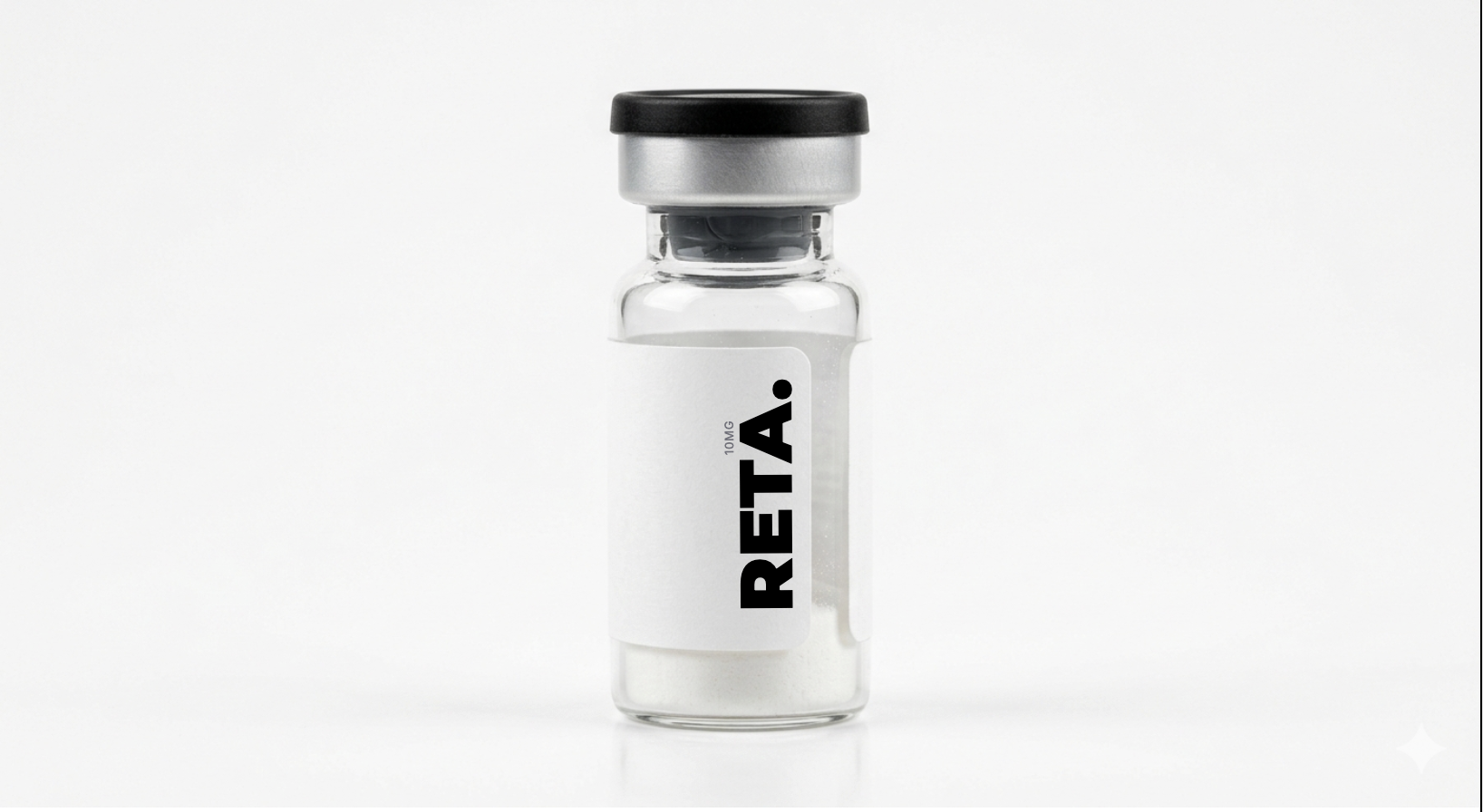
RETA nothing more. nothing less.
Retatrutide (GLP-3) is a synthetic multi-agonist peptide designed to interact with GLP-1, GIP, and glucagon receptor pathways. Studied in research involving triple-incretin signaling and metabolic pathway analysis.
Purity >99.89%Form Lyophilized PowderNo Endotoxins
Notify me when back in stock
For research use only — not for human consumption, therapeutic, or diagnostic use. By adding to cart you acknowledge these terms.
Blank. Credentials
Institutional-grade credentials you can verify
About This Compound
Deep technical insights for clinical research
Synthesis & Purity Overview
Intra-batch variance below 0.15% across peptide potency, multi-receptor binding affinity, and stability testing.
Zero detection of endotoxins, heavy metals, residual solvents, and microbial contaminants per ICH Q3B guidelines.
Chemical Architecture
C₂₃₁H₃₆₀N₅₂O₇₀
4875.42 g/mol
2381089-83-2
39-amino acid synthetic peptide with GIP, GLP-1, and glucagon receptor activation domains
Primary Research Applications
This compound is supplied strictly for in-vitro and preclinical research use only. Primary applications include the areas below.
Achieves significant weight reduction through simultaneous GIP, GLP-1, and glucagon receptor activation in preclinical models.
Reduces liver fat content with superior efficacy versus dual agonists through multi-receptor synergy and enhanced lipolysis.
Research Community Feedback
"Consistency is paramount in our cellular model testing. Blank's peptides have maintained the tightest purity specs of any RUO vendor we've audited."
Dr. Julian Kessler
Lead Investigator, Biomatrix Labs
"The availability of detailed MS and HPLC data on the product page saved us two days of redundant internal verification. Professional grade synthesis."
Anika S. Singh
Synthetics Quality Control
"Finally, a supplier that doesn't hide behind consumer marketing. Stark, clear, and high-purity. Exactly what a modern lab needs."
Prof. David Emmerich
Applied Peptide Research
Peer-Reviewed Literature
Related Studies
Triple–Hormone-Receptor Agonist Retatrutide for Obesity — A Phase 2 Trial
New England Journal of Medicine
Landmark Phase 2 trial demonstrated retatrutide 12 mg achieved 24.2% mean weight loss after 48 weeks — significantly outperforming all existing single and dual agonist therapies.
Retatrutide, a GIP, GLP-1 and Glucagon Receptor Agonist, for People With Type 2 Diabetes: A Phase 2 Trial
The Lancet
Phase 2 trial showed retatrutide achieved 16.9% weight loss with HbA1c improvements of 2.2%, with 82% of participants reaching HbA1c ≤6.5% after 36 weeks.
Triple Hormone Receptor Agonist Retatrutide for Metabolic Dysfunction-Associated Steatotic Liver Disease
Nature Medicine
Phase 2a trial demonstrated retatrutide 12 mg achieved 82.4% mean reduction in liver fat at 24 weeks, with 86% of participants normalizing liver fat levels below 5%.
Retatrutide, a GIP, GLP-1 and Glucagon Receptor Agonist, for People with Type 2 Diabetes: A Randomised, Double-Blind, Placebo and Active-Comparator Controlled, Parallel-Group, Phase 2 Trial
The Lancet
281 T2D patients receiving retatrutide at highest dose achieved HbA1c reduction of 2.02% vs 0.01% placebo, with 100% of patients reaching target HbA1c <7% at 24 weeks.
Retatrutide Phase 2 Obesity Trial: Efficacy and Safety at 48 Weeks
New England Journal of Medicine
Phase 2 trial in 338 adults with obesity showed retatrutide 12 mg produced 24.2% body weight loss at 48 weeks — the highest reported for any anti-obesity pharmacotherapy — with manageable GI side effects.
Glucagon-Based Multi-Agonist Approaches for Metabolic Diseases
Molecular Metabolism
Preclinical characterization of LY3437943 (retatrutide) showing tri-agonism at GIP/GLP-1/glucagon receptors produced superior weight loss, improved hepatic steatosis, and enhanced energy expenditure versus dual agonists.
From the Lab
Related Blog Posts

Apr 13, 2026
About blank. — Premium Research-Grade Peptides
blank. exists for one reason: to give researchers access to the purest peptides on the market — without the noise,…
Feb 16, 2026
Peptide Stacking: Research Protocols, Combinations, and What the Science Says
“Stacking” is borrowed from the bodybuilding lexicon, but the underlying concept — combining compounds with complementary mechanisms — is standar...
Feb 9, 2026
Best Research Peptides in 2026: A Complete Guide by Category
The research peptide landscape in 2026 is broader than it’s ever been. What used to be a handful of compounds…