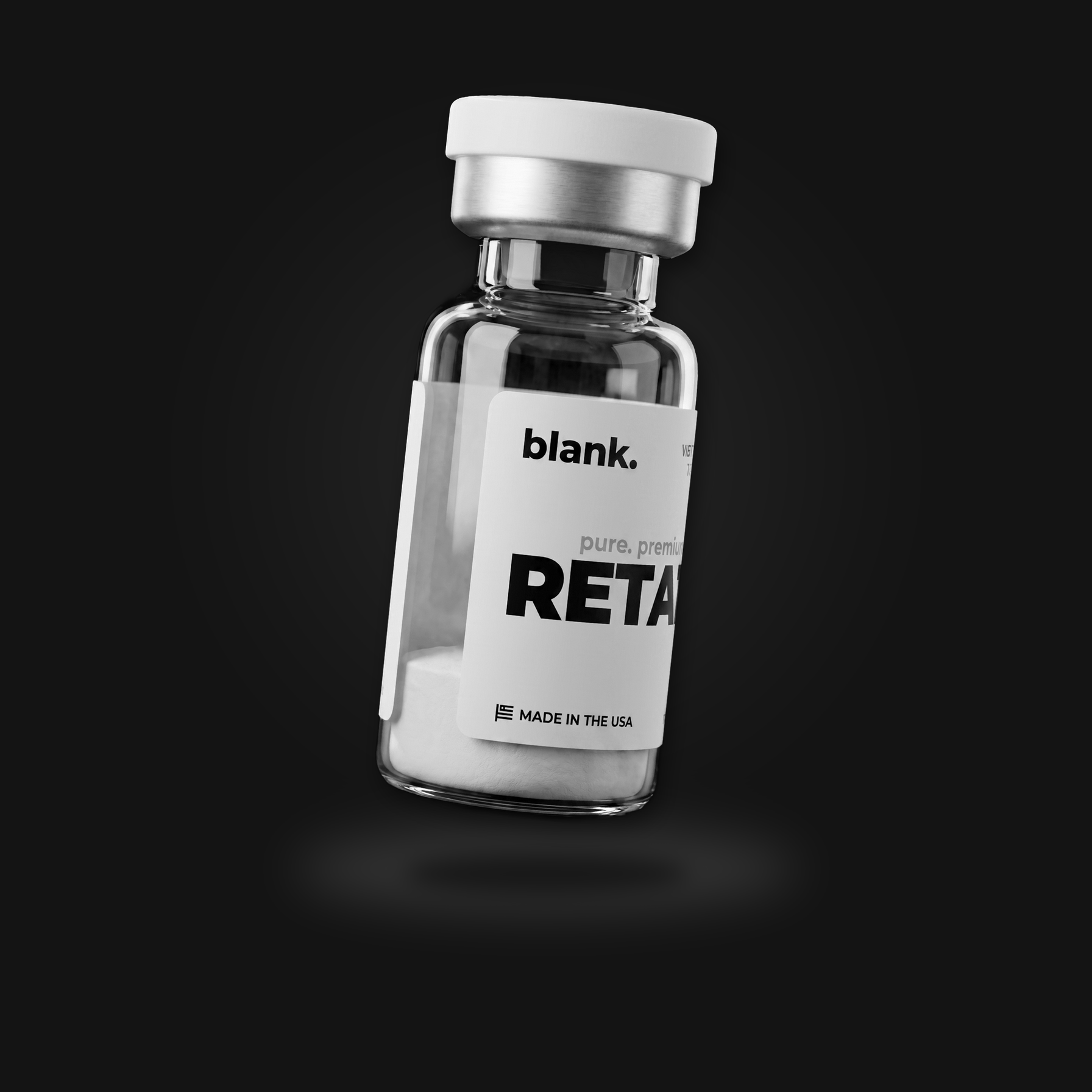
RETATRUTIDE Retatrutide Research Peptide · 10mg / 15mg / 20mg / 30mg
Buy 2, Get 1 Free.
Any 3 vials, any peptide. Cheapest one’s free at checkout. No code.
Retatrutide (GLP-3) is a synthetic multi-agonist peptide designed to interact with GLP-1, GIP, and glucagon receptor pathways. Research covers triple-incretin signaling and metabolic pathway analysis.
Purity >99%Form Lyophilized PowderNo Endotoxins
Notify me when back in stock
Related Products
Peer-Reviewed Literature
Related Studies
Peer-Reviewed Literature
Related Studies
Triple–Hormone-Receptor Agonist Retatrutide for Obesity — A Phase 2 Trial
New England Journal of Medicine
Landmark Phase 2 trial demonstrated retatrutide 12 mg achieved 24.2% mean weight loss after 48 weeks — significantly outperforming all existing single and dual agonist therapies.
Retatrutide, a GIP, GLP-1 and Glucagon Receptor Agonist, for People With Type 2 Diabetes: A Phase 2 Trial
The Lancet
Phase 2 trial showed retatrutide achieved 16.9% weight loss with HbA1c improvements of 2.2%, with 82% of participants reaching HbA1c ≤6.5% after 36 weeks.
Triple Hormone Receptor Agonist Retatrutide for Metabolic Dysfunction-Associated Steatotic Liver Disease
Nature Medicine
Phase 2a trial demonstrated retatrutide 12 mg achieved 82.4% mean reduction in liver fat at 24 weeks, with 86% of participants normalizing liver fat levels below 5%.
Retatrutide, a GIP, GLP-1 and Glucagon Receptor Agonist, for People with Type 2 Diabetes: A Randomised, Double-Blind, Placebo and Active-Comparator Controlled, Parallel-Group, Phase 2 Trial
The Lancet
281 T2D patients receiving retatrutide at highest dose achieved HbA1c reduction of 2.02% vs 0.01% placebo, with 100% of patients reaching target HbA1c <7% at 24 weeks.
Retatrutide Phase 2 Obesity Trial: Efficacy and Safety at 48 Weeks
New England Journal of Medicine
Phase 2 trial in 338 adults with obesity showed retatrutide 12 mg produced 24.2% body weight loss at 48 weeks — the highest reported for any anti-obesity pharmacotherapy — with manageable GI side effects.
Glucagon-Based Multi-Agonist Approaches for Metabolic Diseases
Molecular Metabolism
Preclinical characterization of LY3437943 (retatrutide) showing tri-agonism at GIP/GLP-1/glucagon receptors produced superior weight loss, improved hepatic steatosis, and enhanced energy expenditure versus dual agonists.
RETATRUTIDE FAQ
Where's the best place to buy retatrutide online?
Blank Peptides stocks retatrutide in 10mg, 15mg, 20mg and 30mg vials. The thing worth comparing across vendors is whether the retatrutide for sale carries a lot-matched certificate of analysis you can open before you pay, and whether the seller names the laboratory that ran it. Ours does both, from our cGMP labs in the USA. No prescription process. Processing time is within 1 business day.
What is retatrutide?
Retatrutide is a synthetic triple receptor agonist peptide with activity at the GIP, GLP-1 and glucagon receptors. That third arm is what separates it from the dual and single agonists in the same family. Published pharmacology work has characterised its receptor binding and signalling profile. We supply it strictly as a reference compound for laboratory research.
What purity is your retatrutide, and who verifies it?
Greater than 99%. Identity and purity are established in house by HPLC and mass spectrometry, then an independent sample is analysed by Freedom Diagnostics or Horizon Analytical. Bacterial endotoxin testing is run on every batch before release. The COA Blank Peptides publishes carries the lot number printed on your vial, not a generic sample.
Is retatrutide 10mg, 15mg, 20mg or 30mg the right size?
The peptide is identical across every size; only the mass in the vial changes. Smaller pilot studies typically use the 10mg, and the 15mg is a step up for work that runs a little longer. The 20mg and 30mg options reduce the per-milligram figure and suit extended or multi-arm laboratory work. At our standard reconstitution ratio each size arrives at 10mg/mL, so the concentration maths stays the same.
How do I reconstitute retatrutide?
Follow our catalogue standard of 1mL bacteriostatic water per 10mg with a 3mL ceiling. The 10mg vial takes 1mL, the 20mg takes 2mL and the 30mg takes 3mL, all giving 10mg/mL. Let the water run down the inside of the glass instead of striking the cake, then swirl gently until clear.
How should retatrutide be stored?
Sealed lyophilized vials belong at -20C, dark and dry, and tolerate ambient temperature during shipping. Reconstituted solution goes at 2 to 8C and should be used within a few weeks of laboratory work. Do not freeze and thaw the mixed vial repeatedly. Keep the stopper clean and swab it before each withdrawal.
Retatrutide vs tirzepatide vs semaglutide: how do they differ?
By receptor coverage. Semaglutide is a GLP-1 receptor agonist. Tirzepatide adds GIP receptor activity. Retatrutide adds glucagon receptor activity on top of both. In research terms they are three points on a spectrum of incretin receptor engagement, which is precisely why comparative binding and signalling studies use all three.
How fast do retatrutide orders ship?
Processing time is within 1 business day, shipping from inside the USA in plain outer packaging with nothing on the box identifying the contents. Tracking is emailed at label creation. Lyophilized peptide travels fine at ambient temperature, so no cold pack is required for domestic transit.
Is it legal to buy retatrutide peptide for research?
Yes, as a research chemical. Retatrutide is sold in the United States for laboratory use only, with no prescription required and no restriction on qualified researchers holding it. What it does not have is FDA approval, and it is not a medicine, supplement or veterinary product. Ordering confirms the material stays in a research setting and never reaches human consumption.