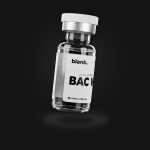
Research Disclaimer
This article reviews published scientific literature for educational purposes only. All compounds referenced are sold by Blank Peptides exclusively for in-vitro research and laboratory use. Nothing in this article constitutes medical advice, a treatment recommendation, or an endorsement of human use.
BPC-157 is a 15-amino acid peptide fragment with a substantial peer-reviewed literature behind it, most of it pointing in genuinely interesting directions. What follows is what that published research shows, set apart from the rumors and testimonials the compound tends to attract.
The Basics: What BPC-157 Actually Is
BPC stands for “body protection compound.” It was discovered in the early 1990s by scientists studying gastric juice. The amino acid sequence: Gly-Glu-Pro-Pro-Pro-Gly-Lys-Pro-Ala-Asp-Asp-Ala-Gly-Leu-Val.
BPC-157 was first identified in stomach acid, and initial research focused on gastric tissue. When researchers introduced BPC-157 to damaged stomach tissue in preclinical models, healing accelerated and blood flow improved. Scientists went on to test it in muscle, tendon, bone, and nervous tissue. Across almost every model tested, the pattern repeated.
The Growth Factor Connection
BPC-157 research has identified several candidate mechanisms. The strongest involve growth factors:
- VEGF upregulation: vascular endothelial growth factor promotes angiogenesis (new blood vessel formation)
- HGF upregulation: hepatocyte growth factor drives tissue repair signaling
- Nitric oxide enhancement: improved NO bioavailability explains localized circulation improvements
- Vascular infrastructure: tissues cannot heal without blood supply, and BPC-157 appears to boost signaling for capillary formation
This is preclinical work, mostly animal models or cell cultures. The consistency across independent labs in different countries is still notable.
Musculoskeletal Research: Tendons, Ligaments, and Bone
A huge chunk of published BPC-157 research focuses on connective tissue, the area with the most papers and the most consistent results.
Tendon and Ligament Repair
- Accelerated healing timelines: tendons are notoriously slow to heal (months to years), so even 20-30% acceleration materially changes recovery
- Consistent results across research groups: multiple independent teams, different protocols, similar findings
- Functional recovery improvements: structural healing plus restored tissue function
Bone Healing
- Accelerated fracture healing: preclinical models show faster callus formation
- Improved bone mineral density, documented in several published studies
- Enhanced vascular invasion: better blood supply to developing new bone at fracture sites
The Nervous System Angle
One of the more intriguing research directions involves BPC-157 and the nervous system:
- Neuroprotection: shields nerve cells from damage in preclinical models
- Nerve regeneration: possible effects, particularly in spinal cord injury models
- BDNF upregulation: emerging research suggests BPC-157 may raise brain-derived neurotrophic factor
- Neuroinflammation modulation: may reduce inflammatory signaling in the central nervous system
Delivery and Bioavailability
Delivery is where much of the practical difficulty sits. Peptides are proteins, and proteins are hard to get into the body intact. Oral administration typically degrades them in the digestive tract.
Research Delivery Methods
- Local injection: near damaged tissue, for the highest local concentration
- Subcutaneous injection: under the skin, broader distribution
- Intramuscular injection: into muscle tissue
- Oral administration: most peptide is likely degraded before reaching circulation, though some gastric research uses this route
Safety Profile: What the Research Shows
Most BPC-157 research is preclinical: cell culture work or animal studies. The preclinical safety profile:
- Doses far exceeding typical use: no major toxicity signals in animal models
- No obvious red flags: consistently clean safety data across studies
- Limited human data: mostly case reports and small observational studies, with no large randomized controlled trials yet
Why Researchers Take BPC-157 Seriously
Despite the uncertainty, BPC-157 gets serious attention from serious researchers. The reasons come down to consistency:
- Cross-tissue consistency: positive findings across tendon, nerve, stomach, muscle, and bone
- Cross-lab consistency: multiple independent research groups, multiple countries, similar results
- Mechanistic logic: growth factor and nitric oxide pathways operate in every tissue
- 180+ PubMed-indexed publications: a substantial and growing evidence base
The next major step: human clinical trials with randomized controlled design, proper dosing studies, and long-term safety data. Those are underway in various countries, but clinical research moves slowly.
Browse These Compounds
Written by Blank Peptides Research Team
Peptide science researchers with 5+ years in US-based peptide manufacturing, independent HPLC and mass spectrometry testing, and research education. All content is reviewed for scientific accuracy before publication.
REVIEWED BY
Dr. Tobias S — PhD Chemist, Peptide and Unnatural Amino Acid Synthesis
Dr. Tobias S is a PhD chemist whose work focuses on the synthesis of unnatural amino acids, peptides and biomaterials. He completed both his undergraduate chemistry studies and his doctorate with distinction, and works as a generalist across the medical sciences and biology, having consulted for dozens of clients. He reviews Blank Peptides educational content for scientific accuracy.
Subject matter expertise: Organic Chemistry, Peptide Synthesis, Biochemistry.