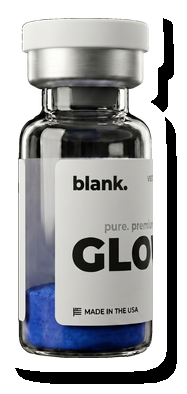
Semax is a synthetic heptapeptide derived from an ACTH(4-10) fragment, developed in Soviet-era research programs and refined through decades of study at Russian neuroscience institutions. Whether it’s legal to acquire in the United States depends on context. For laboratory research, the short answer is yes — is Semax legal for research procurement? It is, and the regulatory reasons are straightforward.
Federal Scheduling Status
The DEA classifies controlled substances under five schedules based on abuse potential, accepted medical use, and physical dependence liability. Semax appears on none of them. It is not a scheduled substance under the Controlled Substances Act (CSA), and no federal statute prohibits acquiring or possessing it for legitimate research purposes.
The FDA has not approved Semax as a drug for human use in the United States. This absence of approval matters in two directions. On one hand, it means Semax cannot be marketed or dispensed as a therapeutic agent. On the other, it means there is no prescription requirement governing its purchase for non-human, non-clinical laboratory investigation. Research compounds that are unscheduled and unapproved occupy a distinct regulatory category — accessible to researchers, but not legally usable on humans or veterinary patients.
This is a consistent pattern across most synthetic peptides in active research use. The regulatory framework catches up slowly to synthetic chemistry; compounds studied in academia for years may never receive a scheduling determination simply because their abuse potential is low and no enforcement pressure exists.
State-Level Considerations
Federal scheduling governs most controlled substance law, but state legislatures can extend restrictions further through analog acts or independent scheduling authority. As of 2026, no US state has independently classified Semax as a controlled substance. Researchers should verify the laws of their specific jurisdiction, since this can change without federal action.
Institutions have another layer to consider: internal procurement protocols. Universities and private research facilities often require researchers to document supplier quality standards, obtain IRB or IACUC approval for animal work, and route purchases through approved vendor lists. These are internal policies, not legal prohibitions, but failure to follow them can create compliance issues within the institution even when the purchase is legally permissible.
What Research-Grade Semax Should Look Like
Regulatory status tells you what you can do. Quality standards tell you whether what you’re ordering is worth doing. A supplier offering research-grade Semax should provide a certificate of analysis with four verifiable data points: HPLC purity at >99%, mass spectrometry confirmation of the correct molecular weight, bacterial endotoxin testing results reported in EU/mL (not just “pass”), and an appearance description consistent with a properly lyophilized peptide — white to off-white powder.
Third-party testing is the differentiating factor. Our Semax is verified by Freedom Diagnostics and Horizon Analytical and manufactured in our cGMP labs in the USA. Purity is confirmed at >99% before any batch ships. Orders process within 1 business day.
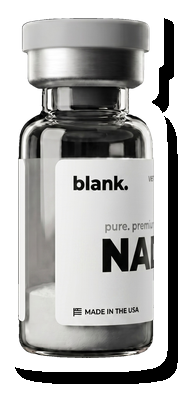
Semax is frequently studied alongside related neuropeptides. Selank, another ACTH-fragment-derived peptide, targets anxiolytic and immunomodulatory pathways in overlapping research contexts. DSIP, the delta sleep-inducing peptide, appears in studies covering neuroendocrine regulation and sleep architecture — a different mechanism but relevant to researchers building out CNS-focused study designs.
Research Framing and Responsible Sourcing
Legal status for research purposes carries specific meaning. Procuring Semax for cell-based assays, receptor binding studies, or animal model work is lawful. Procuring it for human administration is not consistent with its regulatory status — Semax has no approved clinical pathway in the United States, and using it on humans outside of an authorized trial would place both the researcher and the supplier in a difficult legal position.
Vendors who include implied human dosing guidance, testimonials about personal use, or wellness-oriented framing around research peptides are misrepresenting the nature of the product category. A legitimate supplier maintains the research-context distinction consistently across all documentation.
For domestic sourcing, the advantages extend beyond compliance. US-manufactured peptides avoid customs uncertainty, arrive without import delays, and come with batch traceability that international shipments often lack.
FAQ
Does the DEA regulate Semax as a controlled substance?
No. As of 2026, the DEA has not scheduled Semax under the Controlled Substances Act. It is not a controlled substance, and no DEA registration is required to purchase or possess it for laboratory research purposes.
Can research-quantity Semax be imported into the United States?
Research quantities of unscheduled peptides can generally be imported without a DEA permit when the purpose is laboratory investigation. Customs considerations apply to any import, and shipments from overseas suppliers may face delays or scrutiny depending on declared contents and origin. Domestically manufactured Semax avoids this entirely.
Is there a prescription requirement for Semax in the US?
No. Because Semax is neither FDA-approved nor federally scheduled, there is no prescription mechanism governing its acquisition for research. It must not be sold or obtained for administration to humans or animals outside of an approved investigational context.
All products discussed are for laboratory research use only and are not for human or veterinary use.