Finding the best peptide supplier for research work isn’t a price comparison exercise. It’s a documentation and process audit. Most vendors use the same language — “pharmaceutical-grade,” “rigorously tested,” “highest purity” — without specifying what those phrases mean in practice. Here’s what to look for instead.
Synthesis and Sourcing: Where Quality Starts
Research peptides synthesized in cGMP-compliant facilities operate under a defined manufacturing framework. cGMP (Current Good Manufacturing Practice) covers production documentation, equipment calibration, environmental controls, and personnel training. These requirements don’t guarantee a perfect outcome in any single batch, but they signal that a facility treats synthesis as a controlled manufacturing discipline rather than an uncontrolled process.
US-based cGMP labs operate under FDA oversight conditions. Sourcing from domestic production also reduces transit exposure and removes the customs and cold-chain variability that international suppliers introduce.
Testing Standards That Actually Distinguish Suppliers
HPLC (High-Performance Liquid Chromatography) is the baseline analytical method for purity reporting. When paired with mass spectrometry, it also confirms compound identity — not just how pure the sample is, but whether the compound is what the label says. A supplier running HPLC alone gives you a purity number. One running HPLC/MS gives you purity plus identity confirmation.
Separate from purity, bacterial endotoxin testing addresses contamination introduced during synthesis and handling. Endotoxins don’t show in HPLC results but they affect cell culture and animal model outcomes. A supplier that runs bacterial endotoxin testing as standard — and includes the results on the COA — is accounting for research validity beyond the compound’s chemical purity.
Third-party testing is the key differentiator. When Freedom Diagnostics or Horizon Analytical issues a Certificate of Analysis, the result was generated by an independent facility with no stake in a favorable number. In-house testing, where the vendor runs its own analysis, has no external check. Both might show “>99%” — but only one of those numbers has been independently verified.
COA Quality as a Proxy for Supplier Quality
The Certificate of Analysis is the primary document for evaluating any batch of research peptide. A well-structured COA includes a specific batch or lot number, a test date, the testing method (HPLC or HPLC/MS), purity percentage, identity confirmation, and bacterial endotoxin results — issued by a named third-party laboratory.
Generic COAs covering all products or all lots are a meaningful negative signal. If a COA doesn’t correspond to a specific production run, it doesn’t validate that run. For well-sourced research compounds like BPC-157, batch-specific third-party documentation is an established baseline. For compounds like retatrutide, where the vendor landscape is less settled and quality varies more widely, COA specificity matters even more — it’s one of the few objective checks available.
Handling and Auxiliary Supplies
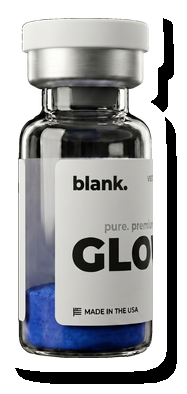
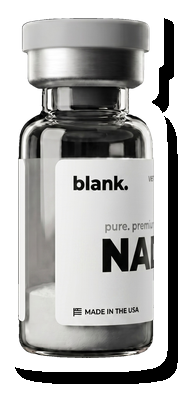
Most research peptides ship as lyophilized (freeze-dried) powder in sealed vials. This format is stable at refrigerator temperatures and more practical for storage than liquid preparations. Proper packaging — sealed vials, adequate thermal protection for temperature-sensitive compounds — reflects how seriously a supplier treats post-synthesis handling.
Reconstitution is standard practice in research settings. Many researchers source bacteriostatic water for this step. A supplier that stocks both peptides and ancillary supplies in the same catalog simplifies sourcing and suggests they understand the full research workflow, not just the compound sale.
Shipping and Order Logistics
Processing time within 1 business day is the standard for suppliers running competent fulfillment operations. It gives researchers a predictable lead time for experiment scheduling. Vague shipping language — “ships fast,” “quick turnaround” without specifics — is worth noting as a possible signal of operational looseness elsewhere.
US-based fulfillment means domestic transit, no customs delays, and known temperature exposure windows. International sourcing introduces variables that domestic suppliers don’t.
Evaluating Price in Context
Price variation between research peptide vendors is real and often meaningful. The lowest price option may reflect cutting steps in testing or sourcing cheaper synthetic inputs. The highest price doesn’t automatically mean better quality either. What’s worth paying for is complete documentation, third-party testing, cGMP synthesis, and domestic production — not just premium presentation.
Vendors whose primary marketing hook is discount pricing tend to select for optimizing margin over testing budgets. The cost of a degraded or failed experiment from a contaminated or misidentified compound exceeds any savings on the vial by a substantial margin.
FAQ
What does “research grade” mean for peptides?
There’s no regulatory definition that makes “research grade” a precise standard. In practice, it means a compound synthesized for laboratory use at stated purity levels with supporting documentation. Quality within that category varies widely. The testing documentation and synthesis standard are what distinguish a well-supported product from an unsupported claim.
How do I verify that a supplier’s COA is authentic?
Check that the COA names a verifiable, independent testing facility, matches a specific batch or lot number, and carries a clear test date. If Freedom Diagnostics or Horizon Analytical appears as the issuing lab, their involvement is independently identifiable. COAs with no lab name, no batch reference, or no test date aren’t verifiable and shouldn’t be treated as confirmation of anything.
Is it worth ordering from multiple suppliers to compare quality?
For critical or long-running experiments, yes. Running identical assays with compounds from two suppliers produces empirical data on quality consistency that COA comparison alone can’t deliver. It adds cost but answers a question that documentation can only address indirectly — especially for compounds where supply-chain quality among vendors varies.
All products discussed are for laboratory research use only and are not for human or veterinary use.