The frustrating part of choosing a peptide supplier is that the sites give you plenty to read and very little to check. Purity figures appear in large type with no method attached. “Accredited labs” shows up as a badge rather than a name. Certificates are referenced, sometimes linked, occasionally locked behind an account, and it’s rarely obvious which situation you’re in until you’ve clicked through three pages.
I’ve stopped trying to form an overall impression of a vendor, because an overall impression is mostly a reaction to typography. What I do instead is answer five specific questions per site and write the answers in a document. Who says they made it, and which laboratory tested it. How many assays are actually printed on the certificate, and whether I can read that certificate before paying. Whether a blend listing states the milligrams of each peptide. Five answers, and two vendors that looked identical stop looking identical.
Below, that exercise applied to Biotech Peptides and Amino Science Labs, using only what each site publicly stated on the pages reviewed 2026-09-08. I’ve no commercial connection to either company and I’m not steering you anywhere. They differ more than their homepages suggest, and one of them does something with its certificates that I wish more vendors copied.
Key takeaways
- The comparison worth making is documentation a buyer can open before purchase: provenance language, a named laboratory, panel scope, certificate timing, and blend composition per component.
- Biotech Peptides states its peptides are domestically synthesised by its own US-based team, verified by HPLC-MS to >99% purity, with lot-numbered certificates on product pages and 89 products listed.
- Amino Science Labs states it “is a chemical supplier and not a compounding pharmacy,” lists 41 products, and publishes a fully open certificate index of 33 batch-numbered documents hosted on a testing service’s own domain.
- On the pages reviewed 2026-09-08, Amino Science Labs listed HPLC only among its methods, neither vendor named a laboratory in site prose, and neither stated milligrams per blend component.
- Everything referenced here is a research-use-only material for in-vitro laboratory work by qualified professionals.
Which five checks separate two peptide vendors?
Here’s the rubric, applied to nobody in particular yet. Five checks you can run from a browser.
Provenance is first, and the useful move is reading verbs rather than atmosphere. “We synthesise, purify and lyophilise” is a claim about production. “We are a chemical supplier” is a claim about a commercial role, and it’s a more modest and arguably more precise thing to say. Neither phrasing is a red flag on its own. They describe different businesses, and knowing which one you’re dealing with changes what questions you should be asking next.
Second is whether a laboratory has a name. Independent testing means very little if the independent party stays anonymous, because a name is the only thing that lets you check accreditation, scope, and whether a certificate matches what that lab actually issues. Look for the name in the site copy, on the certificate itself, and occasionally in the address the certificate is served from, since some vendors host documents on the testing service’s own infrastructure.
Third is panel scope. Purity by HPLC answers one question and identity by mass spectrometry answers a different one. Bacterial endotoxin and sterility are two more assays again. A site listing HPLC alone has told you about purity and nothing about whether the molecule is the one on the label, which is a distinction that gets glossed over constantly.
Fourth is timing and access. Can you read a certificate before you check out, and can you do it without creating an account? A public index that anyone can browse is the strongest version of this, and it’s rarer than you’d hope.
Fifth is blend composition. Milligrams per peptide, or you’re guessing at the ratio in a multi-peptide vial. Ask, and file the answer.
Company age and domain age are off the list on purpose, because neither describes the material.
The standard this comparison is measured against
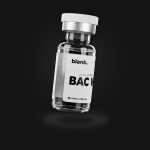
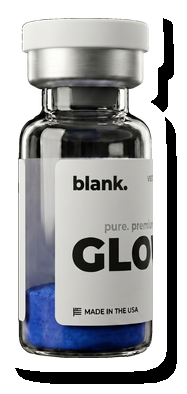
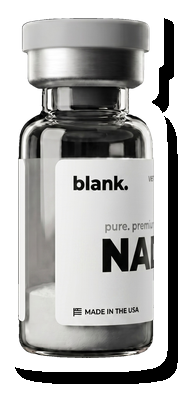
For clarity about where the bar comes from: these five checks are the ones Blank Peptides publishes its own production lots against, with per-lot batch certificates of analysis covering identity, purity, bacterial endotoxin and sterility. Blank Peptides is not a party to this comparison and isn’t being suggested as an alternative to either vendor. It’s referenced only so the rubric reads as a standard somebody meets rather than an invented one.
What Biotech Peptides and Amino Science Labs publicly state
All of the following is drawn from each company’s own pages, reviewed 2026-09-08, and reported as what those pages state.
Biotech Peptides states on its homepage that “peptides are domestically synthesized, backed by our knowledgeable US-based team,” and its about page states that “based in the United States, our team specializes in the precise synthesis and lyophilization of these delicate structures.” On testing, the homepage states that “our production is verified by HPLC-MS to confirm >99% purity” and that “every batch is verified by a third-party lab, with results posted on our website,” with the about page listing methods as “HPLC (High-Performance Liquid Chromatography), Mass Spectrometry, and Certificate of Analysis (COA) evaluations.” No laboratory was named in site prose on the pages reviewed 2026-09-08, though the certificate linked from the 70mg blend page (lot 3141011, dated 2026-07-26) is issued by MZ Biolabs and reports HPLC-UV purity of 99.56% with mass spectrometry identity confirmation. Certificates are linked on product pages before purchase with lot numbers in the filenames. The catalog page shows 89 products including at least eight blends, more than twice the Amino Science Labs listing count, and blend pages state total content without per-component milligrams. No endotoxin or sterility results appeared on any page or certificate reviewed 2026-09-08. Shipping terms state orders “must be placed by 1 pm PST” for same-day dispatch and that returns are not accepted.
Amino Science Labs states on its homepage that “Amino Science Labs LLC is a chemical supplier and not a compounding pharmacy,” and no statement about synthesising or manufacturing the material appeared on the pages reviewed 2026-09-08. On testing, the site describes products as “HPLC Verified,” “U.S. Lab Tested” and tested by “accredited labs,” with its certificate page stating that “every batch is independently tested by accredited U.S. laboratories. Download the full COA for any product below.” Mass spectrometry, endotoxin and sterility were not listed among the methods on the pages reviewed 2026-09-08. Purity is stated as “99%+ purity” across product listings, though a MOTS-c listing stated “98%+ purity,” so the threshold varies by product and is worth reading per item. The certificate page is the company’s strongest asset: 33 batch-numbered certificates were listed with individual download links, viewable by anyone without an account, and the documents themselves are served from a domain belonging to a third-party testing service, Freedom Diagnostics Testing, rather than from the vendor’s own storage. Hosting certificates on the testing service’s infrastructure is a small structural detail with real value, since it makes the documents harder for a vendor to edit after the fact, and very few vendors in this segment do it. The catalog lists 41 products, and the blends shown, including a 70mg GLOW blend, an 80mg KLOW, a BPC-157 and TB-500 blend and a CJC-1295 with ipamorelin blend, did not state milligrams per component. Shipping terms state “fast US shipping with tracking” and “same-day ship before 5PM CT.”
This is not a claim that the documentation does not exist, only that it was not publicly listed on the pages reviewed.
Side by side: provenance, panel scope, and certificate access
| Attribute | Biotech Peptides | Amino Science Labs |
|---|---|---|
| Synthesises in-house | States peptides are “domestically synthesized” by its own US-based team — verify | States it “is a chemical supplier and not a compounding pharmacy”; no synthesis claim on pages reviewed 2026-09-08 — verify |
| Third-party lab named | Not named in site prose; MZ Biolabs appears on a linked COA — verify | Not named in site prose; certificates are served from a Freedom Diagnostics Testing domain — verify |
| HPLC purity | States HPLC-MS confirms >99% purity; 99.56% on the COA examined | States “HPLC Verified” and 99%+ purity, with 98%+ stated on at least one listing — verify |
| MS identity | States mass spectrometry is used; MS identity shown on the COA examined | Not listed among methods on the pages reviewed 2026-09-08 — verify |
| Endotoxin and sterility | Not listed on the pages or COA reviewed 2026-09-08 — verify | Not listed on the pages reviewed 2026-09-08 — verify |
| Batch COA before purchase | Lot-numbered certificates linked on product pages before purchase | Open certificate index of 33 batch-numbered documents, downloadable without an account |
| Blend mg split disclosed | Not stated on the blend page reviewed 2026-09-08; peak-area percentages on COA — verify | Not stated for any blend reviewed 2026-09-08 — verify |
| Catalog size | States 89 products including at least eight blends | 41 products listed on the pages reviewed 2026-09-08 |
| Research-use labelling | States research, laboratory or analytical purposes only; 21+ researchers | States products are “sold strictly for in-vitro research and laboratory use only” |
Honestly assessed, Amino Science Labs wins the access row outright. An open certificate index that needs no account, with documents hosted on the testing service rather than the vendor, is better practice than most of this market manages. Biotech Peptides is ahead on stated panel scope, since mass spectrometry for identity appears in its methods and didn’t appear in Amino Science Labs’, and it carries the larger catalog and a clearer statement about who makes the material. Neither states a blend split, and neither publishes endotoxin or sterility data.
How to verify either supplier yourself
- Check where a certificate is actually hosted by looking at the address it loads from. A document served by the testing service rather than the vendor is a harder document to quietly revise, and that’s worth knowing either way.
- Read the certificate header for an issuing laboratory, a lot number, a test date, and each method sitting beside its result. Purity alone tells you the sample is pure without telling you what it is.
- Confirm the purity threshold on the specific product you’re buying rather than the site-wide figure, since thresholds sometimes vary by compound and the listing is where the real number lives.
- Ask for milligrams per component on any blend, in writing, and keep the reply with your lab records alongside the certificate.
- Take both vendors through the supplier verification checklist and repeat the exercise whenever either site changes how it publishes documentation.
Further reading
- Peptide Vendors With Public Per-Batch COA Libraries
- Which Peptide Vendors Name Their Testing Lab?
- Who Actually Manufactures Research Peptides in the USA?
- Which Peptide Vendors Disclose Blend Composition?
Frequently asked questions
How do Biotech Peptides vs Amino Science Labs compare on documentation?
Amino Science Labs publishes an open index of 33 batch-numbered certificates that anyone can download without an account, served from a third-party testing service’s domain. Biotech Peptides links lot-numbered certificates on individual product pages and states mass spectrometry among its methods, which Amino Science Labs did not list on the pages reviewed 2026-09-08.
Does Amino Science Labs say it makes its own peptides?
No such statement appeared on the pages reviewed 2026-09-08. The site states that “Amino Science Labs LLC is a chemical supplier and not a compounding pharmacy,” which describes a commercial role rather than a production process. That’s a narrower and more careful claim than many vendors make, and it leaves the question of who synthesises the material open for you to ask directly.
Does either vendor name its testing laboratory?
Neither names one in site prose on the pages reviewed 2026-09-08. Amino Science Labs’ certificate files are served from a domain belonging to Freedom Diagnostics Testing, which points at the issuer. Biotech Peptides refers to “a third-party lab,” and MZ Biolabs appears on a certificate linked from one of its product pages. In both cases the document carries the name the copy leaves out.
Which one lists more tests?
Biotech Peptides, on the pages reviewed 2026-09-08. It states HPLC and mass spectrometry, giving purity and identity. Amino Science Labs listed HPLC only among its stated methods, so identity confirmation wasn’t described on the site itself. Neither vendor listed bacterial endotoxin or sterility, so both panels stop short of the four assays the rubric asks for.
Are these products for human use?
No. Both companies label their products for laboratory research. Biotech Peptides states products are sold “for research, laboratory, or analytical purposes only, and are not for human consumption,” and Amino Science Labs states products are “sold strictly for in-vitro research and laboratory use only. Not for human consumption.” Nothing in this article is dosing, clinical or therapeutic guidance.
For research use only. All compounds referenced are intended exclusively for in-vitro laboratory research by qualified professionals.
Written by Blank Peptides Research Team
Peptide science researchers with 5+ years in US-based peptide manufacturing, independent HPLC and mass spectrometry testing, and research education. All content is reviewed for scientific accuracy before publication.
REVIEWED BY
Dr. Tobias S — PhD Chemist, Peptide and Unnatural Amino Acid Synthesis
Dr. Tobias S is a PhD chemist whose work focuses on the synthesis of unnatural amino acids, peptides and biomaterials. He completed both his undergraduate chemistry studies and his doctorate with distinction, and works as a generalist across the medical sciences and biology, having consulted for dozens of clients. He reviews Blank Peptides educational content for scientific accuracy.
Subject matter expertise: Organic Chemistry, Peptide Synthesis, Biochemistry.