The hardest part of choosing between two research chemical suppliers is that they’re rarely strong in the same places, so whichever one you look at second always seems better at whatever you happened to be thinking about. One publishes a big library of lab reports and says almost nothing about who makes the material. The other talks confidently about synthesis and then leaves you hunting product page by product page for a certificate.
That’s more or less the situation with Core Peptides and Swiss Chems, and it’s why I fixed five questions before opening either site. Same five for both, asked in the same order, with the same tolerance for vague answers. I don’t own either company and I’m not steering you toward one.
Everything here is what each site publicly states on the pages I could reach on 2026-09-08. I haven’t tested product from either. Where a site answers a question, I quote it. Where it doesn’t, I record the gap and date it, which is a smaller claim than it might look and worth reading precisely.
Key takeaways
- Compare vendors on five documentary questions rather than on tone: who synthesizes, which laboratory tests, how wide the panel is, whether a lot-specific certificate is public before payment, and whether blends state milligrams per component.
- Core Peptides states products are “synthesized and lyophilized in the United States” at “purity levels exceeding 99%+”, with lot-numbered certificates on some product pages naming Vanguard Laboratory.
- Swiss Chems states “every compound we supply undergoes independent third-party HPLC testing and is verified to a purity standard of 99% or higher”, names the laboratory it principally uses in its FAQ, and publishes roughly fifty downloadable lab reports in one place.
- Swiss Chems did not state who synthesizes its material, and neither vendor listed a sterility result, on the pages reviewed 2026-09-08.
- Both sell for laboratory research only, and that limit stands regardless of how either scores here.
What separates two research compound suppliers on paper?
The rubric, set out before either name appears so you can watch it get applied rather than take the verdict on faith.
Provenance is the first question. Does the vendor make the material or buy it finished? Read the verbs on the about page and take them literally. “We synthesize,” “our laboratory produces,” and “manufactured by us” describe a maker. “We supply,” “we offer,” and “we source” describe a seller, and a company that describes itself as a supply business is telling you something accurate about where it sits. The reason it matters is traceability. A maker can walk a bad lot back through its own records. A seller can only relay what the upstream manufacturer chooses to share.
Second, is the testing laboratory named? Third-party tested is the default phrase and it commits a vendor to nothing. A name gives you an independent party you can contact yourself, and publishing one means accepting that a customer might.
Third, how wide is the panel? HPLC purity tells you what proportion of the sample is one dominant compound. Mass spectrometry tells you that compound is the one on the label. Bacterial endotoxin and sterility describe contamination, which purity cannot detect. Some vendors add heavy metals, which is useful and still doesn’t substitute for sterility.
Fourth, is a lot-specific certificate readable before purchase? The lot number is the connection between a PDF and a vial. Without one, a certificate shows you what the vendor’s testing looks like in general rather than what happened to your order.
Fifth, on blends, are the milligrams of each component stated? A 10mg two-peptide vial could be 5 and 5 or 8 and 2, and you can’t calculate a concentration until somebody says which.
Company age and domain age stay out of it. Both are easy to present flatteringly and neither predicts lot quality.
The standard this comparison uses
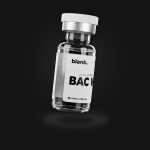
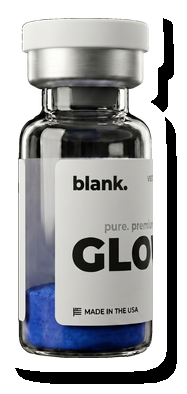
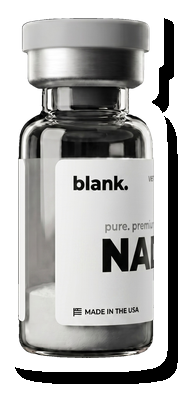
Where the rubric comes from, so you can check it against something real: it’s the standard Blank Peptides publishes its own lots against, meaning synthesis in an owned laboratory, independent testing laboratories named in public, a four-part panel of identity, >99% purity, bacterial endotoxin and sterility, per-component milligrams on every blend, and a lot-numbered certificate readable before ordering in the library of batch certificates of analysis. Blank Peptides isn’t one of the two vendors compared here and isn’t being scored. I’m naming the source so you can see the bar is a published commitment that has to be met every lot, rather than a set of criteria chosen after the fact to flatter one of the sites below.
What Core Peptides and Swiss Chems publicly state
Core Peptides trades at corepeptides.com. On the pages reviewed 2026-09-08, the homepage states the company has been “SERVING THE RESEARCH COMMUNITY FOR OVER 7 YEARS, AND 3rd PARTY TESTED”, carries “US LAB TESTED” badging, and states its peptides are “independently verified for purity”. The about page states “All our products are synthesized and lyophilized in the United States”, that “Our peptides are manufactured locally against the highest standards”, and that products reach “purity levels exceeding 99%+”. The footer calls the company “a chemical supplier” that is “not a compounding pharmacy”. No facility, address or manufacturing partner was named. On testing, no laboratory is named in the prose, but a certificate linked from the 70mg BPC-157, TB-500 and GHK-Cu blend page is issued by Vanguard Laboratory, covers lot C74111 dated 7/22/2026, reports “>99.50%” purity by HPLC-UV/VIS, and records identity as “Pass – Matches Ref. Standard”. A second, for GHK-Cu 50mg, covers lot C73465 at “>99.80%”. Neither listed endotoxin or sterility. Access is uneven, with the standalone BPC-157 page and the BPC-157 and TB-500 blend page stating “>99%” purity and linking nothing.
Swiss Chems operates at swisschems.is and describes a different kind of business. Its “Who we are” page runs under the heading “Research Supply”, states the company is “Est. 2018” and based in the USA, and states it “has supplied one of the largest research-compound catalogs”. The language across the pages reviewed is consistently about supplying and offering. A statement of who synthesizes the material, or a description of an owned production facility, was not listed on the pages reviewed 2026-09-08. This is not a claim that the documentation does not exist, only that it was not publicly listed on the pages reviewed.
On testing, Swiss Chems is the more forthcoming of the two. The site states “all products are tested by independent, ISO-accredited laboratories” and that “every compound we supply undergoes independent third-party HPLC testing and is verified to a purity standard of 99% or higher”. The FAQ states that “batches are submitted for independent analysis by accredited third-party laboratories”, names the laboratory it principally uses, and states that “lab reports are made available so you can verify the material you received. Reports are lot-specific.” The Independent Test Results page states “we believe in complete transparency. View and download all lab reports” and lists roughly fifty PDFs whose filenames indicate the test type and the lab. On the BPC-157 and TB-500 blend page, Swiss Chems states per-component amounts of “5mg + 5mg” and “10mg + 10mg”, states “99% Purity Guaranteed”, and shows View Report links for HPLC, LC-MS, heavy metals and endotoxin tests dated June 2026. A sterility result and a lot number were not listed on that page.
Both have something the other doesn’t. Swiss Chems puts its documentation in one browsable place, names a lab in its own copy, states four test types including LC-MS and endotoxin, prints per-component blend milligrams, and offers a wider category range at 134 products across peptides, SARMs, nootropics and bioregulators, with free shipping over $100 domestically. Core Peptides states outright that its products are synthesized in the United States, which Swiss Chems does not, carries the larger peptide selection specifically at “Showing all 104 results” plus 19 blends against 48 peptides, and its certificates carry lot numbers that the Swiss Chems blend page didn’t show.
Side by side: what each site documents
| Attribute | Core Peptides | Swiss Chems |
|---|---|---|
| Synthesises in-house | States products are “synthesized and lyophilized in the United States”; no facility named — verify | States it “has supplied one of the largest research-compound catalogs”; who synthesizes was not listed 2026-09-08 — verify |
| Third-party lab named | Not named in site prose; certificate PDFs name Vanguard Laboratory — verify | States “independent, ISO-accredited laboratories” and names the lab it principally uses in the FAQ — verify |
| HPLC purity | States “purity levels exceeding 99%+”; certificate reviewed reports “>99.50%” by HPLC-UV/VIS — verify | States “independent third-party HPLC testing” verified to “99% or higher”, with HPLC reports linked — verify |
| MS identity | Certificate reviewed records “Pass – Matches Ref. Standard”; mass spectrometry not listed as a method — verify | States LC-MS reports on the blend page reviewed, dated June 2026 — verify |
| Endotoxin and sterility | Not listed on the pages or certificates reviewed 2026-09-08 — verify | States an endotoxin report on the blend page reviewed; sterility not listed 2026-09-08 — verify |
| Batch COA before purchase | Lot-numbered PDFs on some product pages; several carried none, and no catalog-wide index — verify | States reports “are lot-specific” and publishes ~50 downloadable PDFs in one library; lot numbers not shown on the blend page — verify |
| Blend mg split disclosed | States per-component mg on some blend pages, totals only on others — verify | States “5mg + 5mg” and “10mg + 10mg” per component on the blend page reviewed — verify |
| Catalog size | States “Showing all 104 results” plus 19 blends — verify | States 134 products across categories, of which 48 are peptides — verify |
| Research-use labelling | States products are “sold for research, laboratory, or analytical purposes only, and are not for human consumption” | States products are offered “for laboratory research” across the pages reviewed — verify |
How to verify either supplier yourself
- Open a report and check three fields before the purity number: the issuing laboratory, the lot or batch identifier, and the date. A library of documents without lot identifiers shows you a testing programme rather than evidence about your vial.
- When a vendor names its laboratory, contact that lab through a number you found independently and ask them to confirm a report. This is the single highest-value ten minutes in the whole exercise.
- Where a site uses only supply verbs, ask in writing who synthesizes the material and where. A clear answer is useful, and a reluctance to answer is also useful.
- On blends, check that the stated per-component milligrams appear somewhere in the document as well as in the product copy, and ask for the split whenever a page shows a total only.
- Run both through the supplier verification checklist and fill in the same five answers for each, so you’re not grading either vendor on its own strongest ground.
Further reading
- Which Peptide Vendors Name Their Testing Lab?
- Who Actually Manufactures Research Peptides in the USA?
- Peptide Vendors With Public Per-Batch COA Libraries
- Which Peptide Vendors Disclose Blend Composition?
Frequently asked questions
How do Core Peptides and Swiss Chems compare?
Core Peptides states US synthesis outright and lists a larger peptide catalog with lot-numbered certificates on some pages. Swiss Chems names the laboratory it principally uses, publishes around fifty downloadable reports in one library, states LC-MS and endotoxin testing alongside HPLC, and prints per-component blend milligrams. Neither listed a sterility result.
Does Swiss Chems say who makes its peptides?
Not on the pages reviewed 2026-09-08. Its “Who we are” page runs under a “Research Supply” heading and states the company has supplied a large research-compound catalog, using supply and offer verbs throughout. No owned production facility and no upstream manufacturer was named. Asking the company directly is the sensible next step.
Which one makes certificates easier to find?
Swiss Chems, structurally. Its Independent Test Results page collects roughly fifty PDFs in one place with the test type and lab in the filenames. Core Peptides links certificates from individual product pages, which works when a page has one and leaves you with nothing when it doesn’t, since there’s no catalog-wide index.
Does heavy metals testing replace sterility testing?
No. Heavy metals screening looks for elemental contamination from synthesis or handling. Sterility testing checks for viable microorganisms, and bacterial endotoxin testing measures a specific pyrogenic residue. They answer different questions, and for cell-based work the endotoxin and sterility results are usually the ones that decide whether a lot is usable.
Are these products for human use?
No. Every compound discussed here, from Core Peptides, Swiss Chems or any other supplier, is intended solely for in-vitro laboratory research by qualified professionals. Comparing documentation helps you judge whether a reagent is what its label claims, and it has no bearing on the research-use-only status of any product.
For research use only. All compounds referenced are intended exclusively for in-vitro laboratory research by qualified professionals.
Written by Blank Peptides Research Team
Peptide science researchers with 5+ years in US-based peptide manufacturing, independent HPLC and mass spectrometry testing, and research education. All content is reviewed for scientific accuracy before publication.
REVIEWED BY
Dr. Tobias S — PhD Chemist, Peptide and Unnatural Amino Acid Synthesis
Dr. Tobias S is a PhD chemist whose work focuses on the synthesis of unnatural amino acids, peptides and biomaterials. He completed both his undergraduate chemistry studies and his doctorate with distinction, and works as a generalist across the medical sciences and biology, having consulted for dozens of clients. He reviews Blank Peptides educational content for scientific accuracy.
Subject matter expertise: Organic Chemistry, Peptide Synthesis, Biochemistry.