Most vendor comparisons in this market get written from the wrong end. Somebody decides which site feels more professional, then goes looking for reasons. What you actually need is a fixed list of questions asked in the same order of both companies, so the answer comes out of the evidence rather than out of the layout.
I write for Blank Peptides, and neither Pure Rawz nor Amino Science Labs is us. That’s the point of the exercise here, since a comparison is worth more from someone with nothing riding on the result. I’ll set five questions in advance, put them to both companies, and record what each publicly stated on 2026-09-08. Where a company answers a row its rival leaves open, I’ll say so, and where either one does something the wider market doesn’t, that gets named as a strength.
The scope is worth being blunt about. This is a reading of published pages, nothing more. I haven’t ordered from either company, no material was analysed for this piece, and a missing document tells you about a website rather than about the contents of a vial.
Key takeaways
- Two unfamiliar vendors compare best on pre-purchase evidence: synthesis versus sourcing, whether the testing laboratory is named, how many assays run per batch, whether certificates are lot-keyed and openly readable, and whether blends state milligrams per component.
- These five rows are the specification Blank Peptides publishes its own lot certificates against, named openly so the standard can be judged rather than taken on trust.
- Pure Rawz (purerawz.co) states that “Purerawz does not sell products directly” and that “We do not manufacture, stock, package, ship, or fulfill orders for the products discussed on this website”, describing itself as “an informational and affiliate website”.
- Amino Science Labs states “Every batch is independently tested by accredited U.S. laboratories” and its certificates page invited visitors to “Download the full COA for any product below”, listing 33 certificates with no account required; neither company named a laboratory in site prose on the pages reviewed 2026-09-08.
- Compounds discussed in connection with either site are intended for in-vitro laboratory research by qualified professionals, with no bearing on human or animal use.
What has to be on the page before you can check anything?
The rubric gets fixed before either company is examined, because criteria written afterward tend to shape themselves around whichever site you’d already half decided on.
Provenance is row one. Does the company say it makes the peptide, or does it describe getting finished material from elsewhere? Read the verbs on the about page and ignore the adjectives on the homepage. Production language sounds like “we synthesize” and “our facility”; distribution language sounds like “we work with” and “sourced from”. Both are honest ways to operate, and the reason to know which applies is that it identifies who could actually answer a question about a failed lot.
Second, is the laboratory named? Independent testing gets claimed nearly everywhere and attributed almost nowhere. A name is what makes a claim checkable without the vendor’s cooperation, and that’s exactly why publishing one is rarer than it should be.
Third, how much of the panel runs? HPLC purity measures the fraction of sample under the main peak. Mass spectrometry confirms identity by molecular mass. Endotoxin covers bacterial breakdown products and sterility covers viable growth. Purity on its own is a common and legitimate thing to report, provided nobody sells it as a complete analytical record.
Fourth, can a certificate be read before payment, and does it carry a lot number that will also appear on the vial? Without that link, you’re reading a document about material that may not be yours.
Fifth, do blends state milligrams per component? A blend described only by total weight can’t be reconstituted to a known concentration for any single compound in it. Company age stays out of the rubric, since it says nothing measurable about a batch.
The standard used in this comparison
These rows are the specification Blank Peptides publishes its own lot certificates against, in a public library of batch certificates of analysis. Naming the source seems only fair, since a yardstick means more when whoever wrote it already submits to it, and anyone writing from inside a market should say where their criteria came from. That’s the whole of the connection, and everything after this belongs to Pure Rawz and Amino Science Labs.
What Pure Rawz publicly states
Pure Rawz runs purerawz.co, and its most valuable page is the one most companies in this market would never publish.
The about page describes “an independent online resource created to make information about peptides, supplements, nootropics, research compounds, and other emerging products easier to understand”, and then removes any ambiguity: “Purerawz does not sell products directly”, followed by “We do not manufacture, stock, package, ship, or fulfill orders for the products discussed on this website.” The same page states “Purerawz is an informational and affiliate website. We do not sell or directly supply the products featured on this website”, and that the company “may participate in affiliate marketing programs”, receiving “a commission at no additional cost to you” when a reader buys through a third-party link. The terms page restates it and adds that “Where a product page contains a purchase link, that link may direct you to a third-party website.”
The provenance row therefore resolves by the company placing itself outside the chain of custody. Every question about manufacturing and testing passes through to whichever seller a link resolves to, which is a legitimate answer even though it isn’t the one the rubric was designed to catch.
Testing copy from an earlier version of the site is still visible. The homepage states “Third-party testing is performed by an outside lab” and “We go beyond in-house quality checks and verify each batch with rigorous testing for purity, potency, and consistency”, with product figures such as “99.9% Pure” and “99% Pure”. No laboratory was named on the pages reviewed 2026-09-08, and mass spectrometry, bacterial endotoxin and sterility results were not listed. The legacy certificate index is still carried in search results but returned a 404 on the review date, and the peptide blends category returned a maintenance notice reading “We are doing some work on our site.” One legacy certificate PDF remained reachable, carrying lot PRWZ-083 against a 2023 test date, so lot-keyed documents have existed even though no current library opened. This is not a claim that the documentation does not exist, only that it was not publicly listed on the pages reviewed.
The concession goes to the candour of that disclosure and to breadth of coverage. Saying outright that you don’t manufacture, stock, package, ship or fulfil is worth more to a reader than the fuzzy “our facility” language that saturates this market, and it calibrates expectations in a single sentence. The subject range, running across peptides, supplements, nootropics and other research compounds, also covers wider ground than most single-vendor catalogs.
What Amino Science Labs publicly states
Amino Science Labs trades at aminoscience.io, and its documentation strength sits almost entirely in one place, which happens to be the place that’s hardest to fake.
On provenance, the site describes itself as “a chemical supplier”. A statement naming who synthesizes the peptides, or describing a facility the company operates, was not listed on the pages reviewed 2026-09-08. The site does display “U.S. Lab Tested” and “Accredited Labs” markers, which speak to testing rather than to manufacturing, so this row stays open.
On testing, the homepage states “Premium quality research peptides with 99%+ purity”, product listings state “Purity>99%”, and the site displays “HPLC Verified” as a quality marker. The certificates page states that “Every batch is independently tested by accredited U.S. laboratories.” Mass spectrometry, bacterial endotoxin and sterility results were not listed in the site copy on the pages reviewed 2026-09-08, and no laboratory was named in prose.
On certificate access, Amino Science Labs earns the clearest concession in this comparison and I’ll give it without hedging. The certificates page states “Download the full COA for any product below” and listed 33 downloadable certificates on the review date, with no account, no request and no purchase required. The PDF files themselves are hosted at coas.freedomdiagnosticstesting.com, which means the issuing testing provider is identifiable from the certificate’s own web address even though the site copy stops short of naming a laboratory in words. Open, ungated, per-compound certificate access beats what a large share of this market offers, and pointing the files at the testing provider’s own domain is a stronger arrangement than self-hosted PDFs.
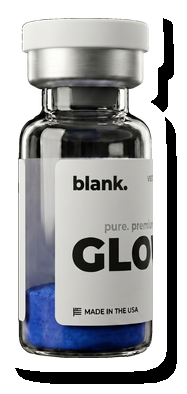
Two honest limits belong alongside that. The page states “Don’t see your product? Contact us for batch-specific COA requests”, which suggests coverage isn’t complete across every batch. And the certificates are organised by product and dosage rather than presented as a lot-number lookup, so matching a particular vial to its document is a step you’d want to confirm with the company. On catalog and blends, a total count was not stated on the pages reviewed. A Glow Blend at 70 mg is listed, with the milligram amount of each component not listed on the pages reviewed 2026-09-08. Shipping is stated as same-day dispatch before 5PM CT with US tracking.
Side by side: certificate access and manufacturing statements
| Attribute | Pure Rawz | Amino Science Labs |
|---|---|---|
| Synthesises in-house | States “We do not manufacture, stock, package, ship, or fulfill orders for the products discussed on this website” | Describes itself as “a chemical supplier”; synthesis not addressed on pages reviewed 2026-09-08 — verify |
| Third-party lab named | Legacy copy states testing “by an outside lab”; no name listed on pages reviewed 2026-09-08 — verify | Not named in site prose; certificate PDFs are hosted on a testing provider’s own domain — verify |
| HPLC purity | States per-product figures such as “99.9% Pure”; method not attached — verify | States “99%+ purity” and displays an “HPLC Verified” marker |
| MS identity | Not listed on pages reviewed 2026-09-08 — verify | Not listed on pages reviewed 2026-09-08 — verify |
| Endotoxin and sterility | Not listed on pages reviewed 2026-09-08 — verify | Not listed on pages reviewed 2026-09-08 — verify |
| Batch COA before purchase | Legacy certificate index returned 404 on the review date; a legacy PDF carries lot PRWZ-083 — verify | States “Download the full COA for any product below”; 33 certificates listed, no account required |
| Blend mg split disclosed | Blends category returned a maintenance notice on the review date — verify | Glow Blend 70 mg listed; per-component mg not listed on pages reviewed — verify |
| Catalog size | States it does not sell; writes across peptides, supplements, nootropics and research compounds; count not stated — verify | Count not stated; 33 certificates listed on the certificates page — verify |
| Research-use labelling | Research-use wording not listed on pages reviewed 2026-09-08 — verify | Research-use wording not listed on pages reviewed 2026-09-08 — verify |
How to verify either supplier yourself
- Where a site states it doesn’t sell or fulfil, follow one of its outbound purchase links and run this rubric against the company at the other end, because that’s the party who would owe you an answer about a bad lot.
- Open a downloadable certificate and check the file’s own web address as well as its contents, since the host can identify the issuing laboratory even when the site’s prose doesn’t.
- Compare the lot number on a certificate against the lot number you’d expect on the vial. Certificates filed by product and dosage alone leave that link for you to establish.
- Ask each company in writing which laboratory analysed a named lot, and how many of their batches have published documents. Both answers come quickly from a company that has them.
- Fill in the supplier verification checklist for both, so you finish with two completed columns instead of a general feeling.
Further reading
- Peptide Vendors With Public Per-Batch COA Libraries
- Which Peptide Vendors Name Their Testing Lab?
- Which Peptide Vendors Disclose Blend Composition?
- Who Actually Manufactures Research Peptides in the USA?
Frequently asked questions
How do Pure Rawz and Amino Science Labs compare?
They occupy different roles. On pages reviewed 2026-09-08, Pure Rawz states it is “an informational and affiliate website” that does not manufacture, stock, package, ship or fulfil, so its documentation rows pass through to linked sellers. Amino Science Labs sells directly and publishes 33 downloadable certificates with no account required, while leaving synthesis and laboratory naming unaddressed in its prose.
Does Amino Science Labs name its testing laboratory?
Not in site copy on the pages reviewed 2026-09-08. It states only that “Every batch is independently tested by accredited U.S. laboratories.” The certificate PDFs are served from a testing provider’s own domain, so the issuing party is identifiable from the file address, and opening a certificate for the compound you want is the quickest way to confirm it.
Does Pure Rawz sell peptides?
Its own pages say no. The about page states “Purerawz does not sell products directly”, and the terms page states “Purerawz does not sell any of the products featured on this website”, adding that purchase links “may direct you to a third-party website”. Older commerce copy remains visible in places, which is worth knowing before treating any page there as a shopfront.
Do either of them disclose blend composition per component?
Not on the pages reviewed 2026-09-08. Amino Science Labs lists a Glow Blend at 70 mg without stating the milligram amount of each component, and the Pure Rawz blends category returned a maintenance notice. Without a per-component split you can’t reconstitute a blend to a known concentration for any single compound inside it.
Are these products for human use?
No. Compounds discussed in connection with either site are for in-vitro laboratory research by qualified professionals. Nothing here is medical advice, and comparing published documentation speaks to research reliability rather than to any suitability for administration to humans or animals.
For research use only. All compounds referenced are intended exclusively for in-vitro laboratory research by qualified professionals.
Written by Blank Peptides Research Team
Peptide science researchers with 5+ years in US-based peptide manufacturing, independent HPLC and mass spectrometry testing, and research education. All content is reviewed for scientific accuracy before publication.
REVIEWED BY
Dr. Tobias S — PhD Chemist, Peptide and Unnatural Amino Acid Synthesis
Dr. Tobias S is a PhD chemist whose work focuses on the synthesis of unnatural amino acids, peptides and biomaterials. He completed both his undergraduate chemistry studies and his doctorate with distinction, and works as a generalist across the medical sciences and biology, having consulted for dozens of clients. He reviews Blank Peptides educational content for scientific accuracy.
Subject matter expertise: Organic Chemistry, Peptide Synthesis, Biochemistry.