Most comparisons in this market end up being a choice between one company that documents well and one that doesn’t, which makes them easy to write and not very interesting to read. This one is different, because Swiss Chems and Protide Health both publish a real archive, both name a laboratory somewhere on the site, and both let you open a document without an account. The differences turn out to sit in smaller places, and those smaller places are where the useful distinctions usually live.
I set five questions before opening either site and asked them in the same order of both companies, with no credit awarded for design or confident phrasing. I don’t own either business and I’m not steering you toward one of them.
Everything below is what each site publicly states on the pages I could reach on 2026-09-08. Where a company answers a question I quote it, and where it doesn’t I record the gap and date it, which is a narrower claim than it might look at first reading.
Key takeaways
- Sort suppliers on five documentary questions rather than on presentation: who synthesizes, which laboratory tests, how wide the panel runs, whether a lot-specific certificate is readable before payment, and whether blends state milligrams per component.
- Swiss Chems states that “every compound we supply undergoes independent third-party HPLC testing and is verified to a purity standard of 99% or higher”, names its principal third-party laboratory in the FAQ, and publishes fifty downloadable reports in one library.
- Protide Health states “every batch is independently tested by Freedom Diagnostics, a third-party U.S. laboratory”, publishes an archive stating “152 public third-party COAs from the last 180 days”, and prints per-component milligrams on its blends.
- Neither company named the entity that performs the synthesis, and neither listed a sterility result in its stated panel, on the pages reviewed 2026-09-08.
- Both sell for laboratory research only, and that limit stands regardless of how either one scores below.
What separates two research compound suppliers on paper?
Here’s the rubric, written out before either name appears, so you can watch it get applied rather than take a verdict on trust.
Provenance comes first. Does the vendor make the material or buy it finished? Read the verbs on the about page literally. “We synthesize” and “manufactured by us” describe a maker, while “we supply”, “we source” and “we partner with” describe a seller working through somebody else’s production. Neither is disqualifying, and the distinction matters for traceability, since a maker can walk a suspect lot back through its own records and a seller can only relay what the upstream manufacturer chooses to share.
Second, is the testing laboratory named? “Third-party tested” is the default phrase in this market and commits a vendor to nothing at all. A name gives you an independent party you can contact yourself, and publishing one means accepting that a customer eventually will.
Third, how wide is the panel? HPLC purity tells you what proportion of the sample is one dominant compound, and mass spectrometry tells you the dominant compound is the one on the label. Bacterial endotoxin and sterility describe contamination, which a purity number cannot detect at any level of precision. Heavy metals screening adds something real and still answers a different question than sterility does.
Fourth, is a lot-specific certificate readable before purchase? The lot number is the only thing joining a PDF to a vial. Without one, a certificate documents a testing programme in general rather than what happened to the material heading for your bench.
Fifth, on blends, are the milligrams of each component stated? An 80mg four-peptide vial could be split any number of ways, and nobody can calculate a working concentration until the site says which. Company age and domain age stay out of this entirely, since both are easy to present flatteringly and neither predicts what a lot assays at.
The standard this comparison uses
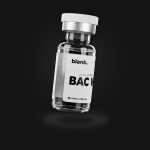
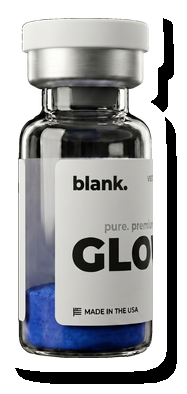
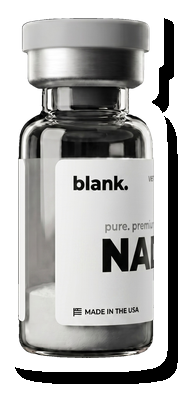
Worth saying where the rubric comes from so you can check it against something real. It’s the standard Blank Peptides publishes its own lots against: synthesis in an owned laboratory, independent testing laboratories named in public, a panel covering identity, >99% purity, bacterial endotoxin and sterility, per-component milligrams on every blend, and a lot-numbered certificate readable before ordering in a library of batch certificates of analysis. Blank Peptides isn’t one of the two companies compared here and isn’t being scored. I’m naming the source so you can see the bar is a published commitment somebody has to meet every lot, rather than criteria assembled afterwards to flatter one of the sites below.
What Swiss Chems publicly states
Swiss Chems trades at swisschems.is and writes about itself in supply language throughout. Its “Who we are” page sits under the heading “Research Supply”, places the company in the USA, and states that it “has supplied one of the largest research-compound catalogs available anywhere”. A statement naming who performs the synthesis, or describing a production facility the company operates, was not listed on the pages reviewed 2026-09-08.
Testing is where the site becomes specific. It states that “all products are tested by independent, ISO-accredited laboratories” and that “every compound we supply undergoes independent third-party HPLC testing and is verified to a purity standard of 99% or higher”. The FAQ states that “batches are submitted for independent analysis by accredited third-party laboratories”, names the laboratory it principally uses, and adds a sentence worth quoting whole: “SwissChems does not self-certify; all COA documentation is produced by laboratories with no commercial relationship to SwissChems.” The FAQ states reports are lot-specific and instructs researchers to “always check that the lot number on your product matches the report you are reading.”
The Independent Test Results page states “we believe in complete transparency. View and download all lab reports”, and listed 50 results across five pages on the review date, with the test type and issuing laboratory readable in the filenames. On the BPC-157 and TB-500 blend page Swiss Chems states per-component amounts of “5mg+5mg” and “10mg+10mg”, states “99% Purity Guaranteed”, and links View Report files covering HPLC, LC-MS, heavy metals and endotoxin. A sterility result was not listed on the pages reviewed 2026-09-08, and lot numbers were not printed on that blend page itself.
Swiss Chems has two genuine advantages worth stating. Heavy metals testing appears in the stated panel on the blend reviewed, which Protide Health’s stated panel does not cover, and the explicit statement that the company never self-certifies is a commitment few competitors put in writing. The site states 134 products across peptides, SARMs, nootropics and bioregulators, same-day dispatch on USA orders before 12PM EST, and an FDA disclaimer reading “all products are for laboratory developmental research USE ONLY. Not for human consumption.”
What Protide Health publicly states
Protide Health trades at protidehealth.com, and its documentation is built around linking a physical vial to a specific document, which it does about as well as anyone in this market.
On provenance, the about page states “we partner with ISO-certified and GMP-compliant facilities to ensure every compound is synthesized to the highest institutional standards”, which describes partnered synthesis rather than owned production. Those facilities were not named on the pages reviewed 2026-09-08, so the arrangement is described and the operator is left open. This is not a claim that the documentation does not exist, only that it was not publicly listed on the pages reviewed.
On testing, the site names the laboratory in its own copy: “every batch is independently tested by Freedom Diagnostics, a third-party U.S. laboratory.” The stated panel is unusually precise about method. “Testing covers identity by liquid chromatography and mass spectrometry (LC-MS), purity by high-performance liquid chromatography with UV detection (HPLC-UV), endotoxin by LAL assay (USP <85>), and net content.” A sterility result was not among the assays listed in that stated panel on the pages reviewed 2026-09-08, which is the clearest gap on this side.
Certificate access is where Protide Health earns the concession, and I’ll give it without hedging. The site states “Certificates of Analysis (COAs) are published for every compound”, and the archive opened without a login on the pass reviewed, describing itself as holding “Certificates of Analysis for every batch Protide Health has shipped”. Entries carry both a certificate number and a lot number, in the format “COA: 2608240764” and “Lot: PH-nasn10-0609”, with PDFs viewable and downloadable, and the site states “152 public third-party COAs from the last 180 days” across 23 pages of pagination. Product pages carry the same linkage, and the Klow blend page states “80mg lyophilized powder in 3mL vial. Contains: GHK-Cu (50mg), KPV (10mg), BPC-157 (10mg), TB-500 (10mg)” with two lot-specific certificates linked from it.
That combination is uncommon: a named laboratory attached to a public, lot-numbered archive you can open before ordering, with blend milligrams printed on the product page and certificates linked from it. Catalog pages showed 83 products across six categories, shipping is stated as “2-3 Day US Delivery Free shipping over $199”, and research-use wording states products are “supplied for laboratory research only and are not for human or animal consumption.”
Side by side: named laboratories, lot archives and blend disclosure
| Attribute | Swiss Chems | Protide Health |
|---|---|---|
| Synthesises in-house | States it “has supplied one of the largest research-compound catalogs available anywhere”; who synthesizes not listed 2026-09-08 — verify | States it partners with “ISO-certified and GMP-compliant facilities”; facilities not named 2026-09-08 — verify |
| Third-party lab named | States “independent, ISO-accredited laboratories” and names its principal third-party laboratory in the FAQ — verify | States “every batch is independently tested by Freedom Diagnostics, a third-party U.S. laboratory” — verify |
| HPLC purity | States “independent third-party HPLC testing” verified to “99% or higher”, with HPLC reports published — verify | States “purity by high-performance liquid chromatography with UV detection (HPLC-UV)” — verify |
| MS identity | States LC-MS reports on the blend page reviewed 2026-09-08 — verify | States “identity by liquid chromatography and mass spectrometry (LC-MS)” — verify |
| Endotoxin and sterility | States an endotoxin report plus heavy metals on the blend page reviewed; sterility not listed 2026-09-08 — verify | States “endotoxin by LAL assay (USP <85>)”; sterility not listed in the stated panel 2026-09-08 — verify |
| Batch COA before purchase | States reports “are lot-specific” and publishes 50 downloadable PDFs in one library — verify | States “152 public third-party COAs from the last 180 days”; archive opened without login, with COA and lot numbers shown — verify |
| Blend mg split disclosed | States “5mg+5mg” and “10mg+10mg” per component on the blend page reviewed — verify | States per-component milligrams, for example “GHK-Cu (50mg), KPV (10mg), BPC-157 (10mg), TB-500 (10mg)” — verify |
| Catalog size | States 134 products across peptides, SARMs, nootropics and bioregulators — verify | Lists 83 products across six categories 2026-09-08 — verify |
| Research-use labelling | States products are “for laboratory developmental research USE ONLY. Not for human consumption” — verify | States products are “supplied for laboratory research only and are not for human or animal consumption” — verify |
How to verify either supplier yourself
- Where a laboratory is named, check the laboratory’s own site through a search you ran yourself, then confirm the name on the certificate matches the name in the marketing copy. A named lab only helps when the document agrees with the claim.
- Open an archive entry and look for a lot identifier before anything else, then ask the company to confirm that the lot on your vial matches the one on the document you read.
- Where a site describes partnered facilities without naming them, ask in writing who operates the facility. A straight answer helps, and reluctance to give one also tells you something.
- Count the assays on the certificate rather than trusting the summary line, because identity, purity, endotoxin, heavy metals and sterility are separate results and a panel missing one is missing one.
- Run both companies through the supplier verification checklist and record the same five answers for each, so neither gets graded on its own strongest ground.
Further reading
- Which Peptide Vendors Name Their Testing Lab?
- Peptide Vendors With Public Per-Batch COA Libraries
- Which Peptide Vendors Disclose Blend Composition?
- Who Actually Manufactures Research Peptides in the USA?
Frequently asked questions
How do Swiss Chems and Protide Health compare?
Protide Health names its laboratory in site copy and publishes a lot-numbered archive stating “152 public third-party COAs from the last 180 days”, with blend milligrams per component. Swiss Chems names its principal third-party laboratory, publishes fifty reports openly, and lists heavy metals testing on the blend reviewed. Neither listed a sterility result.
Does either company say who synthesizes the peptides?
Neither named an operator on the pages reviewed 2026-09-08. Protide Health states it partners with “ISO-certified and GMP-compliant facilities” without naming them, and Swiss Chems writes in supply language without describing an owned facility. Both descriptions are honest about the arrangement, and both leave the specific manufacturer unidentified.
Which archive is easier to match to a vial?
Protide Health’s, on the pages reviewed. Entries carry both a certificate number and a lot number, and product pages link lot-specific certificates directly. Swiss Chems states its reports are lot-specific and tells researchers to check the lot on the product against the report, though lot numbers weren’t printed on the blend page reviewed.
Why does sterility matter separately from endotoxin?
They measure different things. Bacterial endotoxin testing quantifies a pyrogenic residue that survives even when no organism is alive, usually by LAL assay. Sterility testing asks whether viable microorganisms are present at all. A lot can pass one and fail the other, which is why cell-based work usually wants both results on the certificate.
Are these products for human use?
No. Every compound discussed here, from Swiss Chems, Protide Health or any other supplier, is intended solely for in-vitro laboratory research by qualified professionals. Comparing published documentation helps you judge whether a reagent matches its label, and it has no bearing on the research-use-only status of any product.
For research use only. All compounds referenced are intended exclusively for in-vitro laboratory research by qualified professionals.
Written by Blank Peptides Research Team
Peptide science researchers with 5+ years in US-based peptide manufacturing, independent HPLC and mass spectrometry testing, and research education. All content is reviewed for scientific accuracy before publication.
REVIEWED BY
Dr. Tobias S — PhD Chemist, Peptide and Unnatural Amino Acid Synthesis
Dr. Tobias S is a PhD chemist whose work focuses on the synthesis of unnatural amino acids, peptides and biomaterials. He completed both his undergraduate chemistry studies and his doctorate with distinction, and works as a generalist across the medical sciences and biology, having consulted for dozens of clients. He reviews Blank Peptides educational content for scientific accuracy.
Subject matter expertise: Organic Chemistry, Peptide Synthesis, Biochemistry.