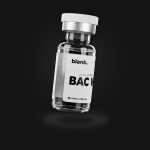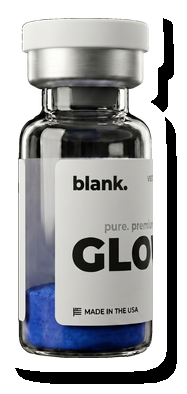
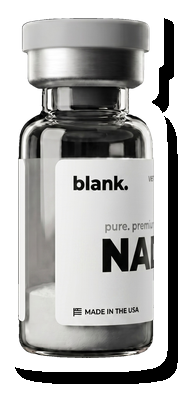
Most lyophilized peptides are hygroscopic to some degree, and several sequences deliquesce on contact with humid air. Treat every vial as moisture-sensitive unless you have sequence-specific data proving otherwise. The immediate action: keep vials sealed until they reach room temperature, minimize exposure to open air, and store desiccated. Skip that step and you risk clumping, pH drift, or measurable activity loss before you ever run an assay.
TL;DR:
- Peptides with polar or charged residues are more prone to water sorption, increasing their risk of deliquescence and chemical changes in humid conditions.
- Equilibrating peptides to room temperature before opening minimizes condensation and prevents rapid moisture absorption that can lead to activity loss.
- Using desiccated storage, inner foil packaging with silica gel, and controlling ambient humidity below 30% effectively reduces moisture uptake risks.
- Sequence-specific hygroscopicity varies greatly, so never assume one peptide’s behavior applies to another, even if they look similar in storage.
- Accurate moisture measurement methods like DVS, LF-NMR, and DSC help identify when peptides have absorbed harmful levels of water, guiding appropriate handling actions.
Table of Contents
- Peptide Moisture Absorption: Storage and Handling Rules That Actually Prevent It
- Why Some Peptide Sequences Absorb More Water Than Others
- How Labs Measure Peptide Hygroscopicity in Practice
- Dissolving Hygroscopic Peptides Without Making Things Worse
- Practical Ways to Cut Moisture Uptake in the Lab and in Formulation
- What Moisture Does to Peptide Chemistry Once It’s Absorbed
- Blank Peptides’ QA Approach to Hygroscopic Risk
- Perspective: Where to Spend Your Moisture-Control Budget
- Order Peptides Built for Consistent Handling
- Sources
- FAQ
Peptide Moisture Absorption: Storage and Handling Rules That Actually Prevent It
The window for room temperature storage is narrow. Most lyophilized peptides tolerate room temperature only for a limited period, several months at 4°C, and colder temperatures like negative 20°C for long-term archiving. However, specific sequences with unusually hygroscopic residues may need tighter controls even within those windows. Sigma-Aldrich’s own peptide handling protocol backs this staged approach and recommends equilibrating cold vials to room temperature before opening them.
That equilibration step matters more than most researchers assume. A vial pulled straight from a negative 20°C freezer and cracked open immediately will draw condensation onto the lyophilized cake within seconds, and that condensation is the fastest route to deliquescence you can create in a lab.
Beyond temperature, a handful of habits determine whether your peptide moisture absorption stays negligible or becomes a real problem:
- Aliquot on receipt into single-use portions rather than repeatedly opening one master vial.
- Avoid freeze-thaw cycling once a peptide is in solution; each cycle reintroduces moisture risk and mechanical stress.
- Keep ambient relative humidity below roughly 30% in any space where peptides are opened or weighed.
- Store desiccated whenever the vial isn’t sealed, using a desiccator cabinet or a sealed container with fresh silica gel.
- Request amber vials and sealed foil pouches with integrated desiccant packs from your supplier at order time.
Pro Tip: *Keep a small hygrometer inside your desiccator cabinet.
Why Some Peptide Sequences Absorb More Water Than Others
Lyophilization typically leaves peptides in an amorphous, glassy state rather than a crystalline one, and amorphous solids sorb water into their bulk structure, not just across the surface. That distinction explains why two peptides that look identical in a vial can behave completely differently in humid air. Water vapor sorption research on peptides and proteins shows this bulk sorption can profoundly affect both chemical and physical stability.
Sequence composition drives most of the variation. Polar and charged side chains, lysine, glutamate, serine, and threonine among them, create more sites for water molecules to hydrogen-bond to the peptide backbone. Porous, low-density lyophilized cake structures compound the effect by giving water more surface area to penetrate.
Research on egg-white derived peptides found hygroscopicity varies sharply by sequence, with some peptides fully deliquescing under humid conditions while others stayed comparatively stable. The practical takeaway: don’t assume your peptide behaves like the last one you handled, even if the two look similar on paper.
Absorbed water doesn’t behave as a single uniform pool, either. Researchers generally separate it into:
- Strongly bound water, tightly associated with polar residues and slow to leave even under vacuum.
- Loosely bound or mobile water, which moves through the amorphous matrix and drives most observable changes.
- Bulk water, present once uptake exceeds the peptide’s capacity to bind it, often the trigger for visible deliquescence.
Some structural changes caused by that mobile water fraction don’t fully reverse once you dry the sample back out, which is exactly why prevention beats correction.
How Labs Measure Peptide Hygroscopicity in Practice
Quantifying moisture uptake isn’t guesswork if you have access to the right instruments. Three methods dominate the literature and cover the practical questions most labs actually need answered.
- Dynamic Vapor Sorption (DVS) exposes a sample to stepped relative humidity levels and tracks mass gain in real time, producing a sorption isotherm that shows equilibrium moisture content at each RH step. DVS studies on egg albumen peptide powder demonstrate how this method reveals both sorption kinetics and the RH threshold where uptake accelerates sharply.
- Low-field NMR (LF-NMR) measures water mobility rather than total mass, separating water into distinct T2 relaxation fractions. A study on soybean antioxidant peptide powder used LF-NMR to show which water fraction correlates with structural change, giving more actionable insight than a moisture-content number alone.
- Differential Scanning Calorimetry (DSC) detects glass transition shifts and other thermal signatures that indicate whether absorbed water has altered the peptide’s physical structure.
Run replicates, choose RH steps that bracket your actual storage environment, and treat any jump in mobile water fraction as a signal to requalify the lot before use.
Dissolving Hygroscopic Peptides Without Making Things Worse
A damp or partially deliquesced peptide doesn’t have to go straight in the trash, but it does demand a more careful reconstitution process than a fresh, dry vial.
Test on a small aliquot first, never the full vial. Solvent choice should follow the peptide’s net charge and hydrophobicity: dilute acetic acid or dilute ammonium hydroxide for peptides with strongly charged residues, buffered saline for more neutral sequences, and a small percentage of DMSO as a co-solvent for hydrophobic sequences prone to aggregation. Sigma-Aldrich’s solubility guidance lays out this charge-first approach and remains a solid starting reference.
If the powder shows visible clumping but hasn’t fully liquefied, vacuum desiccation or re-lyophilization can sometimes recover usable material. If it has visibly deliquesced into a syrup or shows discoloration, discard it. Recovering activity from a fully deliquesced sample is unreliable enough that it’s rarely worth the assay time.
- Prepare concentrated working stocks rather than dilute ones; concentrated stocks resist further degradation better.
- Clarify with a 0.22-micron sterile filter when the application demands it, especially for cell-based assays.
- Note how long a reconstituted stock has been in solution. Most working stocks lose measurable activity within days at 4°C, faster at room temperature.
Pro Tip: If you’re unsure whether a sequence leans hydrophobic or hydrophilic, look at the ratio of charged residues (Lys, Arg, Glu, Asp) to nonpolar ones (Leu, Ile, Val, Phe). More charged residues generally means better aqueous solubility and, often, more hygroscopic behavior in dry form.
Practical Ways to Cut Moisture Uptake in the Lab and in Formulation
Two layers of defense work here: what you do at the bench, and what you ask your supplier to build in before the peptide ever reaches you.
At the bench, multi-layer packaging, an inner foil pouch inside an outer container, backed by a fresh desiccant sachet, blocks most ambient humidity from reaching the peptide. Flushing headspace with dry nitrogen or argon before resealing a vial adds another layer of protection for sequences you already know run hygroscopic. Silica gel desiccants work for general use; molecular sieve desiccants pull moisture more aggressively and suit peptides with documented high sensitivity.
At the formulation level, published approaches go further:
- Embedding the peptide in a gelatin matrix reduced moisture absorption and preserved activity in walnut peptide research.
- Chelating with metal ions such as zinc showed a similar protective effect in that same study, reducing uptake under high-humidity conditions.
- Specifying moisture-content limits and packaging requirements directly in your purchase order gives suppliers a concrete target instead of a vague request.
Each of these carries trade-offs. Embedding agents and metal chelators can interfere with certain assay chemistries, so confirm compatibility with your downstream application before choosing a formulation-level fix over a simpler packaging change.
What Moisture Does to Peptide Chemistry Once It’s Absorbed
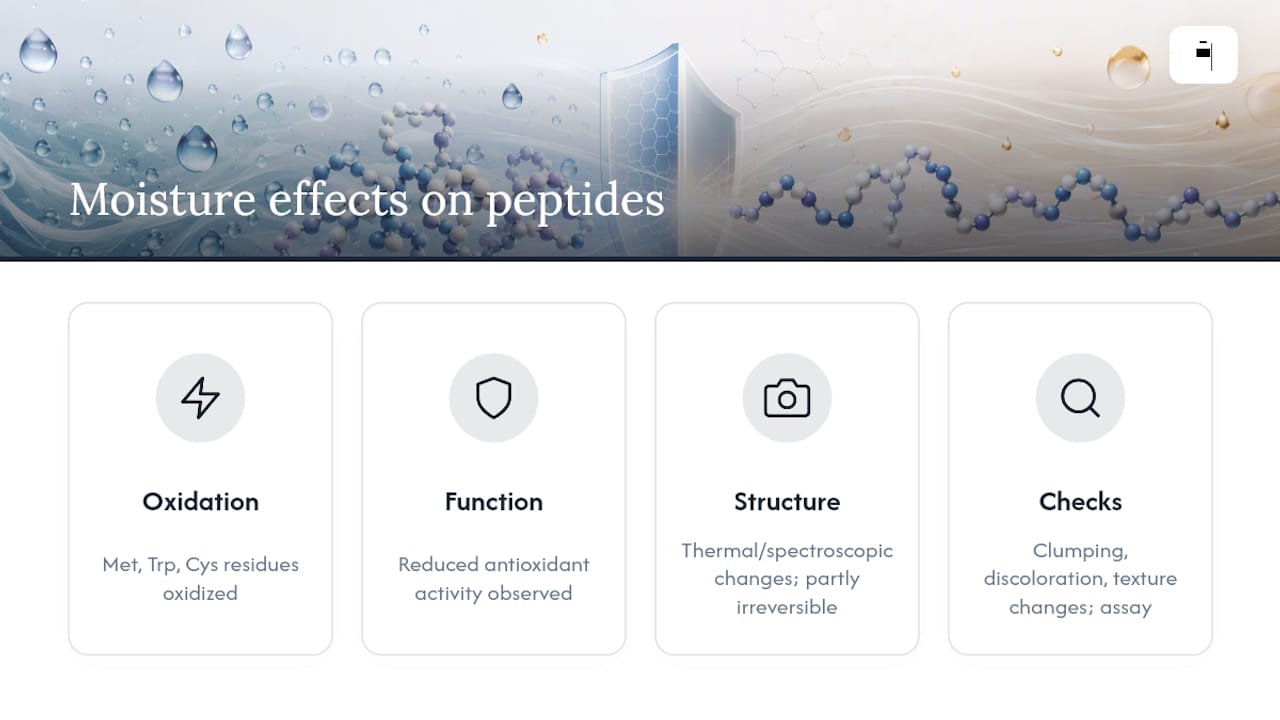
Moisture doesn’t just sit inertly in a peptide cake. It actively catalyzes oxidation of residues like methionine, tryptophan, and cysteine, even in otherwise controlled storage conditions.
Documented consequences go beyond simple potency loss. Research on a cysteine-containing peptide found that moisture exposure caused measurable pH shifts, reduced antioxidant activity, and structural changes detectable by thermal and spectroscopic methods, some of which didn’t fully reverse after re-drying.
Practical checks matter more than theory here. Watch for clumping, discoloration, or a change in cake texture, and run a quick functional assay on any lot with a suspected moisture incident before trusting quantitative results from it.
Blank Peptides’ QA Approach to Hygroscopic Risk
Every batch Blankpeptides ships carries a certificate of analysis and is manufactured in a USA-based facility with independent verification confirming greater than 99% purity. When you order, ask specifically about moisture-content specifications, packaging format, and whether desiccant is included in the shipment.
A basic receiving checklist covers most of what matters: confirm the COA matches the lot number on the vial, inspect for any visible clumping or discoloration on arrival, and log the ambient humidity of your storage area at intake. Any deviation from expected appearance is worth flagging before you commit the material to a critical experiment.
Perspective: Where to Spend Your Moisture-Control Budget
Every lab should equilibrate vials before opening and store desiccated. Those are non-negotiable baseline habits, essentially free. Premium controls like nitrogen flushing or formulation additives earn their cost only for sequences with documented high hygroscopicity. Prioritize sequence-specific testing and lot-level COA review over blanket protocols, and log every humidity incident against its lot number. That record becomes your best predictor of which sequences actually need the extra protection.
— Blank Research Team
Order Peptides Built for Consistent Handling
Reliable moisture control starts before the peptide ever reaches your bench, and that begins with who supplies it. Blankpeptides manufactures every product in USA-based facilities and verifies each batch independently for greater than 99% purity, with a certificate of analysis available for every lot you order.

When you place an order, ask directly about packaging format, desiccant inclusion, and moisture-content specifications for the specific sequence you need. Researchers working with sensitive compounds can review the KISSPEPTIN product page for an example of how COA data and packaging details are presented, or check the SEMAX listing for another sequence with full batch documentation. Peptides like VIP, DSIP, KLOW, and GLOW are all shipped with the same batch-level verification. Browse the current catalog and request a COA before your next order goes in.
Sources
- Water vapor sorption by peptides, proteins and their formulations
- Water dynamics of Ser-His-Glu-Cys-Asn powder and effects of moisture absorption on its chemical properties
- Dynamics of water mobility and distribution in soybean antioxidant peptide powders monitored by LF-NMR
FAQ
How long can a peptide like BPC-157 stay unrefrigerated?
Most lyophilized peptides tolerate room temperature only for a limited period, but sequence-specific hygroscopicity can shorten that window, so refrigeration or freezing remains the safer default for extended storage.
How should I use lyophilized peptides after storage?
Equilibrate the vial to room temperature before opening to prevent condensation, reconstitute with a solvent matched to the peptide’s charge profile, and use the working stock promptly rather than storing it in solution long term.
How can I tell if a peptide is hydrophobic or hydrophilic?
Check the sequence for the ratio of charged residues like lysine and glutamate against nonpolar residues like leucine and valine; more charged residues generally point to hydrophilic behavior and easier aqueous solubility.
What destroys peptide activity fastest?
Moisture-driven oxidation of residues like methionine, tryptophan, and cysteine, along with repeated freeze-thaw cycling and extended storage in solution, are the fastest routes to activity loss.