Research Disclaimer
This article reviews published scientific literature for educational purposes only. All compounds referenced are sold by Blank Peptides exclusively for in-vitro research and laboratory use. Nothing in this article constitutes medical advice, a treatment recommendation, or an endorsement of human use.
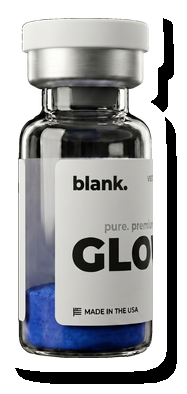
We built the Glow Protocol because we kept seeing researchers assemble the same stack repeatedly: BPC-157 for tissue repair, GHK-Cu for systemic anti-aging, sometimes adding NAD+ for cellular energy. These compounds work through complementary mechanisms, so sourcing them separately was mostly an inconvenience. Putting them in one vial removed it.
What’s In the Glow Protocol
- BPC-157: tissue repair, growth factor signaling, localized healing (VEGF, HGF, nitric oxide)
- GHK-Cu covers systemic anti-aging, collagen remodeling, and gene expression (~4,000 genes)
- NAD+ (optional): cellular energy restoration, mitochondrial function support
BPC-157: The Tissue Repair Component
BPC-157’s role in the stack is active repair work:
- VEGF enhancement: drives angiogenesis and new blood vessel formation at damage sites
- HGF support coordinates tissue repair signaling
- Better nitric oxide bioavailability improves localized blood flow to healing tissue
- Multi-tissue applicability: tendon, ligament, muscle, surgical sites, systemic repair
GHK-Cu: The Anti-Aging Component
GHK-Cu handles the broader aging picture while BPC-157 fixes acute damage:
- Collagen synthesis genes: upregulated for tissue remodeling and skin structure
- Antioxidant defense genes (SOD, catalase) are enhanced for oxidative stress protection
- Fibroblast activity improves, which supports tissue maintenance
- Skin barrier function: measurable improvements in barrier integrity
NAD+: The Cellular Energy Support
Both BPC-157 and GHK-Cu require cellular energy to exert their effects. NAD+ is foundational to mitochondrial function and ATP production:
- Mitochondrial function restoration: the cofactor cells need to produce energy
- Energized cells respond better to peptide signaling, so repair and remodeling run more efficiently
- NAD+ decline is more pronounced with age, which is where researchers most often add it
How Researchers Use the Glow Protocol
Typical Applications
- Localized tissue damage: tendon strain, ligament injury, surgical recovery
- Systemic anti-aging work inside broader regenerative research protocols
- Skin health and collagen, where changes in skin structure and barrier function are measurable
What Researchers Track
- Tissue healing rate: wound closure, pain levels, range of motion
- Skin markers: collagen density, barrier function, visible improvements
- Blood work: IGF-1, collagen markers (P1NP, CTX), inflammatory markers
- Subjective measures: energy levels, recovery speed, skin quality
Dosing Considerations
General Research Ranges (from published literature)
- BPC-157: typically 100-300 micrograms per administration
- GHK-Cu, typically 50-200 micrograms per administration
- Frequency: varies by protocol (daily, every other day, loading + maintenance)
Many researchers combine peptide stacks with resistance training, since training provides the stimulus that peptides can amplify. Others use them in pure recovery contexts. The stack is flexible enough for multiple research designs.