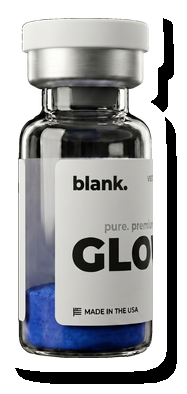
The research peptide market generates a volume of glow peptide reviews across forum threads, supplier listings, and community channels that can look like useful sourcing information. Most of it addresses the wrong question.
Reviews that focus on shipping speed, packaging quality, or vague outcome impressions tell researchers nothing about whether the compound they received matches its label. For a multi-component blend like GLOW — which combines GHK-Cu, BPC-157, and TB-500 — the relevant sourcing questions are analytical: Is the purity >99% by HPLC? Does mass spectrometry confirm the identity of each component at the expected molecular weight? Has bacterial endotoxin testing been run by a named external lab? Review sections don’t answer these.
This post explains how to evaluate vendor data for GLOW with those questions as the frame.
Why User Reviews Don’t Measure Compound Quality
A researcher ordering a GHK-Cu, BPC-157, and TB-500 blend for a study is not evaluating a consumer product. Outcome impressions from other researchers carry minimal informational value for quality assessment. A reviewer who says a product “performed as expected” has provided one data point from one experiment, with no documented purity verification, no independent identity confirmation, and no endotoxin data to speak of.
Reviews do surface real information — whether the vendor responds to pre-sale questions, how orders are packaged, whether documentation arrives with the shipment. These are genuine data points about the sourcing experience. They are not quality signals for the compound itself.
A vendor can ship promptly, answer questions the same day, and still deliver a blend at significantly below-specification purity. The review rating captures the former. Only analytical documentation captures the latter. When researchers treat review volume as a proxy for compound quality, they are substituting social proof for evidence.
What a GLOW COA Should Show
A complete certificate of analysis for GLOW should include three categories of data, each serving a distinct verification function.
HPLC purity at >99%. The COA should show the actual measured result for this specific lot, not a specification requirement alone. A document that states “>99% required” without a corresponding result is not a COA for a specific lot — it is a specification sheet. Blend chromatography is more complex than single-compound HPLC because multiple components produce multiple peaks. A complete certificate will annotate those peaks, not leave interpretation to the reader.
Mass spectrometry identity confirmation. GHK-Cu has a molecular weight around 341.4 Da. BPC-157 is approximately 1419.5 Da. MS data should confirm the presence of these species at their expected masses. Identity confirmation is what separates a verifiable analytical result from a self-reported purity number.
Bacterial endotoxin testing. Endotoxin contamination is invisible to chromatography and mass spectrometry and requires a dedicated LAL assay to detect. The COA should name the lab that performed bacterial endotoxin testing and report the result in EU/mg. A numeric value — not just a pass designation — is what gives the result interpretive use.
The Value of Named Third-Party Labs
In-house testing by the vendor means the vendor runs its own assays and reports its own results. There is no external review. A supplier whose COA says “tested by our QC team” is the only party who has examined the data.
Third-party testing by a named, independent laboratory removes that conflict entirely. The external lab has no stake in whether the batch passes or fails — it reports what the assay produced. That structural difference is not a minor detail. When a COA names Freedom Diagnostics or Horizon Analytical, those labs signed off on the data. The result is independently attributable.
KLOW — GLOW’s four-component counterpart — goes through the same third-party testing protocol. If you’re sourcing both blends, the COA structure should be consistent across both, with the same labs listed and the same data categories present. Inconsistency between how two products from the same supplier are documented is itself a signal worth examining.
Red Flags in Vendor Data for GLOW
Certain patterns in vendor documentation correlate with quality risk and are worth recognizing before ordering.
Purity listed without an HPLC trace. A percentage figure without supporting chromatography data is not independently verifiable. The trace shows peak shape, integration, and secondary peaks from which the percentage is derived. Without it, the number is self-reported and unverifiable.
No named external lab for endotoxin testing. “Internal testing” or “QC certified” without a named third-party lab cannot be independently assessed. For a compound cluster that includes anti-inflammatory peptides, endotoxin contamination would produce artifacts in exactly the study contexts most relevant to GLOW research.
Purity claims that use qualitative rather than quantitative language. “High purity,” “pharmaceutical grade,” and similar phrases without a specific HPLC percentage and trace are marketing language, not analytical results.
Certificates that cover only one component of a blend. A GLOW COA that documents GHK-Cu purity but provides nothing on BPC-157 or TB-500 is a partial certificate for a three-component product.
FAQ
What do glow peptide reviews actually tell you about whether GLOW is research-grade?
They tell you about the sourcing experience — shipping, packaging, vendor communication. They do not tell you whether the compound meets purity specifications, whether identity was confirmed by mass spectrometry, or whether bacterial endotoxin testing was performed by an independent lab. These are analytical questions with analytical answers. No volume of positive reviews substitutes for documented COA data.
How does a GLOW blend COA differ from a single-compound COA for something like GHK-Cu alone?
A single-compound COA covers one peptide with one expected peak in the HPLC chromatogram and one molecular weight to confirm by MS. A blend COA covers multiple components, so the chromatogram reflects the combined profile of all constituents. Each compound should be identifiable — either by annotated retention times or by supporting MS data — rather than presented as a single unresolved peak. The endotoxin testing requirement is the same regardless of whether the product is a blend or a standalone.
Is a GLOW COA from the same lot still valid for a later purchase?
The COA is issued for a specific lot at the time of manufacture. If a later purchase ships from the same lot number — which can happen when a supplier draws down a large batch over time — the COA for that lot remains applicable. Confirm by matching the lot number on the vial label against the lot number on the certificate. If a different lot ships, a COA from the previous lot does not apply and a new certificate should be requested before use.
All products discussed are for laboratory research use only and are not for human or veterinary use.