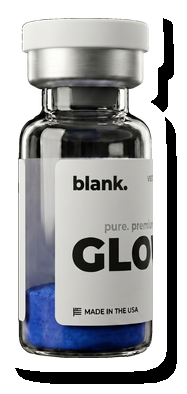
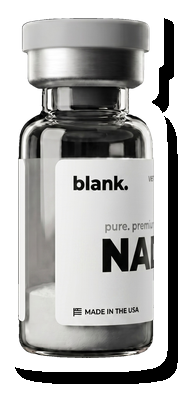
TB-500 (Thymosin Beta-4) in a 10mg vial is one of the most practical formats in research supply. The sizing balances reconstitution volume with workload: most protocols call for repeated small aliquots, and a single 10mg unit lets researchers work cleanly across multiple sessions without sourcing separate vials for every experimental point.
This piece covers what the tb 500 10mg specification actually means for your lab workflow — how the vial is sealed and stored, how to reconstitute it cleanly, what a proper COA should show before you open the vial, and how the single-compound format compares to blended options.
What 10MG Means in Practice
Ten milligrams is a dry, lyophilized mass — not a solution. TB-500 arrives as a white or off-white powder under vacuum or inert gas seal. That mass figure represents the quantity of peptide present; purity and bioactivity are separate values that only third-party analytical testing can confirm.
At >99% purity, a 10mg vial delivers approximately 9.99mg of active peptide with less than 0.01mg of trace residual matter. That figure — >99% — is the benchmark the research-grade industry uses, and it matters for assay sensitivity. A compound at 97% purity introduces roughly 50× more impurity load than one at >99%, which can distort results in receptor binding or cell viability studies where you’re measuring small concentration-dependent effects.
Blank Peptides’ TB-500 is produced in our cGMP labs in the USA and independently tested by Freedom Diagnostics and Horizon Analytical for identity, purity, and bacterial endotoxin levels before release.
The 10mg size serves labs with moderate experimental volumes well. Some teams prefer two 5mg vials for redundancy — if one vial is compromised post-reconstitution, the second stays stable in lyophilized form. Others prefer the single 10mg format to reduce reconstitution events and minimize handling error. Both are sound approaches; the right choice depends on how many experimental sessions your protocol spans.
Reconstituting a 10MG Vial
For a 10mg TB-500 vial, add 1 mL of bacteriostatic water. That’s the standard ratio: 1 mL per 10 mg. Inject the water slowly along the interior glass wall rather than directly onto the powder cake, then swirl gently until the powder fully dissolves. Do not shake — foam formation can denature the peptide structure and is not recoverable.
Bacteriostatic water is the correct diluent for TB-500 reconstitution. The 0.9% benzyl alcohol content inhibits microbial growth in the opened vial over the working period. Blank Peptides carries bacteriostatic water in 10mL and 30mL formats — both are standard choices depending on how many vials you’re working through in a session.
Once reconstituted, store at 2–8°C, away from direct light. Lyophilized peptide tolerates room temperature during transit, but once hydrated, cold storage is required. The reconstituted solution is stable for approximately 30 days at refrigerator temperature.
Reading the COA for TB-500
A complete COA for a 10mg TB-500 vial should include:
- Compound name and CAS number (77591-33-4 for Thymosin Beta-4)
- Lot or batch number that matches the label on your vial
- HPLC purity — expressed as area percentage, not weight
- Mass spectrometry confirmation of molecular identity
- Bacterial endotoxin test results with the method and EU/mg limit stated
- Third-party lab attribution (not just internal testing)
- Test date
The lot number is the critical link. Without it, there’s no way to verify that the purity figure on a product page applies to the actual material you received. Blank Peptides publishes per-batch COAs accessible from the TB-500 product page.
If a supplier provides a COA without a third-party lab name, that document is an internal report — useful as a starting point, but not an independent verification.
Single-Compound vs Blended Formats
Some research designs require TB-500 in combination with BPC-157 and other regenerative peptides. Wolverine is a pre-formulated blend containing TB-500, BPC-157, and GHK-Cu in a single vial — a practical format for protocols investigating compound interaction rather than isolated mechanism.
The tradeoff with a blend is fixed ratios. If your protocol requires adjusting one component independently — for example, titrating TB-500 concentration while keeping BPC-157 constant — single-compound vials are the correct choice. If you’re studying the combined effect and don’t need to vary individual concentrations, the blend reduces sourcing overhead and handling complexity.
This is a protocol design question, not a quality question. Both formats draw from the same testing standards.
Storage and Freeze-Thaw Considerations
Lyophilized TB-500 stored at –20°C maintains peptide integrity for 24 months or more under consistent conditions. Refrigerator storage at 2–8°C is adequate for shorter periods, typically up to 12 months. Once reconstituted, the working life drops to approximately 30 days at 2–8°C.
Repeated freeze-thaw cycles degrade the peptide over time. If a protocol runs across multiple weeks, aliquot the reconstituted solution into single-use fractions and freeze them individually. Thaw only what a single session requires.
FAQ
What is the purity of TB-500 in a 10mg vial from Blank Peptides?
TB-500 from Blank Peptides is tested to >99% purity by HPLC, with mass spectrometry confirmation of molecular identity and bacterial endotoxin testing performed by Freedom Diagnostics and Horizon Analytical. The COA for each batch is available on the product page.
How much bacteriostatic water does a 10mg TB-500 vial require?
Use 1 mL of bacteriostatic water per 10 mg of peptide. Add the water slowly along the vial wall and swirl to dissolve — don’t shake. Store the reconstituted solution at 2–8°C and use within 30 days.
What is the difference between a 10mg TB-500 vial and the Wolverine blend?
The 10mg TB-500 vial contains a single compound, giving you full control over concentration and dosing in your protocol. Wolverine is a fixed-ratio blend of TB-500, BPC-157, and GHK-Cu — better suited to protocols studying combined compound effects where independent titration is not required.
All products discussed are for laboratory research use only and are not for human or veterinary use.