Researchers searching for semaglutide reviews are typically trying to answer two distinct questions at once: is this vendor reliable for fulfillment, and is this compound actually what it claims to be? Online review platforms handle the first question adequately and fail almost completely at the second. A five-star rating can mean a package arrived on time — it tells you nothing about whether the material inside passed purity testing or met endotoxin specifications.
Separating those two questions is the starting point for any rigorous semaglutide sourcing evaluation.
What Vendor Reviews Actually Capture
Most semaglutide vendor reviews cover shipping speed, packaging quality, and communication responsiveness. For research purposes, those factors matter — a vendor that ships promptly and packages peptides properly for cold transit is a better operational partner — but they’re not the same as compound quality assurance.
The review signals worth paying attention to are narrower than they appear. Look for reviewers who mention matching lot numbers to COAs, who describe consistent purity figures across multiple orders, or who note documentation quality specifically. These are researchers applying actual quality control logic, not consumers describing how a product felt.
Reviews that reference subjective “effectiveness” — whether the compound “worked” or not — are outside the scope of research procurement evaluation. A vendor who leans on those signals in their marketing is targeting a different buyer than a laboratory researcher. Treat it as a filter.
One underrated signal: how vendors respond to negative feedback. A supplier who clearly explains what happened when a customer reported a quality issue — whether that’s a shipping error, labeling discrepancy, or documentation problem — tells you more about their actual practices than uniform five-star reviews. When every review is identically positive, either the sample is very small or the collection method is curated.
Reading Compound Data, Not Just Reviews
COA data is where a semaglutide sourcing decision should ultimately rest, and semaglutide reviews rarely surface it usefully. A complete COA for research-grade semaglutide should include:
- HPLC purity expressed as area percentage, not weight
- Mass spectrometry confirmation of molecular identity (CAS 910463-68-2)
- Bacterial endotoxin test results with the EU/mg limit stated
- The lot number matching the vial label
- Named third-party labs that ran the analysis
The third-party attribution is the piece that most separates substantive COAs from internal documents. Blank Peptides uses Freedom Diagnostics and Horizon Analytical for independent verification. A COA that lists lab names, test dates, and batch-specific results is an auditable record; one without those fields is a template.
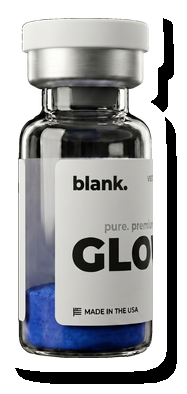
Blank Peptides’ semaglutide is tested to >99% purity and COAs are available per batch on the product page. Processing time is within 1 business day from our cGMP labs in the USA.
Comparing Across the GLP-1 Research Cluster
Researchers running comparative protocols often evaluate semaglutide alongside structurally related compounds. Tirzepatide is a dual GIP/GLP-1 receptor agonist frequently included in metabolic receptor studies; retatrutide is a triple receptor agonist currently under clinical investigation with a distinct binding profile.
When evaluating vendor quality across this cluster, apply the same COA criteria to each compound. A supplier with rigorous documentation for semaglutide but incomplete COAs for tirzepatide or retatrutide is applying selective standards — which raises questions about whether the rigorous documentation is a genuine practice or a marketing decision for the most-searched compound.
Consistent quality across a supplier’s full GLP-1 lineup is a stronger credibility signal than any single product’s review count.
What Pricing Signals — and What It Doesn’t
Semaglutide prices vary substantially across research suppliers, and price alone is not a reliable proxy for quality. Both expensive and budget-priced products can fail purity specifications. The more useful heuristic is documentation depth: a supplier with complete COA access, named external labs, and transparent handling instructions is investing in the supply chain regardless of where their price point sits relative to competitors.
Research-grade positioning is about compound integrity and documentation, not list price. A supplier who competes on price without supporting documentation is offering a commodity; one who supports every lot with third-party testing data is offering accountability.
FAQ
What should a semaglutide COA include to be considered complete?
A complete semaglutide COA should include HPLC purity as an area-percentage figure, mass spectrometry confirmation of molecular identity, bacterial endotoxin test results with the EU/mg limit, and a lot number that matches the product you received. The document should name the third-party lab that ran the analysis — internal-only testing is not independent verification.
How do I tell whether semaglutide vendor reviews are credible?
Look for reviews that reference specific documentation details — COA availability, lot number matching, or testing methodology. Generic positive reviews without documentation references carry less weight than specific reviews describing how a vendor handled an issue. Volume of positive ratings matters less than consistency across multiple orders from reviewers who clearly applied some quality logic.
Is there a standard purity threshold for research-grade semaglutide?
Research-grade semaglutide should test at >99% purity by HPLC. Some suppliers list 98% as acceptable for research use, but the difference matters for sensitive assay designs — a 99%+ compound has roughly half the impurity load of a 98% compound at equivalent mass, which affects concentration-dependent results in receptor binding studies.
All products discussed are for laboratory research use only and are not for human or veterinary use.