When researchers look for where to buy GHK-Cu, availability is rarely the obstacle. The compound—glycine, histidine, and lysine chelated to a copper(II) ion—has been studied since Loren Pickart first described its plasma activity in 1973, and it now appears across a wide range of skin biology, wound healing, and hair follicle research programs. The harder task is confirming that any given supplier’s product is actually the copper-chelated complex and not the free peptide that was never chelated. Documentation resolves that ambiguity; vendor claims alone do not.
Documentation Standards for GHK-Cu
A complete COA for GHK-Cu starts with HPLC purity at >99%, measured as percentage area by reverse-phase chromatography. GHK without copper and GHK-Cu with copper have different retention times, different polarities, and different mass spectra. A COA that reports purity without specifying which form was tested leaves the core question unanswered.
Mass spectrometry distinguishes the two definitively. Free GHK has a molecular weight of approximately 340.38 Da. The copper complex, GHK-Cu, has a molecular weight of approximately 403.92 Da. A mass spectrum showing the correct parent ion for the chelated form confirms that what’s in the vial is the copper complex—not the free peptide from an incomplete synthesis step.
Lot-level traceability is the third requirement. The COA should carry a lot or batch number that matches the number printed on the vial label. Researchers documenting experimental conditions need to record which preparation they used. A COA that covers a production range rather than a specific batch can’t support that level of record-keeping.
Bacterial endotoxin testing should appear as a quantified result in EU/mg, not a pass/fail checkbox. Endotoxin contamination from gram-negative bacteria can confound experiments in fibroblast cultures, keratinocyte assays, and inflammatory models—exactly the settings where GHK-Cu research tends to operate. Knowing that endotoxin levels fall below the threshold relevant to your assay is more useful than knowing a test was run.
Using Third-Party Testing as a Verification Layer
A supplier’s own COA is a starting point. Testing by an independent laboratory such as Freedom Diagnostics or Horizon Analytical provides a second data point that the supplier didn’t generate. When a vendor names their external lab and makes the reports available, you can compare results from two independent sources. Consistent purity and identity data across both documents is meaningfully stronger evidence than either test alone.
The key question is whether the third-party report is tied to the same batch as the vials being sold. A report from a prior production run provides less assurance than a current, lot-matched document. Some suppliers display third-party results prominently but don’t link those results to specific inventory.
GHK-Cu produced in US cGMP labs carries the process documentation that accompanies regulated manufacturing—batch records, testing logs, and specification checkpoints. That documentation is harder to fabricate and easier to audit than a standalone COA from a vendor with no disclosed manufacturing context.
Shipping and Reconstitution for GHK-Cu Research
Lyophilized GHK-Cu stores at -20°C. Because GHK-Cu is a copper complex, exposure to heat, moisture, and pH extremes can affect the chelation state. Cold-pack packaging for domestic orders in warm months is a reasonable standard to apply when evaluating vendors; ambient-temperature shipment in summer is a handling risk worth asking about before placing an order.
Processing time within 1 business day gives researchers a reliable window for experiment scheduling. Unclear pre-shipment timelines complicate protocols when multiple reagents need to coordinate.
For reconstitution, GHK-Cu uses 3 mL of bacteriostatic water per vial—a larger solvent volume than the standard 1 mL per 10 mg approach used for most lyophilized peptides. Using the correct volume matters because under-dilution changes the final concentration and can affect copper complex stability in solution.
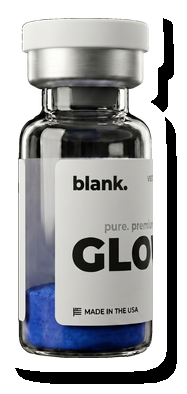
Researchers building skin biology panels that include GLOW—a blend that incorporates GHK-Cu as a component—should note that blend documentation requirements differ: the blend COA should list each component individually, not just report the final mixture. The KLOW formulation offers a different multi-ingredient context where the same documentation logic applies.
FAQ
What’s the practical difference between GHK and GHK-Cu for research ordering?
They’re two different compounds. GHK is the free tripeptide; GHK-Cu is the copper-chelated complex. Research models studying GHK-Cu require the chelated form. Buying GHK and assuming it will behave identically in a cell culture model designed for the copper complex is an error that won’t surface until results are inconsistent. When ordering, verify that the COA and mass spectrum confirm the copper-chelated form rather than just the peptide backbone.
Why does HPLC purity matter more than total protein measurements for GHK-Cu?
Total protein content or UV absorbance measurements don’t distinguish GHK-Cu from related compounds such as free GHK, GHK chelated to other metals, or synthesis byproducts with similar absorption characteristics. HPLC separates those components physically. Percentage area by reverse-phase HPLC tells you what fraction of the detected signal is actually the stated compound. At >99%, there is little room for uncharacterized impurities that could confound cell-based assays.
How does bacterial endotoxin testing affect GHK-Cu research specifically?
Cell culture work with GHK-Cu frequently involves fibroblasts, keratinocytes, and epithelial cells—cell types with well-characterized responses to bacterial endotoxin. Lipopolysaccharide activates TLR4 and downstream inflammatory pathways independently of any peptide effect. When the endpoints being measured overlap with endotoxin-sensitive pathways, the concentration of bacterial endotoxin in the preparation becomes a confounder. Quantified testing data on the COA lets you assess whether the sample meets the threshold your assay requires before the experiment starts.
All products discussed are for laboratory research use only and are not for human or veterinary use.