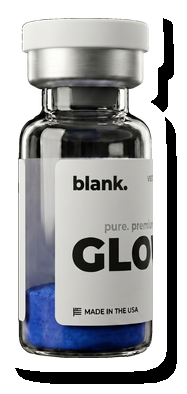
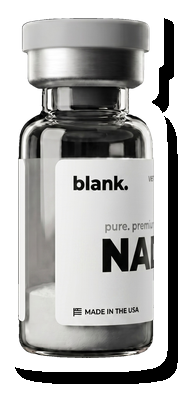
Where to buy retatrutide for laboratory research has become a more common sourcing question as the compound’s profile in metabolic and receptor pharmacology studies has grown. Retatrutide is a long-acting peptide agonist active at three receptors — GLP-1, GIP, and glucagon — which makes it structurally distinct from the dual agonists (tirzepatide) and single-receptor agonists (semaglutide) that researchers have been working with for longer. That added structural complexity also raises the stakes on purity verification, because more synthesis steps mean more points where truncation products or impurities can accumulate.
Retatrutide in a Research Setting
In preclinical study contexts, retatrutide has been examined for its effects on energy homeostasis, adipose tissue dynamics, and metabolic regulation. Its triple-agonism profile — engaging GLP-1, GIP, and glucagon pathways simultaneously — makes it useful for studies aimed at separating out the contributions of individual receptor subtypes to metabolic outcomes.
Researchers working in GLP-1 pharmacology, receptor crosstalk models, or comparative agonist design often source retatrutide alongside tirzepatide and semaglutide. When designing studies that compare these compounds, consistency in sourcing matters: variability in purity or formulation between batches can introduce confounds that complicate cross-compound interpretation, even when the study design controls for concentration.
Purity and COA: What to Verify Before Ordering
For retatrutide, the COA is the most important document to review before committing to a supplier. Three things should appear in any COA worth accepting.
HPLC purity at >99%, with retention time and peak area data that show a well-resolved single compound rather than a mixture of synthesis products. Mass spectrometry confirmation is required to verify molecular identity at the correct molecular weight — retatrutide’s mass profile is distinct from shorter GLP-1 analogs, and a clean MS trace is strong evidence that you’re receiving what you ordered. Bacterial endotoxin testing should appear in every COA for a peptide in this class; it catches contamination introduced during synthesis, and for compounds used in any in vivo or cell-based model, endotoxin interference is a real experimental variable.
Testing should come from an independent third-party lab. Freedom Diagnostics and Horizon Analytical are the recognized standards for this compound class in the US market. Internal testing from the supplier’s own facility is less meaningful as a quality signal.
Also verify lot traceability before finalizing an order. The lot number on the COA should match the batch label on the vial you receive. A COA that can’t be tied to a specific production lot isn’t providing the documentation it appears to.
Where to Buy Retatrutide
Not every research peptide supplier carries retatrutide, and among those that do, the quality of documentation varies. Before placing an order, the practical questions to answer are: Is manufacturing US-based and cGMP-compliant? Does the COA cover all three quality markers? Is there a clear processing commitment for orders?
The retatrutide product page at Blank Peptides is manufactured in our US cGMP labs, purity verified at >99% by Freedom Diagnostics and Horizon Analytical, and includes a lot-matched COA covering HPLC, mass spectrometry, and endotoxin data. Processing happens within 1 business day of order.
Researchers running comparative agonist studies will find the companion product pages worth reviewing. Tirzepatide covers the dual GLP-1/GIP arm of the comparison — the compound studied most directly alongside retatrutide in receptor pharmacology research. Semaglutide provides the GLP-1-only reference point. Having matched purity documentation across all three compounds, produced under the same cGMP conditions, makes cross-compound study design cleaner.
Stability and Storage
Retatrutide is supplied as a lyophilized white powder in sealed research vials. Store at -20°C. The lyophilized form is stable under proper cold storage; do not hold at refrigeration temperature for extended periods.
At receipt, inspect the vial: intact seal, uniformly dry powder, no discoloration. Any moisture ingress or abnormal appearance should be flagged with the supplier before reconstitution.
For research use, the standard reconstitution guidance for this peptide class is bacteriostatic water at 1 mL per 10 mg of peptide. Prepare working dilutions from the stock solution using your assay-specific concentration targets. Avoid vortexing — gentle inversion mixes the solution without mechanical stress to the peptide structure.
FAQ
Why is purity verification especially important for retatrutide compared to shorter peptides?
Retatrutide is a longer, more structurally complex peptide than compounds like BPC-157 or simple tripeptides. Longer synthesis sequences accumulate more truncation products and synthesis-related impurities. At >99% purity with mass spectrometry confirmation, you’ve ruled out most common failure modes. At lower purity levels, the impurity profile is unknown and potentially bioactive — which complicates pharmacological interpretation, particularly in receptor binding or in vivo studies.
Can I source retatrutide, tirzepatide, and semaglutide from the same supplier for a comparative study?
Yes, and there are real advantages to doing so. Matched manufacturing — same facility, same cGMP standards — means the purity and formulation baselines are consistent across compounds. That consistency reduces one variable in studies designed to compare receptor agonism profiles across GLP-1 class peptides.
What distinguishes research-grade retatrutide from a clinical-grade compound?
Research-grade retatrutide is synthesized for in vitro and preclinical study use. It is not compounded for human administration, does not carry clinical-grade regulatory designation, and is not appropriate for clinical or veterinary settings. The purity and testing standards — >99% with COA documentation covering mass spectrometry and bacterial endotoxin testing — are rigorous for research purposes but do not substitute for the separate regulatory pathway that governs clinical use.
All products discussed are for laboratory research use only and are not for human or veterinary use.