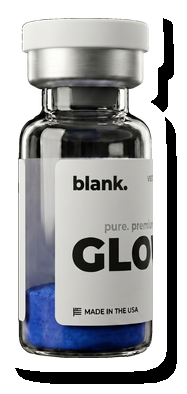
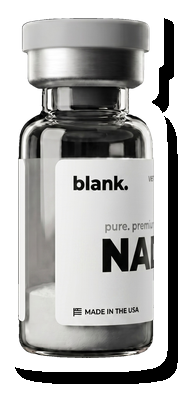
The best place to buy retatrutide for research use is not always the one with the lowest per-vial price. Retatrutide is a structurally complex triple agonist—simultaneously targeting GIP, GLP-1, and glucagon receptors—and the manufacturing complexity involved in producing it means quality variation between suppliers is real and measurable. For labs running metabolic research protocols, compound quality determines whether results are interpretable.
This guide focuses on what to verify before placing an order rather than listing vendors side by side. Evaluation criteria that apply to all retatrutide suppliers are more durable than any ranking.
Why Retatrutide Sourcing Requires Extra Scrutiny
Longer, more structurally complex peptides introduce more opportunities for truncated sequences or misfolded structures during synthesis. These impurities may share a retention time with the target compound on HPLC, which means a high purity percentage alone doesn’t guarantee the product is what the COA claims.
The standard solution is pairing HPLC purity with mass spectrometry: HPLC measures the proportion of the sample matching the target, while mass spec confirms the molecular weight matches the correct sequence. A supplier providing both is doing the minimum responsible thing for a peptide at this complexity level. A supplier providing only HPLC is giving you an incomplete picture.
At Blank Peptides, retatrutide is verified at >99% purity with independent third-party testing through Freedom Diagnostics and Horizon Analytical. COAs include both HPLC and mass spec data.
What a Retatrutide COA Should Show
A complete certificate of analysis for research-grade retatrutide should contain:
HPLC purity — stated as a percentage. The number should be >99% for research-grade material. Values below this threshold indicate measurable impurities that will be present in every reconstituted vial.
Mass spectrometry — confirming the molecular weight matches the retatrutide sequence. This is the check that catches structural isomers or truncated peptides that pass HPLC.
Bacterial endotoxin testing — quantifying endotoxin levels in the product. Without this, you have no documented baseline for in vivo use. A COA that omits endotoxin data is incomplete by any rigorous standard; it means no one has confirmed the product is clean for this variable, not that it necessarily is.
Testing facility identity — the lab name should appear on the document. COAs from unnamed or internal sources are not independently verifiable.
US Sourcing and What It Means for Quality
US-manufactured retatrutide from cGMP labs sits under a consistent quality framework. cGMP requirements address facility conditions, batch documentation, and testing protocols in ways that most overseas manufacturers do not follow.
Some vendors present as US-based while sourcing product internationally. Checking the manufacturing section of the COA directly, or asking the vendor to confirm manufacturing origin, clarifies this quickly. Blank Peptides manufactures through US cGMP labs.
Vial Sizes and Reconstitution
Retatrutide is typically available in 10 mg, 20 mg, and 30 mg vials. The appropriate size depends on the protocol’s duration and per-subject dosing schedule. Working backward from total milligrams consumed across the study gives a practical estimate of how many vials to order.
For reconstitution, 1 mL of bacteriostatic water per 10 mg of peptide is the standard guidance. Having bacteriostatic water on hand is necessary—sterile water is not a suitable substitute for multi-draw use because it lacks the antimicrobial preservative that prevents contamination between draws.
Researchers designing comparative studies may find tirzepatide a useful structural analog for comparison. Tirzepatide targets GIP and GLP-1 but not glucagon, making it a natural contrast compound for studies examining receptor specificity across the triple-agonist architecture.
Processing and Logistics
Blank Peptides processes orders within 1 business day from US-based facilities. Lyophilized retatrutide stored at -20°C is stable for several months, so labs ordering in advance of a study window have a reasonable lead time buffer.
For a first order from any vendor, request the current batch COA at checkout rather than relying on a document posted months earlier. Batch-specific documentation is what matters; a generic spec sheet or outdated COA doesn’t confirm the vials you receive have been tested.
FAQ
Why does retatrutide sourcing require both HPLC and mass spec data?
HPLC measures what percentage of the sample matches the retention time of the target compound. Mass spec confirms the molecular weight of that fraction. For complex peptides, impurities can share an HPLC retention time while having a different molecular structure. Mass spec is the check that catches this; without it, purity claims for complex sequences are incomplete.
How do I confirm a vendor actually uses third-party testing?
Look for a named testing facility on the COA and an independent report number or identifier. Freedom Diagnostics and Horizon Analytical are examples of legitimate third-party labs. Any vendor providing only an undated or unnamed document should be treated with skepticism.
What’s the difference between retatrutide and tirzepatide in a research context?
Tirzepatide is a dual GIP/GLP-1 agonist. Retatrutide adds glucagon receptor agonism, making it a triple agonist. In research settings, this difference matters for studies examining receptor-specific contributions to metabolic outcomes—running both compounds allows direct comparison of what the glucagon arm adds.
All products discussed are for laboratory research use only and are not for human or veterinary use.