A GHK-Cu COA is the document that closes the gap between a supplier’s claims and what’s actually in the vial. For researchers, it functions as a quality contract: the data either supports the use of the material in a study or it doesn’t. Reading a ghk-cu coa line by line, rather than scanning for a purity number, takes five minutes and can prevent weeks of confounded data.
This guide walks through what a complete certificate of analysis for GHK-Cu should contain and what each section tells you about the material.
Identity: Sequence and Physical Confirmation
The first section most COAs lead with is identity verification. For GHK-Cu, this should confirm the peptide sequence (Gly-His-Lys), molecular formula (C₁₄H₂₃CuN₆O₄), molecular weight (approximately 403.92 g/mol for the copper complex, or 340.38 g/mol as the free tripeptide), and CAS number (49557-75-7).
Mass spectrometry is the standard method for identity confirmation. A mass spec result should show the expected [M+H]⁺ or [M+2H]²⁺ peak corresponding to GHK-Cu’s molecular weight. If the measured mass doesn’t match within instrument tolerance, don’t use the material without further investigation.
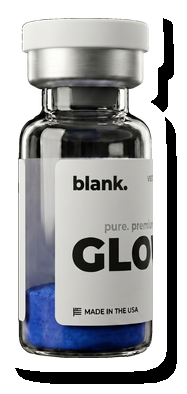
Physical appearance is typically documented here as well. GHK-Cu should be described as a blue to blue-green powder — this reflects the copper(II) chelate. A COA listing “white powder” or “off-white powder” for material sold as GHK-Cu would be inconsistent with its known physical characteristics and warrants a direct question to the supplier.
Purity: Reading the HPLC Data
Purity is the section most researchers check first. For research-grade material, the threshold is >99% by HPLC. Our GHK-Cu meets this standard, with HPLC chromatograms available as part of the lot-specific documentation for every batch.
When reading the HPLC section, check the purity percentage expressed as area percent of the main peak. Related substance peaks should be individually identified where possible; a COA that reports total purity without showing the chromatogram is providing less information than it could.
The column and gradient conditions used for the run matter in principle, though most researchers won’t scrutinize these unless they’re trying to replicate or challenge the result. At minimum, confirm the method is appropriate for a copper-chelated tripeptide at this molecular weight.
Don’t accept a COA that rounds purity to a whole number or shows a range without a specific result. “99-100%” is less useful than “99.4%.”
Endotoxin and Sterility Data
Bacterial endotoxin testing is the section with direct implications for any experiment using living cell systems. The COA should report a specific value in EU/mg, not just “pass” or “negative.” Commonly referenced thresholds in cell biology research sit below 1 EU/mg; parenteral research applications set stricter limits still. Knowing the actual measured value lets you make the right call for your specific protocol rather than relying on a binary pass/fail designation.
Third-party testing strengthens this section considerably. Our GHK-Cu testing is conducted through Freedom Diagnostics and Horizon Analytical, with results reported at the lot level so the specific batch you received can be verified.
Sterility testing (per USP <71> or equivalent) is sometimes included separately. Not every research peptide supplier runs it, but it should be listed as a tested or explicitly non-applicable parameter on a complete COA.
What a Useful COA Summary Includes
A lot-specific COA for GHK-Cu ties together: confirmed identity by mass spec, purity by HPLC above 99%, bacterial endotoxin testing results in EU/mg, lot number, synthesis date, and retest or expiration date. The retest date matters because it tells you how long the supplier expects the material to remain within spec under the stated storage conditions.
The GLOW peptide blend and the KLOW complex each include GHK-Cu as a constituent, with COA documentation covering the full formulation for researchers studying GHK-Cu in combination contexts.
If a supplier provides only a generic or non-lot-specific COA, request the lot-matched version. Suppliers producing research-grade material generate lot-specific documentation as standard practice. A COA that doesn’t match your lot number documents someone else’s batch, not yours.
Frequently Asked Questions
Can I request the COA before placing an order?
You should be able to. Any supplier treating research quality seriously will provide lot-specific documentation on request before purchase. If the response to this request is a generic template or a refusal, that’s worth factoring into your decision.
What does “tested by a third-party lab” actually mean on a COA?
It means the testing was performed by an independent analytical laboratory rather than the supplier’s own internal QC team. Third-party testing is more credible because the lab has no financial interest in the result — they report what their instruments measure. Look for lab names to appear on the COA itself, not just in marketing copy.
Is water content ever reported on a GHK-Cu COA?
Not consistently. Karl Fischer water content analysis is an additional test some suppliers include, especially for larger format vials where residual moisture has more impact on active mass per measured quantity. If your protocol requires precise concentration accuracy, requesting this data before ordering is reasonable.
All products discussed are for laboratory research use only and are not for human or veterinary use.