GMP and cGMP describe the same underlying quality framework: consistent, controlled manufacturing that protects identity, strength, purity, and safety. The practical difference is that cGMP is the FDA’s specific wording, and that lowercase “c” is a legal instruction to keep systems current with today’s technology and controls, not the technology of a decade ago. The relevant legal anchors are 21 CFR Parts 210 and 211 domestically and EudraLex/WHO guidance internationally, and the rest of this piece walks through what “current” actually requires, plus where to start closing gaps.
TL;DR:
- Maintaining current systems involves regular updates to electronic records, validation protocols, and risk assessments to meet FDA expectations.
- cGMP compliance requires ongoing verification that systems are up-to-date, not just meeting past standards, with inspections focusing on documented evidence.
- Both GMP frameworks demand a functioning quality system, but cGMP emphasizes data integrity, electronic controls, and timely validation over time.
- Starting with a detailed gap assessment and prioritizing data integrity and validation gaps can accelerate transition toward cGMP readiness.
- Verifying incoming materials requires both batch-specific certificates of analysis and confirmed manufacturing system compliance.
Table of Contents
- GMP vs cGMP: what “current” adds to the baseline
- What does the “c” in cGMP actually require?
- GMP and cGMP side by side: where they align and where they diverge
- The core components inspectors actually check
- Where to start if you’re building toward cGMP readiness
- Why Blankpeptides’ verification practices matter for your compliance workflow
- Why 2026 raises the bar on “current”
- Verified peptides built for research that can’t afford ambiguity
- Where to verify the regulatory details yourself
- Sources
GMP vs cGMP: what “current” adds to the baseline
GMP is the umbrella term for manufacturing controls that guarantee a product is made the same way, to the same specification, every single time. The World Health Organization’s GMP guidance traces back decades and now underpins national pharmaceutical law in dozens of countries, making it one of the oldest harmonized quality frameworks in global manufacturing.
GMP covers five core aims: consistent production, verified quality, product safety, correct identity, and confirmed purity. Beyond WHO, two other frameworks matter if you work across markets:
- EudraLex Volume 4 governs GMP for medicinal products across the European Union and is enforced through national inspectorates coordinated by the EMA.
- PIC/S (the Pharmaceutical Inspection Co-operation Scheme) harmonizes GMP inspection standards across more than 50 participating authorities, reducing duplicate audits for manufacturers who supply multiple regions.
GMP applies broadly: sterile injectables, biologics, active pharmaceutical ingredients, medical devices, and increasingly research-grade compounds that feed into later-stage development. What surprises a lot of newer QA staff is how deliberately vague these regulations stay. ISPE points out that GMP rules are written to be flexible on purpose, which sounds convenient until you realize it means the manufacturer carries the burden of proving its controls are adequate. Nobody hands you a checklist that guarantees a passing inspection. You have to build the justification yourself and document why your approach works.
What does the “c” in cGMP actually require?
The FDA uses cGMP specifically to signal that manufacturers must use systems and technology that are current, not merely compliant with whatever standard existed when the facility opened. The legal basis sits in 21 CFR Part 211, which spells out requirements across personnel, facilities, equipment, production controls, laboratory testing, and recordkeeping. The FDA’s own facts page on cGMP frames it plainly: cGMP exists to assure proper design, monitoring, and control of manufacturing processes, not just a snapshot of adequacy from years past.
In practice, “current” translates into specific expectations:
- Electronic batch records with audit trails, not standalone paper logs prone to gaps or after-the-fact edits.
- Data integrity controls aligned with 21 CFR Part 11 for any electronic system generating regulated records.
- Process analytical technology where it’s justified, so quality gets measured during production rather than only after the fact.
- Validation protocols that reflect present-day risk assessment methods, not a template copied from a 2005 submission.
Pro Tip: If your facility’s validation master plan hasn’t been revised in over three years, treat that alone as a red flag worth a gap assessment, even if nothing has technically gone wrong yet.
Outdated systems generate a disproportionate share of FDA observations. Warning letters and Form 483s repeatedly cite data integrity failures, inadequate validation, and weak change control as recurring findings, and historical regulatory failures like the 1937 sulfanilamide disaster are part of why the FDA built such an unforgiving legal framework around manufacturing controls in the first place.
GMP and cGMP side by side: where they align and where they diverge
Most of the confusion around GMP vs cGMP comes from treating cGMP as a stricter tier above GMP, as if it’s a premium certification. It isn’t. It’s the FDA’s jurisdiction-specific term carrying an explicit currency requirement, while GMP is the broader international label used by WHO, the EMA, and PIC/S member authorities.
| Dimension | GMP (WHO / EMA / PIC/S) | cGMP (FDA) |
|---|---|---|
| Nomenclature and jurisdiction | Used globally; adopted into national law by many countries | Specific US federal terminology under FDA authority |
| “Current” technology expectation | Implied through periodic guidance updates | Explicit legal requirement embedded in the term itself |
| Regulatory citation | WHO GMP guidance, EudraLex Volume 4 | 21 CFR Parts 210 and 211 |
| Inspection/enforcement | National inspectorates, PIC/S mutual recognition | FDA field inspections, Form 483s, Warning Letters |
| Operational emphasis | Consistent quality systems, risk management | Data integrity, electronic records, validation currency |
Where the two overlap matters just as much as where they split. Both demand a functioning quality system: documented procedures, trained personnel, controlled facilities, and traceable records. Neither one lets you substitute good intentions for evidence.
The sharpest practical divergence involves personnel accountability. The EU requires a Qualified Person (QP) who formally certifies batch release, a role with specific legal liability written into EudraLex. The US structure instead centers on a Quality Control Unit (QCU) under 21 CFR 211, which functions similarly but without the same individually named legal certification role. If you’re building a compliance program that spans both markets, that distinction changes who signs what and when.

The other misconception worth killing directly: cGMP isn’t “GMP plus extra paperwork.” A facility can have exhaustive paperwork and still fail a cGMP inspection if that paperwork describes systems that stopped being current years ago.
The core components inspectors actually check
Inspectors don’t grade philosophy. They check whether specific systems exist, work, and leave evidence behind. Here’s the operational backbone that both GMP and cGMP frameworks expect, in roughly the order an auditor will walk through it:
- Document control covering SOPs with visible revision histories, approval signatures, and periodic review dates. A procedure last updated four years ago, with no review record since, invites scrutiny even if nothing in it is technically wrong.
- Equipment and facility qualification, meaning installation, operational, and performance qualification records that actually match the equipment currently on the floor.
- Process validation built on current risk-assessment methodology rather than a legacy template, covering the full production range you actually run.
- Quality control testing, distinct from any third-party analytical testing you rely on for incoming materials. In-house QC verifies your process; supplier testing verifies your inputs. They answer different questions.
- Data integrity controls for every digital system, including audit trails, restricted access permissions, and verified backup procedures under 21 CFR Part 11.
- Change control and CAPA, with deviation trending metrics that show whether corrective actions actually reduced repeat problems, not just documented them.
Pro Tip: Pull your last twelve months of CAPA records and check whether any single root cause shows up three or more times. Repeat causes are the fastest way an inspector identifies a system that’s documenting problems instead of fixing them.
Where to start if you’re building toward cGMP readiness
Don’t try to fix everything simultaneously. A staged approach gets you defensible progress faster than a sprawling overhaul that never finishes.
- Run a gap assessment mapped directly to your governing regulation — 21 CFR 211 for US operations, EudraLex Volume 4 for EU markets — and score each clause against your actual current state, not your intended state.
- Prioritize data integrity and critical validation gaps first. These generate the most severe findings and the least PR-friendly headlines when they go wrong.
- Bank quick wins early: update the SOPs with the oldest revision dates, add electronic audit trails to any system still running on paper, and require current certificates of analysis from every raw material supplier.
- Bring in external auditors once internal gaps are mapped, and scope remediation projects around the highest-risk findings rather than the easiest ones to close on paper.
Why Blankpeptides’ verification practices matter for your compliance workflow
That distinction matters for anyone qualifying incoming materials: a COA confirms what’s in the vial, but it doesn’t, by itself, certify that the facility producing it runs a full cGMP quality system. ISPE’s own guidance makes that same point: analytical verification and manufacturing-system compliance answer different questions, and a rigorous supply chain needs both.
- USA manufacturing with facility-level quality oversight
- Independent third-party purity verification on every batch
- Batch-specific COAs available for input qualification records
Why 2026 raises the bar on “current”
Digitalization keeps moving the target for what counts as current: electronic audit trails and validated data systems that looked advanced five years ago are now baseline expectations. Compliance isn’t a milestone you hit once. It’s a documented, continuously reviewed habit.
— Blank Research Team
Verified peptides built for research that can’t afford ambiguity
Blankpeptides gives research teams something most suppliers only promise on a landing page: a batch-specific COA you can actually attach to your own qualification file, backed by USA manufacturing you can verify rather than take on faith. That’s the concrete difference versus sourcing from a broker who resells whatever inventory is available that week.

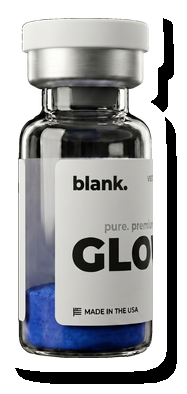
The catalog includes GLOW for researchers working on skin and recovery pathways, CJC-1295 / IPAMORELIN for growth hormone secretagogue studies, and KLOW as a combination formulation for broader metabolic research protocols. Check current batch availability and pull the latest COA before you place your next order.
Where to verify the regulatory details yourself
- FDA — Facts About Current Good Manufacturing Practice (CGMP)
- 21 CFR Part 210 and Part 211 (eCFR)
- WHO — Good Manufacturing Practice
- ISPE — What Is GMP?
Treat primary regulatory text as the final word for any compliance decision. Guides like this one, including this article, are a starting map, not a substitute for reading the actual regulation that governs your facility.