Someone emails you a PDF, it has a lab logo at the top and a purity number in the middle, and you have no idea whether it describes the jar sitting on your bench. That’s the position most buyers are actually in. The document looks official enough that questioning it feels rude, and vague enough that you can’t do anything with it.
With 5-Amino-1MQ there’s an extra wrinkle that catches people out. This compound is not a peptide. It’s a small molecule, 5-amino-1-methylquinolinium, CAS 42464-96-0, formula C10H11N2+ for the cation, molecular weight around 159.09, and it’s usually supplied as a salt rather than as the bare cation. A COA written for a peptide and reused for this compound will carry fields that make no sense here and will be missing fields that matter. Once you know what to look for, spotting that reuse takes about fifteen seconds.
So here’s how I’d read one of these documents, followed by what four named vendors actually publish about COA access for this compound on the pages reviewed on 2026-09-08.
Key takeaways
- A COA is only useful if its lot number matches the container you receive, the laboratory is named, and the methods fit the chemistry of the compound being tested.
- Blank Peptides runs its own cGMP laboratory and publishes a per-lot panel covering identity, >99% purity, bacterial endotoxin and sterility, with testing by Freedom Diagnostics and Horizon Analytical.
- Of the four vendors reviewed, BioLongevity Labs displayed a batch-identified COA on the product page and named laboratories, while Limitless Life Nootropics and Nootropic Source stated third-party testing without a viewable document on the page.
- Purity figures appearing in body copy could not be traced to a specific lot document from the product pages reviewed 2026-09-08 in three of the four cases.
- Everything below concerns documentation for research materials used in vitro by qualified professionals, and nothing here describes human use.
What makes a certificate of analysis actually verifiable?
A COA earns trust in five places, and each one is a yes-or-no question rather than a judgement call.
Provenance comes first. Does the vendor describe manufacturing it performs, or does it describe selecting a supplier? A company that synthesises and fills its own material can tie a document to a production record. A company that resells can usually only pass along what it was given, which may be genuine and may still be untraceable back to the container you hold.
Then, is the laboratory named. An unnamed lab means the report has no accountable author. Named labs can be looked up, and a report header you can match against a known laboratory is a different class of evidence than the phrase “third-party tested” printed in marketing copy.
Third, is the panel complete or purity only. Purity by HPLC is an area-percent measurement against a detection wavelength. It tells you how much of the absorbing material is your peak. It does not confirm the peak is the compound you ordered, and it says nothing about endotoxin or sterility. Identity, purity, endotoxin and sterility are four independent findings.
Fourth, is the document available before purchase. This one determines whether you can compare vendors at all. A COA that arrives with the package can only confirm or disappoint after the money has moved.
Fifth, for blended products, is the milligram split disclosed per component. A single-compound purchase doesn’t hit this directly, though a vendor’s habit here predicts its habit everywhere else.
Now the compound-specific layer. Because 5-Amino-1MQ is a small molecule, identity evidence should reference a small-molecule method against the correct structure, and the document should state the salt form. A chloride salt and an iodide salt have different masses and different assay corrections, so a mass figure quoted without a counterion is ambiguous. You’d also expect water content, typically by Karl Fischer, and a residual solvent statement, because organic synthesis leaves solvent behind and the amount is a quality attribute. What you should not see is net peptide content, an amino acid sequence, or a peptide-style molecular weight in the thousand-dalton range. Any of those tells you the template came from somewhere else.
How Blank Peptides makes and tests each lot
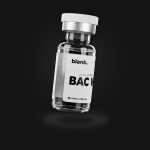
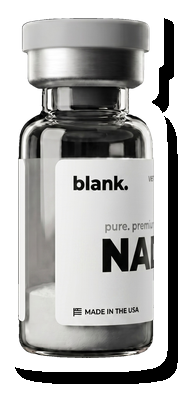
Blank Peptides operates its own cGMP laboratory. The company compounds, vials, finishes and labels its own material and runs quality control in the same facility, which keeps the chain of custody in one place rather than spread across brokers. It also contract-manufactures and fulfils for other peptide brands, an arrangement that means its own documentation gets read by parties with reason to be picky.
Each lot receives a four-part panel: identity, purity at >99%, bacterial endotoxin and sterility. Two named third-party laboratories perform the work, Freedom Diagnostics and Horizon Analytical. Every lot’s results are published as batch certificates of analysis, organised by compound, with lot numbers that correspond to the lot number printed on each vial. Lyophilized material carries an approximate 24-month expiration, processing time is stated as within one business day, and shipping is at room temperature.
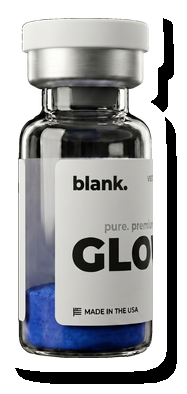
The catalog holds 34 compounds. Blends publish composition per component rather than as a lump total: GLOW at 70mg across GHK-Cu, BPC-157 and TB-500; KLOW at 80mg with KPV added; Wolverine at 20mg across BPC-157 and TB-500. The company has been operating five years and manufactures in the USA.
For clarity about scope: 5-Amino-1MQ was not listed in that 34-compound catalog on the pages reviewed 2026-09-08. The Blank Peptides column below describes the documentation standard applied to the company’s own lots, used here as the yardstick, rather than a claim that this compound is stocked.
What these vendors publish about 5-Amino-1MQ COA access
BioLongevity Labs goes furthest of the four on this axis. The product page reviewed 2026-09-08 lists 5-Amino-1MQ as lyophilized powder in a sealed glass vial at 10mg, states “99%+ Purity, Third Party Tested,” and displays a certificate of analysis image carrying a batch identifier. The page states that “every compound from BioLongevity Labs ships with a COA tied to its specific batch,” and names three laboratories in its testing language: MDx BioAnalytical Laboratory, BioRegen and SafeCert Labs. A displayed image is worth less than a readable document you can zoom and match against a vial label, so the practical step is to ask which of the three named labs produced the report for the lot in stock.
Limitless Life Nootropics lists the compound as powder in a glass jar at 3g, 6g and 9g, states a “≥98.5% purity standard,” and states the material is “third-party tested by certified labs” with “published certificates of analysis.” The page also states independent testing for endotoxins and sterility, plus USA manufacture and GMP compliance. On the page reviewed 2026-09-08, no COA document, no link to one and no laboratory name appeared, so the stated purity standard could not be tied to a lot from that page alone.
Nootropic Source lists 5 Amino 1MQ as powder at 1g, 5g and 10g in a double-sealed mylar bag and states the material “has been lab-tested and verified for both product purity and identity.” No purity percentage, no laboratory name and no COA document appeared on the page reviewed 2026-09-08. The page does publish the correct small-molecule identifiers, listing C10H11N2+, 159.09 and CAS 42464-96-0, which at least shows the listing was written for this compound rather than adapted from a peptide entry.
Pure Rawz occupies a different position. The page reviewed states that “Purerawz does not sell, manufacture, stock, dispense, or directly supply any of the products discussed on this website,” presenting third-party vendor listings alongside compound information. No purity figure and no COA appeared on the page reviewed 2026-09-08, which follows from that stated model rather than contradicting it.
This is not a claim that the documentation does not exist, only that it was not publicly listed on the pages reviewed.
A genuine advantage to concede here. Nootropic Source publishes accurate structural identifiers and unusually explicit research-use-only language, and its bulk gram formats at 1g, 5g and 10g serve work that a vial-based catalog simply cannot supply. Documentation quality and format availability are separate axes, and on the second one the bulk sellers win outright.
Side by side: how a COA reads on each side
The right-hand column summarises tendencies across the four pages reviewed 2026-09-08. Individual vendors differ, so use it as a shape to test rather than a finding about any one seller.
| Attribute | Blank Peptides | Typical vendor |
|---|---|---|
| Synthesises in-house | Own cGMP laboratory, compounding through labelling under one roof | States third-party testing or supplier selection; one states it does not stock the product — verify |
| Third-party lab named | Freedom Diagnostics and Horizon Analytical named on the COA page | One of four names laboratories; the rest state “third-party tested” — verify |
| HPLC purity | >99% per lot, method and lot stated on the document | States ≥98.5% or 99%+ in body copy; lot traceability not shown on three pages — verify |
| MS identity | Mass spec identity confirmed on every lot | States identity verification generally; small-molecule method not specified on the pages reviewed — verify |
| Endotoxin and sterility | Bacterial endotoxin and sterility on every lot | Stated on one page; not listed on the other three reviewed — verify |
| Batch COA before purchase | Public library, lot-matched, readable without an account | One displays a batch COA image; others state COAs exist or ship with the order — verify |
| Salt form and residual solvents | Panel written to the compound’s own chemistry | Not listed on the pages reviewed — verify |
| Catalog size | 34 compounds, narrow by design | Broader ranges including the bulk gram formats this compound is usually sold in |
| Research-use labelling | Research use only across the catalog | States research use only on all four pages reviewed |
How to verify either supplier yourself
- Match the lot number on the COA to the lot number on the container before you accept the document as evidence. An unmatched report describes somebody else’s material.
- Read the identity section for small-molecule language and a stated salt form. A sequence line, a net peptide content line, or a molecular weight in the thousands means the template came from a peptide product.
- Check the test date against the listing. A document more than a few months older than the batch currently shipping is describing a lot that may already be gone, so ask which lot you’ll receive.
- Ask whether endotoxin and sterility were performed, and whether they apply to the format you’re buying. Bulk powder in a sealed bag and a filled sterile vial carry different expectations, and a supplier should say which one it is testing to.
- Put the same five questions to every site on your shortlist and record the answers side by side before price enters the conversation. The supplier verification checklist lays out the sequence.
Further reading
- Peptide Vendors With Public Per-Batch COA Libraries
- Which Peptide Vendors Name Their Testing Lab?
- Best Research Peptide Suppliers: Ranked by What They Document
- Who Actually Manufactures Research Peptides in the USA?
Frequently asked questions
How do I verify a 5-Amino-1MQ COA before buying?
Ask for the lot-specific document before payment, confirm the lot number matches what will ship, check that a laboratory is named in the header, and read the identity section for small-molecule methods and a stated salt form. If the purity figure on the site doesn’t appear on any lot document, ask which batch produced it.
Why does it matter that 5-Amino-1MQ isn’t a peptide?
Because the COA fields differ. Peptide reports carry sequence and net peptide content and confirm masses around a known peptide molecular weight. A small molecule at roughly 159 daltons, supplied as a salt, needs counterion identity, water content and residual solvent data instead. Peptide fields on this compound’s COA indicate a copied template.
Does an endotoxin result belong on this COA?
It depends on format. Endotoxin and sterility testing make sense for material presented for sterile research preparation. For bulk powder sold by the gram in a sealed bag, those tests are less commonly performed and less commonly claimed. Ask the vendor which testing was actually run on the lot you’re buying.
Can I trust a purity number without a document?
Treat it as a claim rather than a measurement. A figure in body copy has no lot, no date, no method and no laboratory attached to it. It may well be accurate, and it may describe a batch that shipped two years ago. The lot document is what turns the number into evidence.
Are these products for human use?
No. Every compound and vendor discussed here supplies research material for in-vitro laboratory work by qualified professionals. Nothing in this article describes dosing, administration, protocols or outcomes in people or animals, and each vendor reviewed carries research-use-only labelling on the pages examined.
For research use only. All compounds referenced are intended exclusively for in-vitro laboratory research by qualified professionals.
Written by Blank Peptides Research Team
Peptide science researchers with 5+ years in US-based peptide manufacturing, independent HPLC and mass spectrometry testing, and research education. All content is reviewed for scientific accuracy before publication.
REVIEWED BY
Dr. Tobias S — PhD Chemist, Peptide and Unnatural Amino Acid Synthesis
Dr. Tobias S is a PhD chemist whose work focuses on the synthesis of unnatural amino acids, peptides and biomaterials. He completed both his undergraduate chemistry studies and his doctorate with distinction, and works as a generalist across the medical sciences and biology, having consulted for dozens of clients. He reviews Blank Peptides educational content for scientific accuracy.
Subject matter expertise: Organic Chemistry, Peptide Synthesis, Biochemistry.