You’ve got fourteen tabs open and every one of them says the same four things: third-party tested, highest purity, made in the USA, trusted by researchers. And you still can’t tell which of these companies actually makes anything, which one is a storefront in front of somebody else’s inventory, and which one is going to send you a vial with a handwritten label on it.
That’s the real problem with this market. It isn’t that vendors lie, exactly. It’s that almost all of them make claims that are technically unfalsifiable, because the claim is written in a way that can’t be checked. “Third-party tested” without a lab name is a sentence, and a sentence is not a credential. So we went through thirteen suppliers and looked only at what they actually publish, on their own pages, where a researcher can read it before spending money.
We’re a manufacturer ourselves, so read this with that in mind. What we’ve tried to do is use a rubric that doesn’t bend toward us, apply it the same way to everyone, and say clearly where other people beat us. In a couple of places they do.
Key takeaways
- Only two of the thirteen suppliers reviewed name the analytical laboratory that runs their testing anywhere on their public pages, which is the single fastest way to separate documentation from marketing copy.
- Most vendors stop at HPLC purity and mass spec identity; bacterial endotoxin and sterility testing appear on a small minority of sites, and sterility on almost none.
- Several sites publish COAs you can read before you buy, and several others only promise a COA “with your order,” which is a meaningfully weaker commitment.
- Blend composition is where disclosure collapses fastest, because a great many vendors list a total milligram figure for a multi-peptide blend without saying how those milligrams split.
- One site on this list openly states it doesn’t sell or supply anything at all, which is worth knowing before you assume you’re reading a supplier.
What we ranked on
Five questions, applied identically to every vendor, all answerable from public pages without emailing anybody.
- Provenance. Does the company say it synthesizes and finishes the material, or is it reselling somebody else’s vials? Plenty of good storefronts exist, but you should know which one you’re dealing with, because a reseller can’t answer questions about a synthesis it didn’t run.
- Named laboratory. Is the testing lab identified by name, so you could look it up or call it? This is the item that almost nobody clears, and it’s the one that costs the least to clear.
- Panel scope. Identity and purity are the floor. Bacterial endotoxin and sterility are the tests that speak to whether a vial was finished in a controlled environment, and they’re the ones that usually go missing.
- COA access before purchase. A batch-specific certificate you can open before checkout is a different thing from a certificate that arrives after your money does.
- Blend disclosure. If a blend is sold at 70mg, the listing should tell you how much of each component makes up that 70mg. Otherwise the number is decoration.
All observations below reflect the pages reviewed 2026-09-08 and are attributed to what each company publicly states. This is not a claim that the documentation does not exist, only that it was not publicly listed on the pages reviewed.
The ranking
1. Blank Peptides
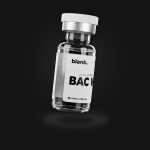
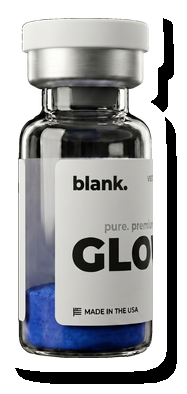
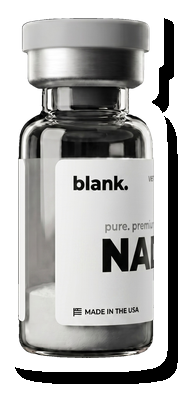
We compound, vial, finish, label and run QC in our own cGMP laboratory in the USA, which means the chain of custody for a vial doesn’t pass through a broker we can’t question. We also contract-manufacture and fulfil for other peptide brands, which is worth stating plainly because it explains why the lab exists at the scale it does. Our testing labs are named: Freedom Diagnostics and Horizon Analytical. Every lot gets a full panel covering identity, >99% purity, bacterial endotoxin and sterility, and every lot gets a batch COA with a lot number printed on the vial and roughly a 24-month lyophilized expiration. Catalog is 34 compounds, which is smaller than most of this list. Processing time within 1 business day, shipped at room temperature, since lyophilized material stays stable in ordinary ground transit. Blends are itemized per component: GLOW at 70mg is GHK-Cu plus BPC-157 plus TB-500, KLOW at 80mg adds KPV, Wolverine at 20mg is BPC-157 plus TB-500. Five years in business.
2. BioLongevity Labs
The only competitor on this list that names a lab. BioLongevity Labs publicly states that “every peptide batch includes a Certificate of Analysis from SafeCert Labs, an independent CLIA certified facility,” and it further states it uses “three different certified labs,” though only the one is named. It states that it manufactures using solid-phase peptide synthesis in USA-registered facilities, states COAs are available before purchase, and itemizes blend composition on listings including a GLOW blend at 70mg with components named. Catalog is stated at 150+ peptides, which is roughly four and a half times ours, and if breadth is what you need this is a genuine advantage we can’t match. Endotoxin and sterility testing were not listed on the pages reviewed 2026-09-08 — verify directly.
3. Ascend Bio Labs
Strong on panel scope. Ascend Bio Labs publicly states “third-party HPLC + LC-MS, endotoxin, and heavy metal testing on every batch,” which puts endotoxin on the page, and very few competitors do that. It also states that “every vial carries a unique batch ID linking to its public COA” and that the COA is “stamped with the batch number, test date, and lab name,” so the lab identity travels on the document even though it isn’t named on the site itself. Provenance is stated as US synthesis with “no international sourcing, no overseas drop-shippers.” Catalog stated at 38+ compounds. Sterility testing and per-component blend ratios were not listed on the pages reviewed 2026-09-08 — verify.
4. Protide Health
Protide Health publicly states that “every batch is third-party tested by an independent US analytical lab before release” and that “batch-specific certificates of analysis are published for every compound,” with a COA library referenced for public access. It’s one of the better performers on blend disclosure, publishing a KLOW blend as “50mg/10/10/10 (GHK-CU, KPV, BPC-157, TB-500)” and a Wolverine blend as 10/10mg, which is exactly the format researchers should be asking everyone for. Provenance is stated as synthesis “in ISO 9001:2015 certified facilities,” which describes a partner arrangement rather than an owned lab. The testing lab is not named, and endotoxin and sterility were not listed on the pages reviewed 2026-09-08 — verify.
5. Verified Peptides
Volume of published documentation is the standout here. Verified Peptides publicly states “over 500+ published Certificates of Analysis” with “test results publicly available for your viewing on the Lab Tests page,” which is more accumulated COA history than most of this list puts online. It states every batch is “sent to a reputable third party analytical testing lab recognized by the research community” and that products are “manufactured in a controlled clean facility that follows Good Manufacturing Practice (GMP).” It states shipping on orders before 1PM EST with free two-day shipping over $200, which is faster than a lot of the field. The lab isn’t named, and endotoxin, sterility and per-component blend breakdowns were not listed on the pages reviewed 2026-09-08 — verify.
6. Cosmic Peptides
Cosmic Peptides publicly states that “independent US labs test everything” alongside the line “we don’t grade our own homework,” and it publishes per-lot purity figures on the site including specific numbers like 99.87% for MOTS-c. It states “COA, HPLC, and end-to-end tracking — you get it all before we ship” and describes provenance as “solid-phase peptide synthesis using pharmaceutical-grade reagents,” which reads as in-house synthesis. It states a 2PM CST order cutoff. The lab is not named, total catalog size isn’t stated, and blend composition beyond a BPC-157/TB-500 pairing was not listed on the pages reviewed 2026-09-08 — verify.
7. Biotech Peptides
Biotech Peptides publicly states that “every batch is verified by a third-party lab, with results posted on our website” and that “our production is verified by HPLC-MS to confirm >99% purity.” Provenance is stated clearly: “peptides are domestically synthesized,” and the company also states it offers custom synthesis of any peptide requested, which is a real capability and one that suggests genuine lab access rather than a pure storefront. Where it falls back is the same place most of the field does, since the lab isn’t named, endotoxin and sterility weren’t listed, and blends are sold with a total milligram figure rather than a per-component split on the pages reviewed 2026-09-08 — verify.
8. PSPeptides
PSPeptides publicly states that “every batch undergoes rigorous independent laboratory testing with HPLC and Mass Spectrometry verification” and that results for the batches currently shipping are always posted to its test reports page, which is a good commitment because it ties the published document to what’s actually in the box right now. It states a minimum 99% purity threshold and describes itself as “US made & shipped.” Free shipping on any order and free two-day air over $200 is generous relative to the field. Provenance beyond that phrase, lab identity, endotoxin, sterility and bundle composition were not listed on the pages reviewed 2026-09-08 — verify.
9. Sports Technology Labs
This one deserves credit for the most honest sentence we read all week. Sports Technology Labs publicly tells buyers to “always use a source that is third-party tested and call third-party labs to confirm that the results you see online are legitimate before purchasing products,” and it states that it “shares certificates with contact information for these laboratories” so customers can do exactly that. It states testing at “one of multiple accredited American third-party laboratories” via HPLC. The purity floor it states is lower than most of this list at a minimum 98%, or 95% for peptides where mannitol is used for storage stability, and it’s mostly a SARMs catalog with peptides alongside. Labs aren’t named on the site itself, and endotoxin and sterility weren’t listed on the pages reviewed 2026-09-08 — verify.
10. Limitless Life Nootropics
Limitless Life Nootropics publicly states “more than 90 research-grade peptides manufactured under GMP protocols” and describes itself as offering “premium USA manufactured research peptides.” It states that “every peptide is independently tested to confirm identity and integrity, with verifiable Certificates of Analysis available for transparency” and that certificates come “with each order,” which is the weaker form of that promise since it doesn’t establish that you can read the document before you commit. Stated processing is 3-5 business days, slower than most of this list. Some blends do carry component milligrams. The lab isn’t named, and endotoxin, sterility and pre-purchase COA access weren’t listed on the pages reviewed 2026-09-08 — verify.
11. Core Peptides
Core Peptides publicly states it has been “serving the research community for over 7 years” and that its products are “3rd party tested,” with “U.S. lab-tested peptides independently verified for purity.” The catalog is one of the largest here at 104 results, and free delivery within the USA on orders of $200 or more is a straightforward offer. Where it thins out is documentation, because no purity percentage, no COA, and no lab name appeared on the pages reviewed 2026-09-08 — verify. The company also states it “is not a compounding pharmacy or chemical compounding facility” and “is not an outsourcing facility,” which tells you what it isn’t without settling whether it synthesizes or resells.
12. Swiss Chems
Swiss Chems publicly states “99% purity guaranteed” and “independently tested and certified for purity,” and it maintains a dedicated independent test results section. Free shipping over $100 domestically and stated same-day shipping on USA orders are both competitive, and the catalog is broad across peptides, SARMs, bioregulators, nootropics and powders, so if you want one checkout for several categories that’s a real convenience. On our rubric it clears less, because the lab isn’t named, provenance isn’t stated either way, and endotoxin, sterility and per-component blend composition weren’t listed on the pages reviewed 2026-09-08 — verify.
13. Pure Rawz
Worth reading carefully before you assume you’re on a supplier’s site. Pure Rawz publicly states: “Purerawz is an informational and affiliate website. We do not sell or directly supply the products featured on this website.” That’s an unusually direct disclosure and we’d rather see it than not, but it changes what the site is. Purity figures like 99.9% appear on some listings and “COA verified” appears in product titles, though sample certificates, a named lab, and a described verification process were not listed on the pages reviewed 2026-09-08 — verify. If you buy through it, the questions on this rubric belong to whoever actually ships the vial.
Comparison table
| Supplier | Provenance | Lab named | Panel scope | COA before purchase | Blend composition |
|---|---|---|---|---|---|
| Blank Peptides | Own cGMP lab, compounds and finishes in-house | Freedom Diagnostics, Horizon Analytical | Identity, >99% purity, endotoxin, sterility | Batch COA per lot, lot number on vial | Disclosed per component |
| BioLongevity Labs | States USA-registered SPPS manufacturing | States SafeCert Labs | States HPLC and MS; endotoxin/sterility — verify | States COAs available before purchase | States per-component milligrams |
| Ascend Bio Labs | States US synthesis, no overseas sourcing | States lab name appears on the COA — verify | States HPLC, LC-MS, endotoxin, heavy metals | States batch ID links to public COA | Total mg only — verify |
| Protide Health | States ISO 9001:2015 certified facilities | Not listed — verify | States third-party testing; panel scope — verify | States published batch-specific COA library | States per-component milligrams |
| Verified Peptides | States GMP clean facility | Not listed — verify | States HPLC purity, content, identity | States 500+ COAs published publicly | Not itemized — verify |
| Cosmic Peptides | States solid-phase peptide synthesis | Not listed — verify | States COA and HPLC per lot | States COA provided before shipping | Not itemized — verify |
| Biotech Peptides | States domestic synthesis and custom synthesis | Not listed — verify | States HPLC-MS to >99% purity | States results posted on site | Total mg only — verify |
| PSPeptides | States US made and shipped | Not listed — verify | States HPLC and mass spectrometry | States shipping batches always posted | Not itemized — verify |
| Sports Technology Labs | States bottled in the USA | States certificates carry lab contact info — verify | States HPLC to a 98% minimum | States COA page published | States stack components and doses |
| Limitless Life Nootropics | States USA manufacturing under GMP protocols | Not listed — verify | States identity and integrity testing | States COA with each order — verify | States component mg on some blends |
| Core Peptides | States it is not a compounding or outsourcing facility | Not listed — verify | States third-party tested for purity | Not listed — verify | Total mg only — verify |
| Swiss Chems | Not listed — verify | Not listed — verify | States independent purity testing | States independent test results section | Not itemized — verify |
| Pure Rawz | States it does not sell or supply products | Not listed — verify | States COA verified on listings — verify | Not listed — verify | Not itemized — verify |
How to verify any supplier yourself
- Ask for the lab name in writing, then look the lab up independently and call it. A supplier that names Freedom Diagnostics, Horizon Analytical, SafeCert Labs or anyone else has given you something checkable, and a supplier that answers with “an accredited third-party lab” has given you a phrase.
- Match the lot number on the vial in your hand to the lot number on the certificate you were shown. If the COA has no lot number, or the vial has no lot number, the document isn’t tied to your material and can’t be.
- Read the panel line by line rather than trusting the summary. Identity plus purity is common, and endotoxin plus sterility is where you learn something about the finishing environment.
- For any blend, ask for the milligram split per component before ordering. A 70mg blend with three peptides in it has three numbers behind that 70, and a supplier who can’t produce them on request probably didn’t set them deliberately.
- Check whether the certificate is dated near your batch. Old certificates get reused across new production runs, and the date is the easiest thing on the document to check.
Further reading
- How to Choose a Research Peptide Supplier: The Verification Checklist
- Which Peptide Vendors Name Their Testing Lab?
- Who Actually Manufactures Research Peptides in the USA?
- Peptide Vendors With Public Per-Batch COA Libraries
Frequently asked questions
Why does naming the testing lab matter so much?
Because it converts a claim into something you can independently check. When a company states it uses “an accredited third-party laboratory,” there’s no way for you to confirm the test happened, no way to ask the lab whether the certificate you’re holding is one they issued, and no consequence to the vendor if the sentence isn’t true. A named lab has a phone number and a reputation of its own, and that’s what makes the claim cost something to make.
Isn’t HPLC and mass spec enough for research material?
For confirming what the molecule is and how pure it is, those two tests do the job well. What they don’t tell you is anything about the environment the vial was filled in, and that’s the gap bacterial endotoxin and sterility testing fill. If you’re working with material in a context where contamination would confound your results, the full panel is the difference between knowing your compound and knowing your compound and its container.
Should I avoid resellers entirely?
No, and we’d be overstating our case if we said so. Some resellers work with good manufacturers and pass along genuine documentation. The thing to be aware of is what happens when you have a technical question, because a reseller can only relay what its supplier tells it, and each hop between you and the synthesis makes the answer slower and less specific. Know which kind of company you’re buying from and set your expectations to match.
What does a smaller catalog actually mean?
It usually means fewer compounds under active production and tighter QC per compound, though that’s a tendency rather than a rule. BioLongevity Labs states 150+ peptides and Core Peptides shows 104 results, and there’s nothing wrong with either number. We run 34 because that’s what we can put a full panel behind per lot without outsourcing the work. Both approaches are legitimate, and you should pick based on whether you need breadth or depth.
Are these products for human use?
No. Everything discussed here is research material intended for laboratory use by qualified professionals. None of these compounds are approved drugs, none are supplements, and none are intended for human or veterinary consumption. Any supplier suggesting otherwise is telling you something about themselves.
For research use only. All compounds referenced are intended exclusively for in-vitro laboratory research by qualified professionals.