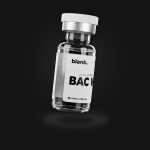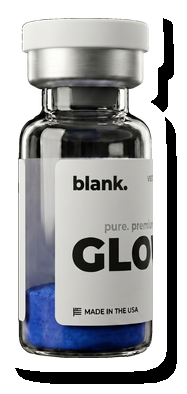
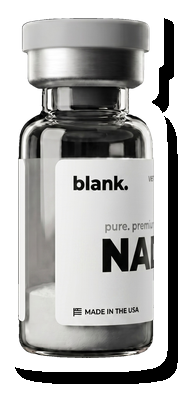
You’ve got a vial with a lot number on the label, and you want the document that goes with it. On paper that’s a two-minute job. In practice, with a lot of research peptide vendors, it turns into clicking through product pages, opening PDFs uploaded who knows when, and wondering whether the report you found describes the batch in your hand or an earlier one that shared the product name.
The phrase “third-party tested” shows up on nearly every homepage in this category, and it tells you nothing about whether you can get the report. Some vendors run a public library indexed by lot. Some link a single PDF from each product page and update it when they remember. Some send certificates by email after you’ve paid. All three get described by the same three words, and you only learn which model you’re dealing with by going and looking.
So this article does one narrow thing. It looks at what Alpha Peptides publicly shows on its own pages about certificate access, as reviewed on 2026-09-08, and sets it beside the standard Blank Peptides publishes its own lots to. I work for Blank Peptides, so check our library yourself. And I’ll be careful throughout to describe only what was visible, because a certificate not being linked is a different fact from a certificate not existing.
Key takeaways
- A useful COA is one you can open before paying, that names the issuing lab, carries a lot number matching the vial, and reports identity and contamination alongside purity.
- Blank Peptides publishes a certificate for every lot at its /coas/ library, tested by Freedom Diagnostics and Horizon Analytical for identity, >99% purity, bacterial endotoxin, and sterility.
- Alpha Peptides publicly maintains a /coas/ page organised by product and batch, states “Every batch tested for identity, purity, and endotoxins by an independent laboratory”, and links certificates from product pages.
- On the pages reviewed 2026-09-08, the issuing lab was not named in the site text, and the one certificate that rendered reported quantitative assay and heavy metals without HPLC purity, endotoxin, or sterility lines.
- Every compound mentioned is intended solely for in-vitro laboratory research by qualified professionals.
What makes a certificate of analysis actually useful?
Let me define “useful” before naming anyone, because the word COA gets applied to everything from a full analytical report to a one-line purity claim on letterhead. When I open a certificate I’m checking five things, and they line up with the five questions I’d ask of any supplier, including us.
The first is provenance. Does the vendor state that it made the material, or does it describe supplying material made elsewhere? The answer changes what the certificate can tell you. A synthesizer’s report describes its own process output. A vendor sourcing bulk is reporting on whatever arrived, and the upstream maker is usually not on the document.
The second is the lab. The certificate should carry the name of whoever ran the analysis, and that name should be checkable. A report from an unnamed “independent lab” can’t be confirmed with anyone, and an unconfirmable document is closer to a promise than to evidence. When the name appears in the PDF but nowhere in the site’s own text, that’s a half-answer, and I’ll flag it as one.
Third is the panel. HPLC purity is the fraction of the sample eluting as the target peak. Mass spectrometry confirms the peak is the right molecule, since different peptides can share a retention time. Bacterial endotoxin and sterility catch contamination that neither chromatographic method sees. Quantitative assay and heavy metals are welcome, but a certificate carrying only those has answered different questions from the four you’d want.
Fourth is access and lot linkage. You should be able to read the certificate before ordering, and it should carry a lot number you can match against the vial label when the package arrives. A certificate with no lot, or one available only after purchase, doesn’t let you verify anything in advance.
Fifth, for blends, the product page and the certificate together should state the milligram amount of each component, because an assay result on a mixed sample is hard to interpret without the intended ratio.
I don’t score on company age, sales figures, or how the site looks. Those are easy to state and hard to check, and none of them describes the vial. The five above can each be checked by opening a page.
How Blank Peptides makes and tests each lot
Blank Peptides operates its own cGMP laboratory in the United States and carries out synthesis, vialing, lyophilization, labeling, and quality-control release under one roof. The company frames this as holding the full chain of custody rather than relabeling or brokering product made elsewhere, and it also contract-manufactures and fulfils for other research peptide brands as a separate line of business, without naming clients.
Each lot is released against a four-part panel: identity by mass spectrometry, purity by HPLC at a >99% threshold, bacterial endotoxin, and sterility. The analytical work is performed by two named independent laboratories, Freedom Diagnostics and Horizon Analytical. Reports for every lot are posted as batch certificates of analysis, where a buyer can open the document before ordering, and each vial carries the lot number that matches it. Lyophilized product is dated for roughly 24 months from release.
The catalog holds 34 compounds, including three blends whose composition is itemised per component: GLOW at 70mg (GHK-Cu, BPC-157, TB-500), KLOW at 80mg (those three plus KPV), and Wolverine at 20mg (BPC-157 and TB-500). Orders are processed within one business day and ship at room temperature, which suits lyophilized peptide without cold-chain handling. The company has operated for five years and sells for research use only.
What Alpha Peptides publicly states
This section is only about certificate access on alpha-peptides.com: where the documents live, whether you can open them before paying, whether they’re tied to a lot, and what they contain. Everything here is from the homepage, COA page, FAQ, and the GLOW and BPC-157 product pages as reviewed on 2026-09-08.
Where they live: the site has a dedicated /coas/ page, reachable without an account. It’s organised by product, shows the current batch number for each, and links “View COA” alongside links to previous batches for the same product. For one product the page showed the current batch and “2 previous batches” from different dates. That’s a genuine archive, and it’s the strongest part of the site’s documentation. The page states “Every batch tested for identity, purity, and endotoxins by an independent laboratory”.
Before or after purchase: before. The COA page is public, and product pages carry a “CLICK HERE FOR COA” link that resolves to a lot-coded document. The FAQ states, “Yes, for applicable lots. COAs and batch information are provided where available and may be linked on product pages.” The homepage separately states certificates are filed “before any vial ships” and also describes emailing with a lot number to request one, so there appear to be two routes, public and by request.
Lot-tied or not: the GLOW product page’s certificate link resolved to a document for lot GLW-32526328, and the BPC-157 link carried the code BPC-42326428. So the links are lot-coded rather than generic. What I couldn’t check from my desk is whether a vial in hand carries the same lot as the currently linked document, which is something only a buyer with a vial can confirm.
What the certificate contains: the GLOW link redirected to a PDF hosted on a separate domain and headed Analytical Formulations, Inc., described on the document as “Premiere Consulting & Lab Services since 2008”, with a receive date of 04-04-26. It reported quantitative assay for GHK-Cu, BPC-157, and TB-500 against a “NLT 90%” specification, with each component landing above its nominal mg, plus a combined heavy metals result under 150 ppb. It did not include an HPLC purity percentage, an MS identity confirmation, an endotoxin result, or a sterility result, and it carried the line “This data is presented in good faith and not warranted as to the accuracy of results.” That matters because the product page lists “Percent Purity” by RP-HPLC and “Conformity” by ESI-MS among five assays, and the COA page states batches are tested for endotoxins, yet none of those three appeared on the document I opened. The BPC-157 link redirected to a file-sharing host that didn’t render, so I can’t describe it. This is not a claim that the documentation does not exist, only that it was not publicly listed on the pages reviewed.
Who issued it: no laboratory was named in the site’s own text on any page reviewed, and the description is “an independent ISO-aligned U.S. laboratory”, while the name Analytical Formulations, Inc. appears only if you open the PDF itself.
To be fair, the archive is the advantage here. Keeping previous batches reachable, with dates, on a single public page is more history than many vendors offer, and it lets a buyer see how a product has trended. That’s worth having.
Side by side: certificate access and content
| Attribute | Blank Peptides | Alpha Peptides |
|---|---|---|
| Synthesises in-house | Yes, own cGMP laboratory | States bulk peptide is “sourced from cGMP-aligned manufacturing partners” — verify |
| Third-party lab named | Freedom Diagnostics and Horizon Analytical | Not named in site text; GLOW PDF headed Analytical Formulations, Inc. — verify |
| HPLC purity | >99% per lot, on the certificate | States “≥98% (verified by HPLC)”; not on the certificate opened — verify |
| MS identity | Yes, on the certificate | States “Conformity” by ESI-MS on product pages; not on the certificate opened — verify |
| Endotoxin and sterility | Both, on the certificate | States batches tested for “endotoxins”; neither on the certificate opened — verify |
| Batch COA before purchase | Yes, public library at /coas/, one per lot | Public /coas/ page by product and batch, prior batches linked, lot-coded links — verify |
| Blend mg split disclosed | Yes, per component | States GLOW as “BPC 157 10mg + TB500 10mg + GHK-CU 50mg” — verify |
| Research-use labelling | Research use only | States “not intended for human or veterinary use” — verify |
How to verify either supplier yourself
- Go to the COA page before you add anything to a cart. Open the current certificate for the compound you’d order and check for four things: a lot number, a lab name, a date, and the test lines. Count how many of HPLC purity, MS identity, endotoxin, and sterility are present.
- Compare the product page’s stated test list against what the certificate actually reports. Where the page lists an assay the document doesn’t show, email the vendor and ask for the report for that lot.
- Look up the lab named on the certificate. Confirm it’s an operating analytical business with a contact route, then ask it whether the report number is genuine.
- If the site keeps prior batches, open two and compare. Consistency across batches is a useful signal, and so is any change in which tests appear.
- When the vial arrives, match its lot to the certificate you saved before ordering. The supplier verification checklist covers the full routine.
Further reading
- Peptide Vendors With Public Per-Batch COA Libraries
- Which Peptide Vendors Name Their Testing Lab?
- Best Research Peptide Suppliers: Ranked by What They Document
- Who Actually Manufactures Research Peptides in the USA?
Frequently asked questions
Does Alpha Peptides publish a COA for every batch?
The site maintains a public /coas/ page organised by product, with a current batch number and links to previous batches, and product pages link lot-coded certificates. Whether every lot ever sold has a document there is something I couldn’t confirm from the pages reviewed 2026-09-08; the FAQ says COAs are provided “for applicable lots” and “where available”.
Can I see an Alpha Peptides COA before I buy?
Yes, based on the pages reviewed 2026-09-08. The /coas/ page is public, and product pages carry a certificate link that resolves to a lot-coded document without an account. The homepage also describes an email route with a lot number. Open the document before ordering and check which tests it reports.
Which lab issues Alpha Peptides’ COAs?
The site’s text describes “an independent ISO-aligned U.S. laboratory” without naming it on any page reviewed. The GLOW certificate PDF, hosted on a separate domain, is headed Analytical Formulations, Inc. That describes only what the pages showed on that date; the documentation may well exist and simply be unpublished.
What tests are on an Alpha Peptides COA?
The GLOW certificate for lot GLW-32526328 reported quantitative assay for each of three components and a combined heavy metals result. HPLC purity, MS identity, endotoxin, and sterility were not on that document, though the product page lists RP-HPLC and ESI-MS among its assays. Open the certificate for your compound and check which lines it carries.
Are these products for human use?
No. Every compound referenced in this article, from any supplier, is sold for in-vitro laboratory research by qualified professionals. Nothing here is intended for human or veterinary use, and nothing here should be read as guidance for anything beyond reviewing a supplier’s published certificates.
For research use only. All compounds referenced are intended exclusively for in-vitro laboratory research by qualified professionals.
Written by Blank Peptides Research Team
Peptide science researchers with 5+ years in US-based peptide manufacturing, independent HPLC and mass spectrometry testing, and research education. All content is reviewed for scientific accuracy before publication.
REVIEWED BY
Dr. Tobias S — PhD Chemist, Peptide and Unnatural Amino Acid Synthesis
Dr. Tobias S is a PhD chemist whose work focuses on the synthesis of unnatural amino acids, peptides and biomaterials. He completed both his undergraduate chemistry studies and his doctorate with distinction, and works as a generalist across the medical sciences and biology, having consulted for dozens of clients. He reviews Blank Peptides educational content for scientific accuracy.
Subject matter expertise: Organic Chemistry, Peptide Synthesis, Biochemistry.