You want to see a certificate before you spend the money, and you’d rather not have to email anyone to get it. That’s a reasonable ask. A certificate of analysis is the only document in this whole transaction that describes the actual material you’d receive, and a vendor that makes you buy first and ask questions afterwards has inverted the order of operations. So you go looking for an Amino USA COA and you end up scrolling a catalog trying to work out whether the thing you’re looking at covers your lot or somebody else’s from two years ago.
The confusing part is that “publishes COAs” covers about four different behaviours in this market, and they’re not equivalent. A vendor can post one certificate per compound and never update it. It can post a wall of certificates with no way to connect any of them to the vial in your hand. It can email one on request after you’ve paid. Or it can tie a document to a lot number, print that lot number on the vial, and let you read the whole thing before you decide. The last one is the one worth paying for, and the first three all get described using the same three words on a homepage.
What follows is the standard I hold any supplier to on certificates, how Blank Peptides meets it, and then a plain record of what Amino USA’s public pages showed about certificate access when I read them on 2026-09-08. Where a page wouldn’t load for me, I’ll say so rather than treat my access problem as the vendor’s documentation problem.
Key takeaways
- The question that matters is whether a certificate is tied to a lot number printed on your vial and readable before purchase, rather than whether the site says the words “COA available”.
- Blank Peptides publishes a batch certificate per lot covering identity, >99% purity, bacterial endotoxin and sterility, tested at Freedom Diagnostics and Horizon Analytical, with the lot number on every vial.
- Amino USA does show certificate references on its catalog product cards, carrying a compound name, a lot number and an analysis date, and those are visible without an account or a purchase.
- A testing laboratory name, the analytical methods, and endotoxin or sterility results were not listed on the aminousa.com pages reviewed 2026-09-08, and the FAQ, Quality Control and per-product analysis pages returned an access error to our fetch that day.
- Every compound discussed is research-use-only material for in-vitro laboratory work by qualified professionals.
What makes a certificate of analysis actually useful?
Take the phrase “COA available” off the table for a moment and ask what you’d need from a document before you’d let it change your mind about an order. I think it’s five things, and they line up with the five questions I’d ask any supplier.
Provenance is first, because the certificate has to describe material whose origin you understand. If the vendor synthesizes and fills its own vials, the document covers a run it controlled end to end. If the vendor buys finished product from a manufacturer, the certificate describes somebody else’s run, which can still be perfectly good, though you’d want to know whose run it was.
Second, does the certificate name the laboratory that produced it? This is the single highest-value line on the page. A named lab can be looked up, its scope of work can be read, and in some cases the lab will confirm whether a report number is genuinely theirs. An unnamed lab reduces the certificate to a claim the vendor is making about itself.
Third, what does the panel cover? A purity number from HPLC answers how much of the sample is the dominant peak. Mass spectrometry identity answers whether that peak is the compound on the label. Bacterial endotoxin and sterility answer whether the vial is fit to go anywhere near cell culture. Four separate questions, and a certificate that reports only the first has left three open.
Fourth, and this is the one people skip, is the document lot-tied and readable before purchase? A lot number on the certificate is only useful if the same number is printed on the vial that arrives. Without that link you have a document and a vial that happen to share a compound name, which isn’t traceability.
Fifth, for blends, does the certificate or the listing state each component’s milligrams? A blend certified only by total mass can’t be reproduced by anyone reading your methods section later.
Company age and domain age don’t appear anywhere on that list, and they shouldn’t. Neither has any bearing on whether the paperwork for your lot exists.
How Blank Peptides makes and tests each lot
Blank Peptides runs its own cGMP laboratory in the USA and performs every production step in-house: compounding, vialing, finishing, labelling and quality control. Because no stage is handed to an outside manufacturer, the company holds the chain of custody for each vial from raw material through to shipping, rather than assembling it after the fact from a supplier’s paperwork. The same laboratory contract-manufactures and fulfils for other peptide brands, a line of work described in general terms without naming any client.
Testing is sent to two named independent laboratories, Freedom Diagnostics and Horizon Analytical, and the panel is fixed for every lot: identity, >99% purity, bacterial endotoxin and sterility. Each lot’s results are published in the company’s library of batch certificates of analysis, the lot number appears on every vial, and the two match, so a buyer can read the document before ordering and confirm the link on arrival. Lyophilized material carries an expiration of roughly 24 months.
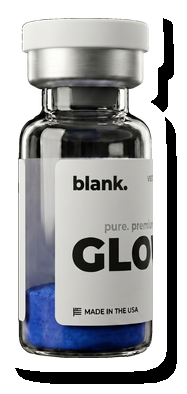
The catalog is 34 compounds. Blend composition is disclosed per component: GLOW at 70mg lists its GHK-Cu, BPC-157 and TB-500 amounts, KLOW at 80mg adds KPV with its own figure, and Wolverine at 20mg shows the BPC-157 and TB-500 split. Processing time is within 1 business day and orders ship at room temperature, the correct handling condition for lyophilized peptide. Five years of operating history, though the per-lot documentation is what an outside reviewer would actually weigh.
What Amino USA publicly states about certificate access
Amino USA sells from aminousa.com. On 2026-09-08 I reviewed the homepage, the peptides collection and the full catalog listing, and I attempted to open the FAQ, the Quality Control page, the About page, individual product pages and the per-product analysis pages. Those deeper pages returned an access error to our fetch that day, so everything below comes from the pages that loaded.
Here’s the part Amino USA gets right, and it deserves saying plainly because plenty of larger vendors don’t manage it. Certificates are surfaced at the catalog level, on the product cards themselves, and each reference carries a compound name, a lot number and an analysis date. Examples read “Certificate of Analysis for compound BPC-157, lot 24BPC10-0004, and analysis date 2024-10-16” and a second card carrying “lot 2024-07-30, analysis date 2024-08-19”. No account, no purchase and no email is needed to see that a specific lot has a specific document behind it. That’s genuine before-purchase, lot-level access, and it’s a real advantage over vendors who keep certificates behind a support ticket.
Two caveats about how to use it. Some displayed analysis dates run back to 2023 and 2024, which means the certificate shown may describe an older run than the vial currently on the shelf, so match the lot code on arrival rather than assuming continuity. And a handful of cards carried incomplete compound identification in their references, which is the sort of thing worth confirming with support before you rely on the document.
On what the certificates contain, I can tell you less than I’d like. The per-product analysis pages, which appear to be where the full documents live, returned an access error on 2026-09-08, so I could not read a certificate in full. A testing laboratory name was not listed on the pages I could load, and HPLC, mass spectrometry, bacterial endotoxin and sterility did not appear in that page text either. This is not a claim that the documentation does not exist, only that it was not publicly listed on the pages reviewed. The homepage does state, “Our reputation is everything, which is why we ensure purity of our products through third-party testing,” and refers to “the significance of providing outside verification through third-party testing,” and separately states the company has “partnered with a WHO/GMP and ISO 9001:2015 approved manufacturers”.
One more thing that affects which certificate you’re reading. A second domain using the same name, aminousa.us.com, was reachable on 2026-09-08 and states different testing detail, including “We run third-party verification across three separate labs”, HPLC to “a minimum threshold of 98% purity”, and mass spectrometry “to confirm the exact amino acid sequence”. I don’t know the relationship between the two sites, so before quoting a testing standard back to anyone, check which domain it came from.
Side by side: certificate access and what it covers
| Attribute | Blank Peptides | Amino USA |
|---|---|---|
| Batch COA before purchase | Public library at blankpeptides.com/coas/, one certificate per lot | States lot-numbered certificate references on catalog product cards, visible without an account — verify |
| COA tied to your vial | Lot number printed on every vial matches its certificate | States lot numbers on certificate references; vial-to-document match not listed on pages reviewed — verify |
| Third-party lab named | Freedom Diagnostics and Horizon Analytical | States “third-party testing”; no lab name on pages reviewed 2026-09-08 — verify |
| HPLC purity | >99% purity on every lot | States purity verified by third-party testing; method not listed on pages reviewed — verify |
| MS identity | Identity confirmed on every lot | Not listed on pages reviewed 2026-09-08 — verify |
| Endotoxin and sterility | Both tested on every lot | Not listed on pages reviewed 2026-09-08 — verify |
| Synthesises in-house | Own cGMP laboratory, all steps in-house | States partnership with “WHO/GMP & ISO 9001:2015 approved manufacturers” — verify |
| Blend mg split disclosed | Yes, every component of every blend | States per-component mg in some blend titles; others not split on pages reviewed — verify |
| Research-use labelling | Research use only on every listing | Not visible on homepage or catalog pages reviewed 2026-09-08 — verify |
How to verify either supplier yourself
- Open the certificate for the exact compound and strength you intend to order and read the laboratory name, the report number and the method column off the document rather than off the product card.
- Search for whatever laboratory the document names and check that it runs peptide assays. For Blank Peptides that means Freedom Diagnostics and Horizon Analytical.
- Email the vendor with one sentence asking for the certificate covering the lot they’d actually ship you today, and note whether the reply contains a lot number.
- When the vial arrives, photograph the label next to the certificate and confirm the lot codes agree. If they differ, stop and ask for the matching document before using the material.
- Work through the supplier verification checklist and keep the certificates with your lab records so any result can be traced to a lot later.
Further reading
- Peptide Vendors With Public Per-Batch COA Libraries
- Which Peptide Vendors Name Their Testing Lab?
- Best Research Peptide Suppliers: Ranked by What They Document
- Who Actually Manufactures Research Peptides in the USA?
Frequently asked questions
Where do I find the Amino USA COA for a product?
On the pages reviewed 2026-09-08, certificate references appear on the catalog product cards themselves, each carrying a compound name, a lot number and an analysis date, viewable without an account. The per-product analysis pages that appear to hold the full documents returned an access error to our fetch that day, so try loading one yourself.
Are Amino USA certificates tied to specific lots?
The references I could see carried lot codes such as 24BPC10-0004 alongside an analysis date, so they are lot-specific documents rather than one generic certificate per compound. Whether the lot code shown matches the vial you’d be shipped was not listed on the pages reviewed 2026-09-08, which is worth confirming on arrival.
Does Amino USA name the lab that runs its testing?
Not on the pages reviewed 2026-09-08. The site states purity is verified “through third-party testing” without naming a laboratory in the page text I could read. The certificates themselves may well carry the name, which is the first thing I’d look for if the analysis pages load for you.
Should I buy if I can’t read a certificate first?
I wouldn’t, and that holds for any vendor rather than this one in particular. A certificate you can’t read before paying can’t inform the decision it’s supposed to inform. Ask support to send the document for the lot they’d ship, and treat a refusal or a vague reply as useful information about the vendor.
Are these products for human use?
No. Every compound referenced here, from either vendor, is intended strictly for in-vitro laboratory research by qualified professionals. Nothing in this article is dosing guidance or medical advice. A missing research-use-only label on a listing is a documentation gap, not a signal that some other use would be appropriate.
For research use only. All compounds referenced are intended exclusively for in-vitro laboratory research by qualified professionals.
Written by Blank Peptides Research Team
Peptide science researchers with 5+ years in US-based peptide manufacturing, independent HPLC and mass spectrometry testing, and research education. All content is reviewed for scientific accuracy before publication.
REVIEWED BY
Dr. Tobias S — PhD Chemist, Peptide and Unnatural Amino Acid Synthesis
Dr. Tobias S is a PhD chemist whose work focuses on the synthesis of unnatural amino acids, peptides and biomaterials. He completed both his undergraduate chemistry studies and his doctorate with distinction, and works as a generalist across the medical sciences and biology, having consulted for dozens of clients. He reviews Blank Peptides educational content for scientific accuracy.
Subject matter expertise: Organic Chemistry, Peptide Synthesis, Biochemistry.