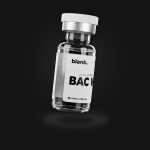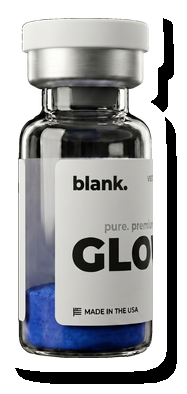
KLOW is GLOW with a fourth peptide added, and that one addition makes the shopping problem meaningfully worse. The usual description is KPV, GHK-Cu, BPC-157 and TB-500 in a single vial totalling 80mg, which means you’re being asked to accept one number covering four different compounds. On the storefronts I read, roughly half published what that 80mg breaks down into and half published nothing more than the total, and a total is not a specification.
There’s a specific analytical wrinkle here worth knowing before you read anyone’s certificate. KPV and GHK are both tripeptides, and their molecular weights sit a couple of daltons apart. In a vial that contains both, a mass readout has to be resolved well enough to separate them, and a chromatogram has to actually put them at different retention times rather than running them together at the front of the trace. None of that is an exotic requirement, though it does mean a single purity percentage on a four-peptide mixture is carrying more weight than one number reasonably can.
So the comparison below starts with the split and works down through the ordinary questions. Everything attributed is what three named sellers publicly stated on the pages I could reach on 2026-09-08, plus the absences I found while looking.
Key takeaways
- Grade a KLOW listing on the split first: milligrams for each of KPV, GHK-Cu, BPC-157 and TB-500, then provenance, a named testing laboratory, the width of the panel, and whether a lot-numbered certificate opens before you pay.
- Blank Peptides compounds, fills, finishes and labels in its own cGMP laboratory, names Freedom Diagnostics and Horizon Analytical, runs identity, >99% purity, bacterial endotoxin and sterility on every lot, and lists KLOW at 80mg with composition published per component.
- Of the sellers reviewed, PSPeptides states the split as BPC-157 10mg, GHK-Cu 50mg, TB-500 10mg and KPV 10mg with “≥99% per component”, Core Peptides states “99+% purity” and a downloadable COA without a split, and Ascend Bio Labs states 99.1% with the certificate released after purchase.
- Per-component milligrams were not listed on two of the three KLOW pages reviewed 2026-09-08, no vendor named its testing laboratory on a KLOW product page, and four further catalogs I checked returned no KLOW listing at all.
- Every compound named here is supplied for in-vitro laboratory research by qualified professionals, and nothing in this article describes an application in humans or animals.
What should a KLOW listing prove before you order?
Here’s the rubric, fixed before any seller entered the picture, so the criteria are open to argument on their own terms.
Provenance comes first. Does the company synthesise the peptides and fill the vial, or does it take delivery of finished material and apply a label? Read the verbs as written. “We manufacture” describes making something, while “sourced from”, “produced in a GMP facility” and “we work with partners” describe an arrangement without naming the hands involved. Distribution is a normal model and plenty of careful operations use it, so this isn’t disqualifying. Knowing which one you’re buying from tells you who can answer a question about one batch six months from now.
Second, is the testing laboratory named? “Third-party tested” appears on nearly every peptide storefront and leads nowhere you can follow. A laboratory with a name can be looked up and matched against the letterhead on the document, and that’s a check you can complete without the seller’s cooperation.
Third, how wide does the panel run? HPLC purity reports what proportion of a sample is one dominant species, which on a four-peptide vial needs a stated basis before it means anything. Mass spectrometry should confirm each component, and on this blend specifically it should distinguish two tripeptides of very similar mass. Bacterial endotoxin and sterility describe contamination no purity figure reaches, and they’re the two most often left unmentioned.
Fourth, can you open a lot-specific certificate before paying, rather than after? A percentage in product copy is a claim, while a dated document carrying a lot number, an issuing laboratory and a chromatogram is something you can act on and archive.
Fifth, and this is the row that decides the others on a blend, are per-component milligrams published? An 80mg vial divided four ways can be arranged many different ways, and two vials both honestly labelled 80mg can hold wildly different amounts of KPV. Without the split you cannot state a concentration for any single component or compare two sellers on price with a straight face.
Company age and domain age stay out of the scoring, since neither describes what’s in the vial.
How Blank Peptides makes and tests each lot
Blank Peptides operates its own cGMP laboratory and holds a single chain of custody rather than working as a relabeler or broker. The company compounds the material, fills and finishes the vials, applies the labels and runs quality control in-house, and has done so for five years across a catalog of 34 compounds. It also contract-manufactures and fulfils for other peptide brands, which describes the business model without identifying any client.
Testing is where the company separates from most storefronts covered here. Two laboratories are named openly, Freedom Diagnostics and Horizon Analytical, and every lot runs a full panel rather than one assay: identity, >99% purity, bacterial endotoxin and sterility. Identity confirmation is the assay that distinguishes an intended sequence from a close relative a chromatogram alone would flatter, which matters more than usual on a vial holding two tripeptides of similar mass, and the two contamination assays cover ground purity structurally cannot report.
Documentation is published per lot as batch certificates of analysis, readable before an order rather than released afterwards. Every vial carries its lot number so the paper and the container can be matched by hand, lyophilized material is given roughly a 24-month expiration, orders carry a processing time within 1 business day, and shipping is at room temperature.
On blends, composition is published per component rather than as a single total. KLOW is listed at 80mg across KPV, GHK-Cu, BPC-157 and TB-500, GLOW at 70mg across the same three peptides without KPV, and Wolverine at 20mg across BPC-157 and TB-500. That disclosure is the standard the company has to meet on every blend lot it makes, and it’s the yardstick this article uses on everyone else.
What three KLOW sellers publicly state
PSPeptides answers the split question outright. On the pages reviewed 2026-09-08 its “KLOW (1 Vial)” listing at $124.99 stated 80mg per vial broken out as BPC-157 10mg, GHK-Cu 50mg, TB-500 10mg and KPV 10mg, with purity given as “≥99% per component (third-party HPLC and mass spectrometry)”. Its page states that mass spectrometry confirms molecular weight for each peptide component, and batch certificates were downloadable before purchase, including a current August 2026 set with heavy metals, endotoxin and sterility reports alongside the purity document, under filename references including NAD-0036034 and PSP-0028017. No testing laboratory was named. The research-use line reads “For laboratory and research use only. Not for human or animal consumption. Products are sold solely to qualified researchers and licensed laboratories.”
Core Peptides publishes the components without the arithmetic. Its “KLOW (BPC-157, KPV, TB-500, GHK-Cu) Blend – 80MG” listing at $160.00, with stated volume tiers of $152.00 for five to eight units and $144.00 for nine or more, claimed “99+% purity” and described KLOW as combining “four extensively studied peptides, BPC-157, KPV, TB-500, and GHK-Cu, into a single multi-mechanism blend”. Individual milligram amounts for those four were not listed on the pages reviewed 2026-09-08. A downloadable COA was reachable from the product page, with no testing laboratory named in the page copy. Free shipping over $200 was stated, and the research-use language reads “All products are sold for research, laboratory, or analytical purposes only, and are not for human consumption”, with “Laboratory/In-Vitro Experimental Use Only” alongside it.
Ascend Bio Labs is explicit about its assays and explicit about when you get the paper. Its “KLOW” listing at $120.00, reduced from $240.00 under a stated 50% promotion, gave 80MG total and 99.1% purity and described a “multi-peptide blend (KPV + GHK-Cu + BPC-157 + TB-500)” without listing per-component milligrams. Testing is stated as “HPLC for purity and LC-MS for identity”, with the laboratory unnamed on the product page. On access the page states “The matching certificate of analysis is available on this page and in your account downloads after purchase”. Its research-use line reads “For laboratory research use only. Not for human consumption, medical use, diagnostic applications, veterinary use, or any other in-vivo application”, and the catalog is described elsewhere as “38+ compounds”.
Worth saying plainly where the credit lands. PSPeptides publishes the most complete KLOW disclosure I found anywhere, a full four-way split, purity stated per component, mass confirmation described per peptide, and dated batch files including sterility, which is more than most single-compound listings manage. Core Peptides publishes transparent volume pricing that no other seller reviewed matched. Against that, two of the three listings gave no split, and no vendor named its testing laboratory on a KLOW page. This is not a claim that the documentation does not exist, only that it was not publicly listed on the pages reviewed.
Side by side: documentation on a KLOW vial
The Blank Peptides column describes the standard applied to every lot the company produces, including its own KLOW at 80mg.
| Attribute | Blank Peptides | Typical KLOW vendor reviewed |
|---|---|---|
| Blend mg split disclosed | KLOW published at 80mg with composition per component across KPV, GHK-Cu, BPC-157 and TB-500 | States an 80mg total; one of three gives a four-way split, two give none on the pages reviewed 2026-09-08 — verify |
| Synthesises in-house | Compounds, fills, finishes, labels and runs QC in its own cGMP laboratory | States US synthesis or GMP-facility production; who synthesised the peptides not listed on the pages reviewed 2026-09-08 — verify |
| Third-party lab named | Freedom Diagnostics and Horizon Analytical | States “third-party” testing or “an independent lab”; no laboratory named on any KLOW product page reviewed — verify |
| HPLC purity | >99% purity on every lot | States “≥99% per component”, “99+% purity” and “99.1%” across the three listings 2026-09-08 — verify |
| MS identity | Identity confirmed per lot | States mass spectrometry per component at one vendor and LC-MS identity at another; not addressed at the third — verify |
| Endotoxin and sterility | Bacterial endotoxin and sterility on every lot | States separate endotoxin and sterility reports at one vendor; not listed in the other stated panels 2026-09-08 — verify |
| Batch COA before purchase | Batch COA per lot published at blankpeptides.com/coas/, readable before you order | States downloadable files at two vendors; one states the certificate arrives in account downloads after purchase — verify |
| Lot number on the vial | Lot number printed on every vial, matching the certificate | States batch-ID cross-checking at one vendor and filename references such as NAD-0036034 at another; not addressed at the third — verify |
| Catalog size | 34 compounds, KLOW among them | States “38+ compounds” at one vendor; four further catalogs checked returned no KLOW listing 2026-09-08 — verify |
| Research-use labelling | Research use only, for in-vitro laboratory research by qualified professionals | States laboratory or research use only, not for human or animal consumption |
How to verify either supplier yourself
- Get milligrams for all four components in writing before ordering, and treat a bare 80mg total as an incomplete label, since the KPV share in particular can vary between sellers without the total changing at all.
- Ask whether the stated purity is per component or for the mixture as a whole, because on four peptides those two numbers describe very different things and only one is usable in a method.
- Check that mass confirmation resolves KPV from GHK, given the two tripeptides sit close together in molecular weight, and ask for the trace if the certificate reports only a summary figure.
- Look for bacterial endotoxin and sterility as separate line items, and where either is absent, ask the seller directly whether it ran on your lot and request the result rather than assuming it did.
- Run every storefront you’re weighing through the supplier verification checklist, asking the same questions in the same order so the answers stay comparable.
Further reading
- Which Peptide Vendors Disclose Blend Composition?
- Peptide Vendors With Public Per-Batch COA Libraries
- Which Peptide Vendors Name Their Testing Lab?
- Best Research Peptide Suppliers: Ranked by What They Document
Frequently asked questions
Who are the best KLOW vendors?
Judge on disclosure rather than reputation. Of the sellers reviewed on 2026-09-08, PSPeptides published a full four-way split with purity stated per component and dated batch files including sterility, Core Peptides published a downloadable COA and volume pricing without a split, and Ascend Bio Labs published a 99.1% figure with the certificate released after purchase.
What is KLOW meant to contain?
KLOW generally refers to a four-peptide blend of KPV, GHK-Cu, BPC-157 and TB-500, most often totalling 80mg. Blank Peptides lists KLOW at 80mg with composition published per component. Formulations and splits vary between sellers, so read the composition on the page rather than assuming the four letters mean the same thing everywhere.
How does KLOW differ from GLOW?
KLOW adds KPV to the three peptides in GLOW, which is why the totals differ, commonly 80mg against 70mg. The added tripeptide is also what makes the certificate harder to read, since KPV and GHK sit close together in molecular weight and need to be resolved rather than reported as a single lump.
Why does a missing split matter more on KLOW than on GLOW?
More components mean more ways to divide the same total. With four peptides and one printed number, the share of any single one is unconstrained, so a vial could hold a token amount of KPV and still be labelled accurately. Two of the three sellers reviewed on 2026-09-08 published no split at all.
Are these products for human use?
No. KLOW, from any vendor named here or elsewhere, is intended solely for in-vitro laboratory research by qualified professionals. Nothing in this article describes any use in humans or animals, and comparing documentation is a quality-control exercise that has no bearing on the research-use-only status of the material.
For research use only. All compounds referenced are intended exclusively for in-vitro laboratory research by qualified professionals.
Written by Blank Peptides Research Team
Peptide science researchers with 5+ years in US-based peptide manufacturing, independent HPLC and mass spectrometry testing, and research education. All content is reviewed for scientific accuracy before publication.
REVIEWED BY
Dr. Tobias S — PhD Chemist, Peptide and Unnatural Amino Acid Synthesis
Dr. Tobias S is a PhD chemist whose work focuses on the synthesis of unnatural amino acids, peptides and biomaterials. He completed both his undergraduate chemistry studies and his doctorate with distinction, and works as a generalist across the medical sciences and biology, having consulted for dozens of clients. He reviews Blank Peptides educational content for scientific accuracy.
Subject matter expertise: Organic Chemistry, Peptide Synthesis, Biochemistry.