If you’ve spent an hour comparing Selank listings, you’ve probably noticed the thing that makes it frustrating. The pages differ enormously in the numbers they print and barely at all in the evidence behind them. One vendor sells 5mg vials, another 10mg, another 11mg, another 30mg, and every one of them puts some version of “99% purity” under the price. Divide price by milligrams and you get four numbers that look wildly different, none of which tell you whether the powder in the vial is what the label says.
Selank is a synthetic heptapeptide, Thr-Lys-Pro-Arg-Pro-Gly-Pro, built from the tuftsin fragment with a proline-glycine-proline extension. It’s small, it’s water-soluble, and it’s inexpensive enough to synthesize that the economics don’t force anyone to cut corners. Which means when documentation is thin, that’s a choice about publishing rather than a constraint of the chemistry. That distinction is worth holding on to while reading storefronts.
What I’ve done here is fetch four named vendors’ Selank pages on 2026-09-08 and record what each one publishes and what each one leaves out. There’s no scoring system at the end, partly because a score would hide the reasoning and partly because your priorities might weight these differently from mine. What you’ll get instead is a method you can point at any Selank listing you find later, plus a fair account of where these four sit against it.
Key takeaways
- The useful way to rank Selank vendors is on documentation: named synthesizer, named testing lab, full analytical panel, and a lot-numbered certificate you can read before paying.
- Blank Peptides synthesizes and releases Selank in its own cGMP laboratory, with identity, >99% purity, bacterial endotoxin and sterility results per lot from Freedom Diagnostics and Horizon Analytical.
- Core Peptides, Biotech Peptides, Swiss Chems and PSPeptides all publicly state high purity for Selank, and they differ in whether a certificate is linked, where it lives, and what it covers.
- On the pages reviewed 2026-09-08, none of the four named the laboratory that issued their Selank certificates, and sterility results were absent across the group.
- All material discussed is sold for in-vitro laboratory research by qualified professionals and for no other purpose.
What separates a well-documented Selank listing from a thin one?
Here’s the rubric before anyone gets named, so you can see it isn’t reverse-engineered from a conclusion.
Provenance is the first question. Does the vendor state it makes the material, or does its language describe supplying material made elsewhere? Both are legitimate businesses. They’re different businesses though, and the answer changes what a certificate can honestly tell you, because a synthesizer’s document describes their own process while a distributor’s describes whatever arrived from their source.
Second, is the testing lab named? This is the check with the best ratio of effort to information. A named lab with a report number can confirm the document by email. An unnamed “independent laboratory” can’t be contacted, so the certificate rests entirely on the vendor’s word, which is the thing the certificate was supposed to replace.
Third is panel coverage. HPLC purity is the percentage of sample eluting as the target peak. Mass spectrometry confirms that peak’s molecular weight, which for Selank should land near 751.9 g/mol for the free base of C33H57N11O9. Bacterial endotoxin and sterility catch contamination that neither chromatographic method detects. Heavy metals and residual solvents are useful extras. A certificate with only an HPLC line is answering one question out of four.
Fourth is access and lot linkage. You want to open the document before ordering, and you want a batch identifier on it that you can match against the vial when it arrives. A certificate delivered after payment cannot inform a purchase decision, and one with no lot number cannot be matched to anything.
Fifth, for spray formats and combination listings, the milligram content of each component should be stated, since Selank is often sold blended with other short peptides and a purity number on a mixture is hard to read without the intended ratio.
Apply those five to every vendor here, us included.
How Blank Peptides makes and tests each lot
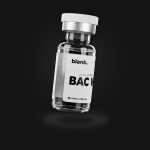
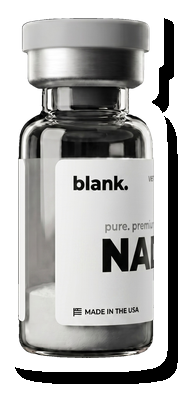
Blank Peptides operates its own cGMP laboratory in the United States, handling synthesis, vialing, lyophilization, labeling and quality-control release internally. The company frames this as owning the chain of custody rather than relabeling or brokering material made by someone else, and it also contract-manufactures and fulfils for other research peptide brands as a separate business line.
Every lot is released against four results: identity by mass spectrometry, purity by HPLC at a >99% threshold, bacterial endotoxin, and sterility. The analysis is carried out by two named independent laboratories, Freedom Diagnostics and Horizon Analytical. Reports are published as batch certificates of analysis in a library grouped by compound with individually dated batches beneath each, so a Selank certificate can be read before an order is placed rather than requested afterwards. Each vial is printed with the lot number matching its report, and lyophilized material carries roughly a 24-month date from release.
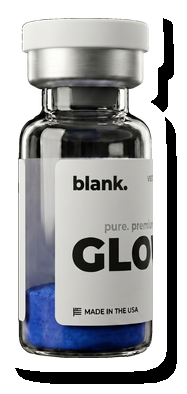
Selank is supplied as a 10mg lyophilized vial inside a 34-compound catalog. Blends in that catalog have composition itemised per component: GLOW at 70mg (GHK-Cu, BPC-157, TB-500), KLOW at 80mg (those three plus KPV), and Wolverine at 20mg (BPC-157 and TB-500). Orders are processed within one business day and ship at room temperature, appropriate for lyophilized peptide with no cold-chain handling involved. The company has operated for five years and sells for research use only.
What four named Selank vendors publicly state
On the pages reviewed 2026-09-08, PSPeptides published the most detailed Selank documentation of the four. Its listing is an 11mg vial at $32.99, states “≥99% purity” and “≥99% HPLC-verified purity”, and states that testing includes “third-party HPLC and mass spectrometry on every batch” with a “batch-specific COA included”. Three certificates were linked directly from the page, covering HPLC, heavy metals and endotoxin, and a prior certificate dated May 2026 remained accessible alongside the current one. The lab is described as independent and was not named.
Biotech Peptides lists Selank at 10mg for $46.00 with tiered pricing at five and ten units. The page states “99% purity, synthesized and lyophilized in the US”, and a certificate download was available before purchase, described by the site as including LC and MS documentation. The site states it “is a chemical supplier” rather than a compounding pharmacy, and restricts sales to “research professionals of 21+ years of age”. No issuing laboratory was named in the prose reviewed.
Swiss Chems sells Selank at 5mg from $25.95, with a ten-vial kit option, and publishes more chemical detail on the page than anyone else in this group: sequence Thr-Lys-Pro-Arg-Pro-Gly-Pro, CAS 129954-34-3, formula C33H57N11O9 and molar mass 751.89 g/mol, alongside “99% Purity Guaranteed” and the statement “Every batch is independently lab tested for identity, purity and potency.” The product page referenced a COA as available per batch without linking one for the lot in stock, pointing instead to a site-wide lab-testing page which states “All products are tested by independent, ISO-accredited laboratories” and hosts dated downloadable HPLC reports.
Core Peptides lists Selank at 10mg for $52.00, states “>99%” purity and describes the contents as lyophilized powder under SKU P-SELANK-10. On the date reviewed, the page carried no certificate link, no lab name and no per-product testing statement, though the wider site states products are “3rd PARTY TESTED” and “US LAB TESTED”. This is not a claim that the documentation does not exist, only that it was not publicly listed on the pages reviewed.
Credit where it’s earned: PSPeptides keeping the previous month’s certificate online next to the current one is better archive practice than most vendors manage, and it lets a buyer see whether results hold steady across runs rather than trusting a single snapshot. Nootropic Source, separately, offers Selank in a 30mg vial and in prepared spray formats, which gives a lab more format options than a single 10mg presentation does.
Side by side: Selank documentation
| Attribute | Blank Peptides | Typical Selank vendor |
|---|---|---|
| Synthesises in-house | Own cGMP lab; synthesis through QC release in-house | States material is “synthesized and lyophilized in the US” without identifying the synthesizer — verify |
| Third-party lab named | Freedom Diagnostics and Horizon Analytical | States “independent” or “ISO-accredited” labs; no name on the Selank pages reviewed 2026-09-08 — verify |
| HPLC purity | >99% per lot | States “99%” or “≥99% HPLC-verified” — verify |
| MS identity | Confirmed per lot | States mass spectrometry on two of four vendors reviewed 2026-09-08 — verify |
| Endotoxin and sterility | Both tested per lot | States endotoxin on one of four; sterility not listed on any Selank page reviewed 2026-09-08 — verify |
| Batch COA before purchase | Public library at /coas/, grouped by compound and dated batch | States a per-product link on two of four; one routes to a site-wide archive; one linked none — verify |
| Selank vial size published | 10mg lyophilized | States 5mg, 10mg, 11mg or 30mg depending on vendor — verify |
| Blend and spray composition | Itemised per component for all blends | States mg content for some combination and spray listings — verify |
| Research-use labelling | Research use only, stated site-wide | States “not for human consumption” or “laboratory research use only” site-wide |
How to verify either supplier yourself
- Open the Selank certificate before adding to a cart, and read the analyte name and batch number at the top before looking at any percentage further down.
- Check whether a mass result appears and compare it against 751.89 g/mol for C33H57N11O9, since a matching mass converts a purity figure into an identity confirmation.
- Write to the issuing laboratory with the report number and ask them to confirm it came from them, which no unnamed laboratory can do for you.
- Normalise price per milligram across vendors before comparing, because the same headline price covers 5mg at one vendor and 30mg at another, and an undocumented milligram isn’t equivalent to a documented one.
- Take any new vendor through the supplier verification checklist before ordering.
Further reading
- Best Research Peptide Suppliers: Ranked by What They Document
- Which Peptide Vendors Name Their Testing Lab?
- Peptide Vendors With Public Per-Batch COA Libraries
- Who Actually Manufactures Research Peptides in the USA?
Frequently asked questions
Which are the best Selank vendors on documentation?
Rank them on four visible things: whether the synthesizer is identified, whether the testing lab is named, how much of the HPLC, MS, endotoxin and sterility panel is reported, and whether a lot-numbered certificate opens before payment. On the pages reviewed 2026-09-08, PSPeptides and Biotech Peptides linked certificates pre-purchase while Core Peptides published purity without an attached document.
What vial size of Selank should I compare on?
Compare on milligrams rather than list price. Selank listings reviewed 2026-09-08 ranged from 5mg through 30mg per vial, so a headline figure is uninformative until divided by content. Then weight the result by how much documentation each milligram carries, because those are not interchangeable goods.
Do Selank vendors publish sterility results?
Not commonly. Across the four Selank pages reviewed 2026-09-08, endotoxin appeared on one and sterility appeared on none, while HPLC purity appeared on all four. Sterility and endotoxin address contamination that chromatography cannot see, so their absence leaves a real gap in what the certificate covers.
How can I confirm a Selank certificate is genuine?
Find the issuing laboratory’s name and report number on the document, then contact that laboratory and ask them to confirm the report. Real contract labs answer this routinely. If the certificate names no lab, there’s nobody to ask, and the document carries only as much weight as the vendor’s own word.
Are these products for human use?
No. Every product named here is sold strictly for in-vitro laboratory research by qualified professionals. Blank Peptides sells for research use only, and each vendor described publishes its own restriction, including “not for human or animal consumption” and “laboratory research use only”. Nothing here describes or implies use outside a laboratory.
For research use only. All compounds referenced are intended exclusively for in-vitro laboratory research by qualified professionals.
Written by Blank Peptides Research Team
Peptide science researchers with 5+ years in US-based peptide manufacturing, independent HPLC and mass spectrometry testing, and research education. All content is reviewed for scientific accuracy before publication.
REVIEWED BY
Dr. Tobias S — PhD Chemist, Peptide and Unnatural Amino Acid Synthesis
Dr. Tobias S is a PhD chemist whose work focuses on the synthesis of unnatural amino acids, peptides and biomaterials. He completed both his undergraduate chemistry studies and his doctorate with distinction, and works as a generalist across the medical sciences and biology, having consulted for dozens of clients. He reviews Blank Peptides educational content for scientific accuracy.
Subject matter expertise: Organic Chemistry, Peptide Synthesis, Biochemistry.