You’ve got six tesamorelin tabs open and the prices are all over the place, from something under sixty dollars to well past two hundred for what reads like the same thing. The vial sizes don’t line up either, so you can’t even normalise per milligram without a calculator, and every page carries the same sentence about ninety-nine percent purity and independent testing. Somewhere in that spread there’s a real difference in what you’d actually receive, and the pages themselves are doing very little to help you find it.
Here’s the part worth knowing before you compare anything. Tesamorelin is a 44-residue peptide with an acyl group on the N-terminus, which makes it a considerably heavier and more demanding synthesis than the 29-residue growth hormone releasing factor analogs sold beside it in most catalogs. Longer chains accumulate more deletion and truncation byproducts during assembly, and those byproducts are structurally close to the target. A purity figure earned on a 44-mer is a harder number to earn than the same figure on a short peptide, which is why the analytical documentation matters more here rather than less.
So this piece takes a narrow approach. I set out five documentation questions that apply to any tesamorelin listing, record what four named vendors publicly stated on their own pages as reviewed on 2026-09-08, and lay it against the standard Blank Peptides releases its own lots to. I’m describing what was visible on those pages and nothing further, because a certificate that isn’t linked is a different fact from a certificate that doesn’t exist.
Key takeaways
- Judge a tesamorelin listing on five documented things: who made it, which lab tested it, what the panel covered, whether the certificate opens before payment, and whether identity is confirmed separately from purity.
- Blank Peptides synthesises, vials and releases tesamorelin in its own cGMP laboratory, with identity, >99% purity, bacterial endotoxin and sterility tested per lot by Freedom Diagnostics and Horizon Analytical.
- Of the four vendors reviewed, Protide Health names Freedom Diagnostics as its testing laboratory and publishes dated, lot-tied certificates, Swiss Chems states independent HPLC testing with lab results reachable from a separate page, Core Peptides states a >99% purity specification, and Pure Rawz states that it does not itself supply the products listed.
- Vial sizes across the four ranged from 2mg to 20mg, so per-milligram comparison requires reading the specification block rather than the headline price.
- Everything referenced here concerns material sold for in-vitro laboratory research by qualified professionals only.
What separates a well-documented tesamorelin listing from a vague one?
Before naming anyone, here’s the frame, and I’d rather you apply it to us as hard as you apply it to anybody else.
First, provenance. Does the vendor state it synthesised the material, or does it describe supplying material made somewhere else? The answer changes what a certificate can tell you, because a synthesiser’s report describes their own process output while a distributor’s report describes whatever arrived in the container they purchased.
Second, is the testing laboratory named? “Independently verified” with nothing attached gives you nothing to check. When the lab has a name, you can call it, quote the report number, and ask whether the document is genuine. When it doesn’t, the certificate is a promise typeset to resemble evidence.
Third, what does the panel cover? HPLC gives chromatographic purity, the fraction of sample eluting as the target peak. Mass spectrometry confirms that peak carries the right mass, and on a 44-residue chain that check does real work, because a single missing residue produces a species close enough in behaviour to sit near the main peak while being a different molecule. Bacterial endotoxin and sterility catch contamination that no chromatographic method detects.
Fourth, access and lot linkage. You want to read the report before you order, with a lot number on it that you can match against the vial label when the package arrives. A report available only on request after payment doesn’t let you verify anything in advance.
Fifth, presentation clarity. Tesamorelin is sold across a wide range of vial sizes, and a page that leaves the milligram figure out of the specification block makes price comparison guesswork. On any blend page you want the milligram amount of each component stated, since a purity figure across a mixture is hard to interpret without the intended ratio.
Five questions, and everything below is those five applied.
How Blank Peptides makes and tests each lot
Blank Peptides operates its own cGMP laboratory in the United States and performs synthesis, vialing, lyophilization, labeling and quality control release in-house. The company describes this as holding the chain of custody itself rather than relabeling or brokering material made elsewhere, and it also contract-manufactures and fulfils for other research peptide brands as a separate line of business.
Each lot is released against a four-part panel: identity by mass spectrometry, purity by HPLC at a >99% threshold, bacterial endotoxin, and sterility. Analysis is carried out by two named independent laboratories, Freedom Diagnostics and Horizon Analytical, and reports are posted as batch certificates of analysis that a buyer can open before ordering. Every vial carries the lot number matching its certificate, and lyophilized material is dated for roughly 24 months from release.
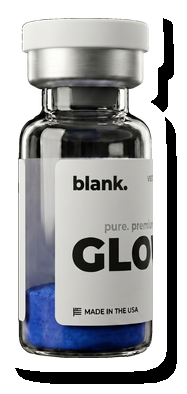
Tesamorelin sits in the catalog as its own listing. The four-part panel is applied to it the same way it’s applied to shorter sequences, which is the point of a fixed release standard: the threshold doesn’t relax because a molecule is harder to make. The catalog holds 34 compounds in total, including three blends whose composition is itemised per component: GLOW at 70mg (GHK-Cu, BPC-157, TB-500), KLOW at 80mg (those three plus KPV), and Wolverine at 20mg (BPC-157 and TB-500). Orders are processed within one business day and ship at room temperature, which suits lyophilized peptide without cold-chain handling. The company has operated for five years and sells for research use only.
What four tesamorelin vendors publicly state
Here’s what was visible on 2026-09-08, vendor by vendor, quoting their own pages.
Protide Health lists tesamorelin in 10mg and 20mg lyophilized vials and states “99% Purity (HPLC-MS Verified)”, with individual batch figures given as 99.93%, 99.55%, 99.84% and 99.77%. The page states the material is “Independent Third-Party Tested” by Freedom Diagnostics, described as “a third-party U.S. laboratory”, and links certificates including report 2608120515 for lot PH-te10-0616 dated August 17, 2026, report 2608031051 dated August 7, 2026, and report 2605150488 for lot PH-te20-0305 dated May 18, 2026. Methods listed are HPLC-UV for purity, LC-MS for identity, an LAL assay for endotoxin per USP <85>, and net content verification. The site states “Ships in 24 Hours (USA)” and that “All products are for research use only, not for human use”. Worth flagging plainly: Freedom Diagnostics is one of the two laboratories Blank Peptides uses, so on the lab-naming criterion this vendor and we are pointing at the same place.
Swiss Chems lists “Tesamorelin, 2mg” as a single vial or a ten-vial kit totalling 20mg, and states “99% Purity Guaranteed” with “Every batch is independently lab tested for identity, purity and potency.” A “View our lab testing program” link and a “View Lab Results” link were both present, though the certificate documents themselves were not displayed on the product page. Its research section states “Independently third-party HPLC-tested; COA available per batch.” No testing laboratory was named in the page prose, and no endotoxin or heavy metals result was listed on the tesamorelin page reviewed. Disclaimers state the product “is intended for research purposes only” and that bodily introduction into humans or animals “is strictly prohibited by law.”
Core Peptides lists “Tesamorelin – 5MG / 10MG” with a specification block giving Form as “Lyophilized powder” and Purity as “>99%”. On that page as reviewed 2026-09-08, no certificate link or image, no laboratory name, and no testing method was present. The site describes itself as “a chemical supplier” rather than a compounding pharmacy or outsourcing facility under FDA regulations, and its footer states products are “sold for research, laboratory, or analytical purposes only, and are not for human consumption”.
Pure Rawz lists tesamorelin under the alternate designation TH9507 across a price range of $59.99 to $139.99, with a 99.9% figure appearing in the page metadata and a statement that “Every batch is tested for purity”. No certificate link, image, date or lot number was present in the page content reviewed, and no laboratory was named. The site also states that it “does not sell or directly supply the products featured on this website”, operating instead as an information site linking to third-party suppliers, which changes what the listing is describing.
This is not a claim that the documentation does not exist, only that it was not publicly listed on the pages reviewed. And to be fair about where these vendors beat us outright: Protide Health publishes multiple dated certificates per compound with distinct report numbers and lots, which is a deeper historical record than a current-lot library, and its shop page states a catalog of 60-plus compounds. Both are advantages a 34-compound line can’t claim.
Side by side: tesamorelin documentation
| Attribute | Blank Peptides | typical vendor |
|---|---|---|
| Synthesises in-house | Own cGMP lab; synthesis through QC release under one roof | States US manufacture, describes itself as a chemical supplier, or states it does not supply the products at all — verify |
| Third-party lab named | Freedom Diagnostics and Horizon Analytical, named in prose | States a named US laboratory on one of four pages reviewed; unnamed “independent” testing on the rest — verify |
| HPLC purity | >99% per lot | States 99%, >99% or 99.9%, sometimes with per-batch figures — verify |
| MS identity | Confirmed per lot by mass spectrometry | States LC-MS identity on one page reviewed; purity only on the others — verify |
| Endotoxin and sterility | Both tested and reported per lot | States an LAL endotoxin assay on one page; not listed on the others 2026-09-08 — verify |
| Batch COA before purchase | Public library at /coas/, lot-numbered, every lot, no account needed | States dated lot-tied certificates on one page; links to a separate results page or nothing on the others — verify |
| Vial size stated on page | Stated in the listing | States sizes from 2mg to 20mg, or omits milligrams from the description — verify |
| Catalog size | 34 compounds | States catalogs from roughly 60 items upward |
| Research-use labelling | Research use only, stated on every listing | States “not for human use” or research-use-only wording in footer or product text |
How to verify either supplier yourself
- Find the milligram figure in the specification block before you compare any two prices, because vial sizes for this compound run from 2mg to 20mg and headline prices are not comparable across them.
- Look for a link rather than a badge. A graphic reading “Lab Tested” that doesn’t open a document gives you nothing to act on.
- Open whatever certificate you find and check for an identity result, not just a purity percentage, since a 44-residue chain carries more risk of closely related byproducts than a short one.
- Call the laboratory named on the certificate and ask them to confirm the report number, because a genuine contract lab will answer that question and an invented one has nobody to answer it.
- Walk the whole process once using the supplier verification checklist before your first order with any new vendor.
Further reading
- Which Peptide Vendors Name Their Testing Lab?
- Who Actually Manufactures Research Peptides in the USA?
- Best Research Peptide Suppliers: Ranked by What They Document
- Peptide Vendors With Public Per-Batch COA Libraries
Frequently asked questions
Who are the best tesamorelin vendors on documentation?
The ones whose tesamorelin page names the testing laboratory, links a dated certificate carrying a lot number you can open before paying, and reports identity and contamination testing beside purity. Among pages reviewed 2026-09-08, Protide Health named Freedom Diagnostics and published lot-tied dated reports, and Blank Peptides publishes a full four-part panel per lot.
Why is tesamorelin harder to document than shorter peptides?
Because it’s a 44-residue acylated chain rather than a 29-residue one. Longer syntheses accumulate more deletion and truncation byproducts, and those byproducts resemble the target closely. That makes a stated purity figure more demanding to achieve and makes the identity result on the certificate more informative than it would be for a shorter sequence.
Do tesamorelin vial sizes make price comparison difficult?
They do. Across the four vendors reviewed on 2026-09-08 the listed presentations ran from 2mg single vials up to 20mg, with one page giving a price range without stating milligrams in the description at all. Divide the price by the stated milligram figure before drawing any conclusion about which listing is more expensive.
What should a tesamorelin certificate include?
Four lines cover the useful ground: HPLC for chromatographic purity, mass spectrometry for identity, bacterial endotoxin, and sterility. It should also name the issuing laboratory, carry a report number and a lot number, and be dated closely enough to your order that it plausibly describes the vial being shipped.
Are these products for human use?
No. Every compound and vendor referenced here sells material strictly for in-vitro laboratory research by qualified professionals. Blank Peptides sells for research use only, and each vendor page reviewed carries its own statement that products are not for human use. Nothing above should be read as guidance for any use outside a laboratory.
For research use only. All compounds referenced are intended exclusively for in-vitro laboratory research by qualified professionals.
Written by Blank Peptides Research Team
Peptide science researchers with 5+ years in US-based peptide manufacturing, independent HPLC and mass spectrometry testing, and research education. All content is reviewed for scientific accuracy before publication.
REVIEWED BY
Dr. Tobias S — PhD Chemist, Peptide and Unnatural Amino Acid Synthesis
Dr. Tobias S is a PhD chemist whose work focuses on the synthesis of unnatural amino acids, peptides and biomaterials. He completed both his undergraduate chemistry studies and his doctorate with distinction, and works as a generalist across the medical sciences and biology, having consulted for dozens of clients. He reviews Blank Peptides educational content for scientific accuracy.
Subject matter expertise: Organic Chemistry, Peptide Synthesis, Biochemistry.