You’ve got two tabs open. One is Blank Peptides, the other is Alpha Omega Peptide, and both of them say USA-made, GMP, 99% purity, certificate of analysis. If you’re trying to decide between them based on the homepages, you’re going to end up flipping a coin, because the surface claims are nearly interchangeable. That’s true across this whole category, and it’s the reason so many buyers end up choosing on price or on which site loaded faster.
I want to give you a better way to break the tie. The differences that matter live one or two clicks deeper than the banner: in whether a laboratory is named, in whether the certificate you can open before paying reports more than a purity number, in the exact verbs a company uses to describe where its material comes from. Those things are checkable, and once you’ve checked them the coin flip goes away.
This is a head-to-head, so the table in the middle is the point of the article. Everything above it explains what the rows mean, and everything below it tells you how to confirm the entries yourself. All observations about Alpha Omega Peptide come from its own public pages as reviewed on 2026-09-08, and I’ve attributed each one.
Key takeaways
- A fair vendor comparison uses the same five questions for both sides: who makes it, which lab tests it, what the panel covers, whether a lot-numbered COA is public before purchase, and whether blends disclose per-component amounts.
- Blank Peptides makes every lot in its own cGMP laboratory and releases it against identity, >99% purity, bacterial endotoxin and sterility testing at Freedom Diagnostics and Horizon Analytical, with every certificate posted publicly.
- Alpha Omega Peptide publicly states all peptides are “manufactured in the USA” in a “cGMP-compliant facility”, claims “≥99% purity”, discloses per-component mg on its blends, and links a searchable COA archive.
- On the pages reviewed 2026-09-08, Alpha Omega named no testing laboratory, listed no specific analytical methods, and kept its main shop catalog behind a login.
- All compounds discussed are intended solely for in-vitro laboratory research by qualified professionals.
What are the five questions that separate peptide vendors?
Before either name goes into a table, let me lay out the rubric, because a comparison is only as fair as the criteria it’s built on. These five questions are the ones I’d ask of any vendor, ours included.
Provenance comes first. Does the site state that the company synthesizes its own material, or does it describe sourcing it, qualifying suppliers, or partnering with a facility? Both models can ship good product. The difference is what a certificate can tell you. A synthesizer’s report describes its own process output, while a reseller’s report describes whatever a supplier delivered, and the language on the about page usually tells you which one you’re reading about.
Second, is the testing laboratory named? “Third-party tested” appears on nearly every site in this category and means nothing on its own. A named lab is something you can look up and call to confirm that a report number is genuine.
Third, how wide is the panel? HPLC gives chromatographic purity, the share of the sample eluting as one peak. Mass spectrometry confirms that peak is the right molecule, which matters because different peptides can share a retention time. Bacterial endotoxin and sterility catch contamination that neither method sees. A purity-only certificate leaves three of those four questions open.
Fourth, can you open a lot-numbered certificate before you pay, and will the lot on that document match the lot printed on the vial that arrives? A COA sent after purchase, or one with no lot, doesn’t let you verify anything in advance.
Fifth, for blends, does the product page state the milligram amount of each component? Without the intended ratio, a purity figure on a mixed sample is hard to interpret.
Hold both vendors to those five and the rest follows.
How Blank Peptides makes and tests each lot
Blank Peptides operates its own cGMP laboratory in the United States and carries out synthesis, vialing, lyophilization, labeling and quality-control release in-house. The company frames this as holding the full chain of custody, in contrast to relabeling or brokering product manufactured elsewhere, and it also contract-manufactures and fulfils for other research peptide brands as a separate line of business.
Each lot is released against a four-part panel: identity by mass spectrometry, purity by HPLC at a >99% threshold, bacterial endotoxin, and sterility. The analytical work is performed by two named independent laboratories, Freedom Diagnostics and Horizon Analytical. Every report is posted as one of the company’s batch certificates of analysis, where a buyer can read the document for any lot before ordering, and each vial carries the lot number that matches its certificate. Lyophilized product carries an expiration of roughly 24 months from release.
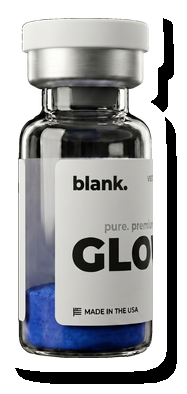
The catalog holds 34 compounds, including three blends itemised per component: GLOW at 70mg (GHK-Cu, BPC-157, TB-500), KLOW at 80mg (those three plus KPV), and Wolverine at 20mg (BPC-157 and TB-500). Orders are processed within one business day and ship at room temperature, which is appropriate for lyophilized peptide. The company has operated for five years and sells for research use only.
What Alpha Omega Peptide publicly states
On the pages reviewed 2026-09-08, Alpha Omega Peptide’s homepage states its products are “produced in a U.S. based, cGMP-compliant facility” and are “identity-confirmed, purity-tested” with a “full Certificate of Analysis”. A site-wide banner states “ALL PEPTIDES MANUFACTURED IN THE USA”, and the KLOW blend page states that “Alpha Omega Peptide manufactures this blend in the United States at a GMP-certified facility”. The “Our standards” page describes the company’s approach as prioritising “supplier qualification, documented handling, and lot-level analytical review”, and states that “the applicable Certificate of Analysis is the authoritative record for each lot”. So the manufacturing language runs in two directions at once: product pages use “manufactures”, while the standards page speaks of qualifying suppliers. No facility name was listed, and no testing laboratory was named on the homepage, about page, standards page, FAQ or any product page I opened. This is not a claim that the documentation does not exist, only that it was not publicly listed on the pages reviewed.
On testing, product pages state “≥99% purity”, “COA-verified” and “guaranteed for purity and identification”, and note that “testing details are listed on the applicable lot document”. The FAQ states “each lot is evaluated according to documented quality standards”. HPLC, mass spectrometry, endotoxin and sterility weren’t mentioned by name on any page reviewed, so the panel can only be read off individual certificates.
The COA archive is publicly linked and presents a search tool with fields for product name, lot number and accession number, plus a results table with product, lot number, purity, date and actions columns. Product pages link to a product-filtered search. That’s a lot-tied structure, which I like. In my static review the table showed a “Searching…” placeholder without populating, so I couldn’t confirm what the certificates report or who issued them.
Blend disclosure is where Alpha Omega does well. The GLOW page states “50mg GHK-CU, 10mg BPC-157, 10mg TB-500”, and the KLOW page states 50/10/10/10mg across GHK-Cu, BPC-157, TB-500 and KPV. That is full per-component disclosure.
And here’s the advantage I’ll concede outright: Alpha Omega states that “orders placed before 2 PM ET ship the same business day via 2-day service” by FedEx, with “up to 30% off” volume pricing on five or more units and a “30-day money-back guarantee on unopened products”. Same-day dispatch with two-day transit and a money-back window beats one-business-day processing on speed and on buyer protection, and I won’t pretend otherwise.
Side by side: manufacturing, labs and testing panel
| Attribute | Blank Peptides | Alpha Omega Peptide |
|---|---|---|
| Synthesises in-house | Own cGMP lab; synthesis through QC in-house | States “manufactured in the USA” at a “cGMP-compliant facility”; standards page describes “supplier qualification” — verify |
| Third-party lab named | Freedom Diagnostics and Horizon Analytical | Not listed on pages reviewed 2026-09-08 — verify |
| HPLC purity | >99% per lot | States “≥99% purity”; method not listed — verify |
| MS identity | Confirmed per lot | States “identity-confirmed”; method not listed — verify |
| Endotoxin and sterility | Both tested per lot | Not listed on pages reviewed 2026-09-08 — verify |
| Batch COA before purchase | Public library at /coas/, lot-numbered, every lot | States a public archive searchable by product, lot and accession number; contents not rendered in review — verify |
| Blend mg split disclosed | GLOW, KLOW, Wolverine all itemised | States GLOW 50/10/10mg and KLOW 50/10/10/10mg per component |
| Catalog size | 34 compounds | Main shop login-gated; product pages and cosmetics collection public — verify |
| Research-use labelling | Research use only on every product | States “not for human or animal use” |
How to verify either supplier yourself
- Open both COA libraries without logging in, pick a lot at random on each, and check that the certificate names the issuing laboratory and carries a lot number. On Alpha Omega’s site, try searching by a lot number printed on a vial you already own.
- Read the certificate to the last line and list the tests. If purity is the only result, then identity, endotoxin and sterility haven’t been reported for that lot, whatever the product page promises.
- Compare the manufacturing verbs across pages. Alpha Omega’s product pages say “manufactures” and its standards page says “supplier qualification”; ask the company directly which describes the peptide you’re ordering.
- For blends, confirm the per-component milligram amounts on the product page against the certificate for that lot.
- Work through the supplier verification checklist for both vendors on the same day, so your notes are comparable.
Further reading
- Which Peptide Vendors Name Their Testing Lab?
- Who Actually Manufactures Research Peptides in the USA?
- Best Research Peptide Suppliers: Ranked by What They Document
- Peptide Vendors With Public Per-Batch COA Libraries
Frequently asked questions
How do Blank Peptides and Alpha Omega Peptide compare?
Both state USA manufacturing, GMP conditions and 99% purity. The public differences on 2026-09-08 were that Blank Peptides names its two testing labs and reports identity, purity, endotoxin and sterility on every posted certificate, while Alpha Omega’s pages named no lab and listed no methods, though its COA archive is public and lot-searchable. Alpha Omega ships faster.
Does Alpha Omega Peptide name a testing laboratory?
Not on the pages reviewed 2026-09-08. The homepage, about page, standards page, FAQ and product pages describe products as “identity-confirmed, purity-tested” and point to the COA archive for “lot-specific documentation”. Any lab name would appear on the individual certificate, which didn’t render in my review, so check one yourself.
Which vendor discloses blend composition?
Both do. Alpha Omega’s GLOW page states 50mg GHK-Cu, 10mg BPC-157 and 10mg TB-500, and its KLOW page adds 10mg KPV. Blank Peptides itemises GLOW at 70mg, KLOW at 80mg and Wolverine at 20mg by component. On this row the two vendors are level, which is more than most of the category manages.
Can I view Alpha Omega Peptide’s full catalog before buying?
On 2026-09-08 the main shop page stated “PLEASE LOGIN TO SHOP OUR CATALOG”. Individual product pages, including BPC-157 10mg and the GLOW and KLOW blends, were publicly viewable, as was a cosmetics collection. A complete count of the research catalog wasn’t possible without an account, so I’ve marked that row as something to verify.
Are these products for human use?
No. Every compound mentioned in this comparison, from either vendor, is sold strictly for in-vitro laboratory research by qualified professionals. Alpha Omega Peptide’s pages state products are “not for human or animal use”, and Blank Peptides labels every product for research use only. Nothing here should be read as guidance for any other purpose.
For research use only. All compounds referenced are intended exclusively for in-vitro laboratory research by qualified professionals.
Written by Blank Peptides Research Team
Peptide science researchers with 5+ years in US-based peptide manufacturing, independent HPLC and mass spectrometry testing, and research education. All content is reviewed for scientific accuracy before publication.
REVIEWED BY
Dr. Tobias S — PhD Chemist, Peptide and Unnatural Amino Acid Synthesis
Dr. Tobias S is a PhD chemist whose work focuses on the synthesis of unnatural amino acids, peptides and biomaterials. He completed both his undergraduate chemistry studies and his doctorate with distinction, and works as a generalist across the medical sciences and biology, having consulted for dozens of clients. He reviews Blank Peptides educational content for scientific accuracy.
Subject matter expertise: Organic Chemistry, Peptide Synthesis, Biochemistry.