Two vendors, two nearly identical product lists, and two homepages that both promise lab-tested purity. You’ve got GLOW and KLOW in one cart and GLOW and KLOW in another, the prices are within a few dollars, and you honestly can’t tell from the storefronts what you’d be giving up by choosing either one. That’s a frustrating place to be, and it’s where a lot of research buyers end up because the category’s marketing language has converged on the same handful of phrases.
The way out is to ignore the phrases and compare the paperwork. Every research peptide vendor makes claims about testing; far fewer publish a document you can open, with a lot number you can match, from a lab you can look up, reporting the tests you’d actually want run. Comparing two suppliers on those specifics is dull work, but it’s the only comparison that survives contact with a vial on your bench.
That’s what this article does with Blank Peptides and Alpha Peptides. I work for Blank Peptides, so read the sections about us with that in mind and check our documents yourself. The section on Alpha Peptides describes only what the company publicly stated on its own pages when I reviewed them on 2026-09-08, with every claim attributed to the page it came from.
Key takeaways
- The comparison that matters between two peptide suppliers is who made the material, who tested it, what tests were run, and whether you can read the report before paying.
- Blank Peptides synthesizes in its own cGMP laboratory and releases each lot on identity, >99% purity, bacterial endotoxin, and sterility, tested by Freedom Diagnostics and Horizon Analytical.
- Alpha Peptides publicly states that bulk peptide is “sourced from cGMP-aligned manufacturing partners”, that batches are tested by “an independent ISO-aligned U.S. laboratory”, and it publishes a COA page organised by product and batch.
- On the pages reviewed 2026-09-08, the lab was not named in Alpha Peptides’ site text, and the one certificate opened reported quantitative assay and heavy metals without HPLC purity, endotoxin, or sterility lines.
- All compounds discussed are intended solely for in-vitro laboratory research by qualified professionals.
Which five questions separate one peptide supplier from another?
Before I name anyone, here’s the rubric. It’s the same five questions regardless of which vendor you’re looking at, and I’d encourage you to apply it to us first.
Provenance comes first. Does the supplier state that it synthesizes the peptide, or does it describe purchasing bulk material and qualifying it on arrival? Neither model is inherently dishonest, but they carry different amounts of information. A synthesizer can tell you about the process that produced the lot. A vendor that sources bulk can only tell you about what it did after the material arrived, and the upstream manufacturer’s identity usually stays private.
Second, is the testing lab named? The word “independent” describes a relationship, and “ISO-accredited” describes a status. Neither gives you a phone number. A named lab means you can confirm the report is genuine, and a report you can’t confirm is a claim in PDF form.
Third, what’s on the panel? HPLC purity gives you the fraction of the sample eluting as the main peak. Mass spectrometry confirms that peak is the right molecule. Bacterial endotoxin and sterility detect contamination that chromatography doesn’t see. A certificate with purity alone has answered one of four questions, and for anything going into culture the other three are the ones that bite.
Fourth, can you open a lot-tied certificate before you pay? The best case is a public library where every lot has a document and the number on the vial matches the number on the page. The worst case is a certificate that arrives by email after the order, if it arrives at all.
Fifth, for blends, does the product page state the milligram amount of each component? Without that split, a total mg figure can’t be interpreted against an assay result.
I deliberately leave out company age, domain age, sales figures, and review counts. All of those are easy to state and hard to check, and none of them tells you anything about the vial you’re about to receive. The five questions above can be answered from a vendor’s own pages in under half an hour.
How Blank Peptides makes and tests each lot
Blank Peptides runs its own cGMP laboratory in the United States and carries out synthesis, vialing, lyophilization, labeling, and quality-control release in that single facility. The company positions this as holding the complete chain of custody rather than relabeling or brokering product made elsewhere. It also contract-manufactures and fulfils for other research peptide brands, which it describes as a separate service line without naming clients.
Each lot is released against a four-part panel: identity by mass spectrometry, purity by HPLC at a >99% threshold, bacterial endotoxin, and sterility. The analyses are performed by two named independent laboratories, Freedom Diagnostics and Horizon Analytical. The reports are posted as batch certificates of analysis where anyone can open them before placing an order, and every vial carries the lot number that ties it to its certificate. Lyophilized product carries an expiration of roughly 24 months from release.
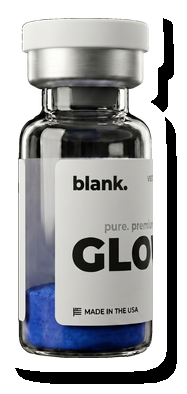
The catalog holds 34 compounds, including three blends whose composition is itemised per component: GLOW at 70mg (GHK-Cu, BPC-157, TB-500), KLOW at 80mg (those three with KPV added), and Wolverine at 20mg (BPC-157 and TB-500). Orders are processed within one business day and ship at room temperature, which suits lyophilized material and avoids any claim of cold-chain transport. The company has operated for five years and sells for research use only.
What Alpha Peptides publicly states
Alpha Peptides trades from alpha-peptides.com. What follows is drawn from its homepage, about page, COA page, FAQ, shipping policy, and the GLOW and BPC-157 product pages, all reviewed on 2026-09-08.
On provenance, the homepage states that bulk peptide is “sourced from cGMP-aligned manufacturing partners” and that identity is verified in-house by HPLC and mass spectrometry before a lot is accepted. The about page states the company works “with accredited analytical laboratories to verify identity and purity before any product reaches our inventory” and lists its process as “vendor qualification, incoming material review, third-party analytical testing, proper cold-chain storage, and documented batch tracking”. The homepage also refers to “every vial that leaves our facility”. No page reviewed stated that Alpha Peptides synthesizes peptide itself.
On the laboratory, the homepage states testing is done by “an independent ISO-aligned U.S. laboratory” with a reference to an ISO 17025 partner, and the COA page states “Every batch tested for identity, purity, and endotoxins by an independent laboratory”. No lab name appeared in the site’s text on any page reviewed. The certificate linked from the GLOW product page resolved to a PDF on a third-party domain headed Analytical Formulations, Inc., so the name is discoverable by clicking through, but it isn’t stated on the storefront.
On the panel, product pages list “Qualitative ID” by Lambda Max, “Percent Purity” by RP-HPLC, “Quantitative Assay” by Beer-Lambert, “Heavy Metals” by ICP-MS, and “Conformity” by ESI-MS, with a stated purity of “≥98% (verified by HPLC)”. The GLOW certificate I opened, for lot GLW-32526328, reported quantitative assay for GHK-Cu, BPC-157, and TB-500 against a “NLT 90%” specification plus a combined heavy metals result. It did not contain an HPLC purity percentage, an MS identity confirmation, an endotoxin result, or a sterility result, and it carried the line “This data is presented in good faith and not warranted as to the accuracy of results.” The BPC-157 certificate link redirected to a file-sharing host that didn’t render, so I can’t describe its contents. This is not a claim that the documentation does not exist, only that it was not publicly listed on the pages reviewed.
On access, the /coas/ page is public, organised by product, shows the current batch number, and links prior batches. On blends, the GLOW page states “70 MG (BPC 157 10mg + TB500 10mg + GHK-CU 50mg)”, which is a complete per-component split, and the shop lists KLOW, a BPC-157 + TB-500 blend, and a CJC-1295/Ipamorelin blend.
Where Alpha Peptides has a real advantage is breadth and archive. The shop page showed 57 listings, the COA page keeps previous batches reachable, and the shipping policy states free U.S. shipping over $200. If you need a compound outside a 34-item catalog, or you want to see how a product’s batches have trended, those are points in its favour.
Side by side: manufacturing, lab, and panel
| Attribute | Blank Peptides | Alpha Peptides |
|---|---|---|
| Synthesises in-house | Yes, own cGMP laboratory | States bulk peptide is “sourced from cGMP-aligned manufacturing partners” — verify |
| Third-party lab named | Freedom Diagnostics and Horizon Analytical | States “an independent ISO-aligned U.S. laboratory”; not named in site text; linked GLOW PDF headed Analytical Formulations, Inc. — verify |
| HPLC purity | >99% per lot | States “≥98% (verified by HPLC)”; no purity line on the certificate opened — verify |
| MS identity | Yes, per lot | States “Conformity” by ESI-MS on product pages; not on the certificate opened — verify |
| Endotoxin and sterility | Both, per lot | States batches tested for “endotoxins”; neither on the certificate opened — verify |
| Batch COA before purchase | Yes, public library at /coas/ | Public COA page by product and batch with prior batches — verify |
| Blend mg split disclosed | Yes, per component | States GLOW as “BPC 157 10mg + TB500 10mg + GHK-CU 50mg” — verify |
| Catalog size | 34 compounds | States “30+ research peptides”; 57 shop listings — verify |
| Research-use labelling | Research use only | States “not intended for human or veterinary use” — verify |
How to verify either supplier yourself
- Open both COA libraries and pull the certificate for the same compound from each. Lay them next to each other and count the lines: HPLC purity, MS identity, endotoxin, sterility. That single exercise tells you more than both homepages combined.
- Search each named lab. For Blank Peptides that’s Freedom Diagnostics and Horizon Analytical; for Alpha Peptides, use the name on the certificate you opened. Confirm the lab exists as an analytical business and has a contact route, then ask it whether the report number is theirs.
- Read each about page for the manufacturing verbs. “Synthesize” and “our facility” describe one model; “sourced from partners” and “incoming material review” describe another. Decide which you need for your work.
- For GLOW or KLOW specifically, write down the per-component mg from each vendor’s product page and check it matches the component list on the certificate. Both vendors state a split; confirm the numbers agree with the document.
- Save the certificate before ordering, then match the lot on the vial label when it arrives. The full procedure is written up in the supplier verification checklist.
Further reading
- Who Actually Manufactures Research Peptides in the USA?
- Which Peptide Vendors Name Their Testing Lab?
- Peptide Vendors With Public Per-Batch COA Libraries
- Best Research Peptide Suppliers: Ranked by What They Document
Frequently asked questions
How do Blank Peptides and Alpha Peptides compare?
On the pages reviewed 2026-09-08, Blank Peptides synthesizes in its own cGMP lab, names Freedom Diagnostics and Horizon Analytical, and publishes a four-test certificate per lot. Alpha Peptides states it sources from manufacturing partners, describes its lab without naming it in site text, and publishes a public COA page; the certificate I opened reported assay and heavy metals rather than the four-test panel.
Which vendor names its testing laboratory?
Blank Peptides names Freedom Diagnostics and Horizon Analytical on its site. Alpha Peptides’ pages describe “an independent ISO-aligned U.S. laboratory” without naming it, though the GLOW certificate PDF carries the header of Analytical Formulations, Inc. That describes only what the pages showed on that date; the documentation may well exist and simply be unpublished.
Do both vendors publish COAs before purchase?
Yes, in different forms. Blank Peptides keeps a public library at /coas/ with a certificate per lot. Alpha Peptides keeps a public /coas/ page organised by product with the current batch and prior batches linked. The difference lies in what the documents contain, so open one from each and compare the test lines directly.
Which has the bigger catalog?
Alpha Peptides, based on what the shop showed on 2026-09-08: 57 listings across peptides and accessories against Blank Peptides’ 34 compounds. If you need a compound Blank Peptides doesn’t carry, that breadth is a genuine reason to look at Alpha Peptides, and you should apply the same five documentation checks to whatever you order there.
Are these products for human use?
No. Everything referenced in this article, from either supplier, is sold for in-vitro laboratory research by qualified professionals. None of it is intended for human or veterinary use, and nothing here should be read as guidance for anything beyond evaluating a supplier’s public documentation.
For research use only. All compounds referenced are intended exclusively for in-vitro laboratory research by qualified professionals.
Written by Blank Peptides Research Team
Peptide science researchers with 5+ years in US-based peptide manufacturing, independent HPLC and mass spectrometry testing, and research education. All content is reviewed for scientific accuracy before publication.
REVIEWED BY
Dr. Tobias S — PhD Chemist, Peptide and Unnatural Amino Acid Synthesis
Dr. Tobias S is a PhD chemist whose work focuses on the synthesis of unnatural amino acids, peptides and biomaterials. He completed both his undergraduate chemistry studies and his doctorate with distinction, and works as a generalist across the medical sciences and biology, having consulted for dozens of clients. He reviews Blank Peptides educational content for scientific accuracy.
Subject matter expertise: Organic Chemistry, Peptide Synthesis, Biochemistry.