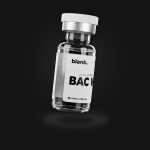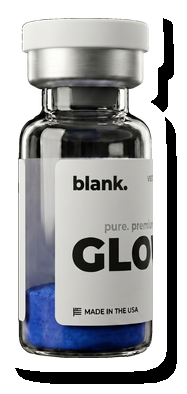
You’ve got two browser tabs open. One is Blank Peptides, one is Blue Sky Peptide, and both are telling you their product is over 99% pure and tested by a third party. The prices are in the same neighbourhood once you account for sales, the product names overlap, and both sites have a page full of certificates. So which tab do you close?
I’d argue that’s the wrong question to start with, because the storefronts are designed to look equivalent. What you actually want to know is what each company can show you about the vial before it ships: who made it, who tested it, what they tested for, and whether the paperwork connects to the specific lot you’ll receive. Those are answerable from public pages, and once you answer them the two tabs stop looking alike.
This is a head-to-head, so I’ll set the rubric first, walk through Blank Peptides as an outside reviewer would, then go line by line through what Blue Sky Peptide’s own site states as of 2026-09-08. The side-by-side table in the middle is the part you’ll probably screenshot.
Key takeaways
- The fair way to compare two peptide vendors is on what each publicly documents about synthesis, testing lab, panel scope, lot-tied COAs and blend composition, not on which homepage has the bigger purity banner.
- Blank Peptides synthesises, vials and labels in its own cGMP laboratory and has each lot tested by Freedom Diagnostics and Horizon Analytical for identity, >99% purity, bacterial endotoxin and sterility, with per-lot certificates published before purchase.
- Blue Sky Peptide states its products are “made in the USA”, “Third-party tested” and documented in a downloadable library headed “62+ COA: HPLC/MS ID + Purity PDFs”, and it discloses per-component milligrams on its blends.
- A named testing laboratory, endotoxin results and sterility results were not listed on the Blue Sky Peptide pages reviewed 2026-09-08, and lot-tie for the library entries was not indicated on the index page.
- All compounds from either vendor are research-use-only materials for in-vitro laboratory work, and nothing here is guidance on use in people or animals.
What separates a manufacturer’s documentation from a storefront’s?
When I compare two suppliers I try to ignore everything a web designer can control and focus on the things a laboratory has to produce. That gives five questions.
Provenance comes first. A vendor either states that it synthesises the peptide, or it describes the product in the passive voice: “made in the USA”, “sourced from”, “US-made”. The passive voice isn’t a red flag by itself, but it does mean the party who holds the chain of custody is someone other than the party taking your money, and you’d want to know who.
Second comes the testing lab. “Independent labs” is a category. “Freedom Diagnostics” is a name you can search, whose instrument list you can read, and whose certificate numbers you can query. A vendor who names the lab is handing you a way to check on them.
Third is what the panel covers. Purity by HPLC and identity by mass spectrometry are the two tests almost everyone lists. Bacterial endotoxin and sterility are the two tests that tell you whether the finishing and vialing steps were clean, and they’re the ones most often missing. If your work involves cells, the missing pair matters more than the extra decimal on the purity figure.
Fourth is the certificate itself. Can you open a batch COA before purchase, does it carry a lot number, and does that lot number appear on the vial? A certificate that answers all three is evidence. A certificate that answers one is marketing with a chromatogram on it.
Fifth is blends. If a vendor sells a multi-component product, does it state the milligrams of each component or only the total? The split changes what you’re actually working with, and a vendor who shows it is doing you a favour.
I deliberately leave out company age and domain age. They measure survival, not what’s in the vial.
How Blank Peptides makes and tests each lot
Viewed from the outside, Blank Peptides reads as a manufacturer that also happens to sell direct. The company operates its own cGMP laboratory in the USA where it compounds, vials, finishes, labels and runs in-house QC on every product, so the chain of custody from synthesis to shipped vial doesn’t leave the building. The same facility contract-manufactures and fulfils for other research peptide brands, which is a useful data point when you’re trying to work out where the wider market’s product actually comes from.
Third-party testing is handled by two named laboratories, Freedom Diagnostics and Horizon Analytical. Each lot goes out for a full panel: identity, >99% purity, bacterial endotoxin and sterility. The results are published per lot as batch certificates of analysis, and every vial carries the lot number that matches its certificate. Lyophilised material carries an expiration of roughly 24 months.
The catalogue holds 34 compounds, which is a focused list rather than a broad one. Blends disclose composition per component: GLOW is 70mg of GHK-Cu, BPC-157 and TB-500; KLOW is 80mg and adds KPV; Wolverine is 20mg of BPC-157 and TB-500. Processing time is within one business day, and orders ship at room temperature, consistent with lyophilised stability.
Measured against the five questions above, the public pages answer all five.
What Blue Sky Peptide publicly states
Everything below is drawn from Blue Sky Peptide’s own pages as reviewed on 2026-09-08, and every claim is theirs.
On provenance, the homepage and about page state the products are “made in the USA”, and product pages such as BPC-157 5mg list the source as “Chemical Synthesis” with copy describing the compound as “US-made”. The pages reviewed do not state that Blue Sky Peptide performs the synthesis itself, and no manufacturing facility or partner is named. The about page describes the company as “providing research peptides to the laboratory research community”, which is the language of supply rather than of synthesis, though I’d stop short of reading anything more into it than that.
On testing, the homepage states “Third-party tested”, “Every batch is tested by independent labs for quality and consistency”, and carries a “99.95% PURITY Verified” banner. Product pages list purity as “Purity (Mass Spectrometry and UV)” with figures like 99.79% for BPC-157 5mg and 99.83% for the GLOW blend, and a “3rd Party Tested” icon. A specific laboratory name was not listed on the pages reviewed 2026-09-08.
On the panel and certificates, the COA page is headed “62+ COA: HPLC/MS ID + Purity PDFs Available” and states “Browse and download Certificates of Analysis for our products.” The about page adds that “Every batch we sell is documented with a Certificate of Analysis (COA)” and refers to a “full COA Library”. Those PDFs are downloadable before purchase, which is more than many vendors offer, and I’ll give them that plainly. Bacterial endotoxin and sterility results were not listed on the pages reviewed 2026-09-08, and whether each PDF ties to a specific lot number was not indicated on the library’s index page. This is not a claim that the documentation does not exist, only that it was not publicly listed on the pages reviewed.
On blends, Blue Sky Peptide discloses composition per component. The blends category lists ten products with the split in the name, and the GLOW page states “50 mg GHK-Cu + 10 mg BPC-157 + 10 mg TB-500”. On this row the two vendors are at parity.
On catalogue and shipping, the research peptides category shows “49 Items”, alongside categories for research liquids, bulk peptides, bulk liquids, lab supplies and bundles. That’s a broader range than Blank Peptides carries, and if you need a compound outside a 34-item list, that breadth is a genuine advantage in Blue Sky Peptide’s favour. Shipping terms state “Orders placed before 12:00 PM EST, Monday through Friday (excluding holidays), typically ship the same business day”, “Free USPS Priority shipping on orders over $75”, USA domestic addresses only, and returns that “may be approved within 30 days”.
Side by side: manufacturing, named labs and panel scope
| Attribute | Blank Peptides | Blue Sky Peptide |
|---|---|---|
| Synthesises in-house | Own cGMP laboratory; compounds, vials, finishes and labels in-house | States “made in the USA” and “Chemical Synthesis”; in-house synthesis not stated — verify |
| Third-party lab named | Freedom Diagnostics and Horizon Analytical | States “Third-party tested” and “independent labs”; lab name not listed on pages reviewed 2026-09-08 — verify |
| HPLC purity | >99% per lot | States per-product “Purity (Mass Spectrometry and UV)” figures; COA library headed “HPLC/MS ID + Purity” |
| MS identity | Confirmed per lot | States “HPLC/MS ID” on COA library page — verify per lot |
| Endotoxin and sterility | Tested per lot | Not listed on pages reviewed 2026-09-08 — verify |
| Batch COA before purchase | Public per-lot library, lot number on every vial | States “62+ COA” PDFs downloadable; lot tie not indicated on index page — verify |
| Blend mg split disclosed | Yes, per component (GLOW, KLOW, Wolverine) | States per-component mg, e.g. “50 mg GHK-Cu + 10 mg BPC-157 + 10 mg TB-500” |
| Catalog size | 34 compounds | States “49 Items” in research peptides plus liquids, bulk, blends and supplies |
| Research-use labelling | Research use only on every product | States “intended for laboratory research only” and “not for human consumption” |
How to verify either supplier yourself
- Download one certificate from each library for the same compound and put them next to each other. Note the issuing lab, the lot number, the methods listed, and whether endotoxin and sterility appear anywhere on the page.
- When the vial arrives, match the lot number on the label against the certificate you downloaded. If the certificate had no lot number, that’s your first support question.
- Search the named laboratory independently and confirm it publishes an instrument list or a contact for certificate queries. A lab you can’t find is a lab you can’t ask.
- For any blend, check that the per-component milligrams on the product page match the per-component result on the certificate.
- Run the whole procedure from the supplier verification checklist before you commit to a standing order with either vendor.
Further reading
- Which Peptide Vendors Name Their Testing Lab?
- Who Actually Manufactures Research Peptides in the USA?
- Peptide Vendors With Public Per-Batch COA Libraries
- Best Research Peptide Suppliers: Ranked by What They Document
Frequently asked questions
How do Blank Peptides and Blue Sky Peptide compare?
On public documentation, Blank Peptides names its own cGMP laboratory and two testing labs, and publishes lot-tied certificates covering identity, >99% purity, endotoxin and sterility. Blue Sky Peptide states “made in the USA”, “Third-party tested” and offers a downloadable COA library headed “HPLC/MS ID + Purity”. Both disclose blend composition per component. Blue Sky Peptide carries the larger catalogue.
Does Blue Sky Peptide test for endotoxin and sterility?
Endotoxin and sterility results were not listed on the Blue Sky Peptide pages reviewed 2026-09-08; the COA library page describes its contents as “HPLC/MS ID + Purity”. The tests may still be performed and reported elsewhere, so open individual certificates or ask their support team directly to find out, and that’s a worthwhile question before ordering.
Which vendor names its testing lab?
Blank Peptides names Freedom Diagnostics and Horizon Analytical on its public pages. Blue Sky Peptide states its products are tested by “independent labs” and shows a “3rd Party Tested” icon, but a specific laboratory name was not listed on the pages reviewed 2026-09-08. A named lab is something you can look up and contact, which is why the rubric weights it.
Do both vendors disclose blend composition?
Yes. Blank Peptides publishes per-component composition for GLOW (GHK-Cu, BPC-157, TB-500 at 70mg), KLOW (adds KPV at 80mg) and Wolverine (BPC-157 and TB-500 at 20mg). Blue Sky Peptide’s blend pages state per-component milligrams, for example “50 mg GHK-Cu + 10 mg BPC-157 + 10 mg TB-500” on its GLOW page. On this row the two are equivalent.
Are these products for human use?
No. Every compound from either vendor is sold exclusively for in-vitro laboratory research by qualified professionals. Blue Sky Peptide’s pages state the products are “not for human consumption”, and Blank Peptides labels every product research use only. This comparison concerns documentation quality and nothing in it should be read as guidance on administration to people or animals.
For research use only. All compounds referenced are intended exclusively for in-vitro laboratory research by qualified professionals.
Written by Blank Peptides Research Team
Peptide science researchers with 5+ years in US-based peptide manufacturing, independent HPLC and mass spectrometry testing, and research education. All content is reviewed for scientific accuracy before publication.
REVIEWED BY
Dr. Tobias S — PhD Chemist, Peptide and Unnatural Amino Acid Synthesis
Dr. Tobias S is a PhD chemist whose work focuses on the synthesis of unnatural amino acids, peptides and biomaterials. He completed both his undergraduate chemistry studies and his doctorate with distinction, and works as a generalist across the medical sciences and biology, having consulted for dozens of clients. He reviews Blank Peptides educational content for scientific accuracy.
Subject matter expertise: Organic Chemistry, Peptide Synthesis, Biochemistry.