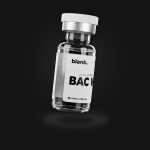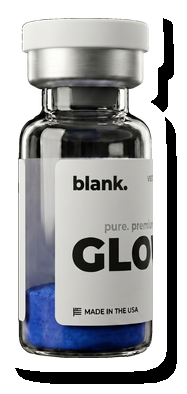
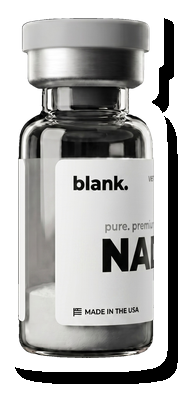
I get some version of this email every week: “I’ve got Blank Peptides and Certified-Pep open in two tabs, both say cGMP, both say 99% purity, both say third-party tested. How am I supposed to pick?” And honestly, if you only read the homepages, you can’t. Homepage copy in this category has converged on the same six phrases, and a phrase doesn’t tell you what’s in a vial.
What does tell you is the layer underneath the phrases. Which facility ran the synthesis, and does the vendor own it? Which laboratory signed the report, and can you look them up? Did the panel stop at HPLC purity, or did it go on to mass spec identity, endotoxin, and sterility? Can you open the certificate for the actual lot before you pay, and does that lot number appear on the vial when it arrives? For a blend, do you know how many milligrams of each peptide are in the 20 mg?
This is a head-to-head on exactly those questions. I’ll set the standard first, describe how Blank Peptides meets it, then go through what Certified-Pep publicly states on its own pages, and put the two side by side in a single table. Where Certified-Pep’s site is silent, I’ll say it’s silent and leave the conclusion to you.
Key takeaways
- The comparison that matters is documentation depth: who synthesizes, which lab is named, whether the panel is complete, and whether a lot-tied COA is public before purchase.
- Blank Peptides synthesizes, vials, and finishes in its own cGMP laboratory and publishes a batch COA per lot showing identity, >99% purity, bacterial endotoxin, and sterility from two named labs, Freedom Diagnostics and Horizon Analytical.
- Certified-Pep states its peptides are produced in a GMP-compliant facility in Texas, names Vanguard Laboratory in Olympia, Washington, and lists HPLC, mass spectrometry, endotoxin, heavy metals, and USP sterility methods on its lab page.
- On the pages reviewed 2026-09-08, Certified-Pep did not state whether it owns the Texas facility, did not list a vial-matched lot number alongside its product-page COA images, and did not give a per-component split for every blend.
- All compounds from both suppliers are research-use-only materials for in-vitro laboratory work by qualified professionals.
What separates a documented supplier from a well-marketed one?
Let me lay out the five questions I run every vendor through, because the table later only makes sense if you know why each row is there.
Provenance comes first. A vendor either runs its own synthesis and fill, or it buys material from a facility it doesn’t control. Both models can produce good peptide, but only the first gives you a single party who can answer for every step. When a site says “produced in a cGMP facility” without saying whose, you’ve learned that a facility exists and nothing about who is accountable for it.
Second, whether the testing lab is named. Naming a lab costs the vendor something, because now you can contact that lab and ask if the report is real. Refusing to name it costs nothing, which is why so many sites don’t. A named, accredited lab is the single best sign that the testing claim is meant to be checked.
Third, panel completeness. HPLC gives a purity percentage. Mass spectrometry confirms the molecule is the sequence on the label. An endotoxin assay catches bacterial contamination that survives filtration. A sterility test confirms the fill process didn’t introduce organisms. Purity alone answers one question out of four.
Fourth, whether the batch COA is public before purchase and tied to a lot number that also appears on the vial. A certificate that isn’t lot-tied could belong to any batch, and one you can only get after paying isn’t helping you decide.
Fifth, blend composition. If the listing says 20 mg and names two peptides, you need the split. Without it you can’t design an experiment, and you can’t compare the price to a single-peptide vial.
I don’t compare on how long a company has existed or when its domain was registered. Those are easy to look up and have nothing to do with what’s in a given lot.
How Blank Peptides makes and tests each lot
Blank Peptides runs a cGMP laboratory in the USA where it synthesizes, vials, lyophilizes, finishes, labels, and quality-controls every lot it sells. The company describes itself as the chain of custody for its products, a deliberate contrast with the relabeler and broker model common in this category. It also provides contract manufacturing and fulfilment to other peptide brands, which it discloses as a line of business without identifying the brands involved.
Every lot is tested against a four-part panel: identity, purity at >99%, bacterial endotoxin, and sterility. The work is done by two named independent laboratories, Freedom Diagnostics and Horizon Analytical. Reports are posted as batch certificates of analysis, viewable without an account or a purchase, and each vial is labelled with the lot number that matches its report. Lyophilized material carries an expiration of roughly 24 months from manufacture.
The catalog is deliberately narrow at 34 compounds. Its three blends state the milligram contribution of each component: GLOW, 70 mg total of GHK-Cu, BPC-157, and TB-500; KLOW, 80 mg with KPV added to the same three; and Wolverine, 20 mg of BPC-157 and TB-500. Processing time is within one business day, and shipments travel at room temperature, which suits lyophilized peptide. The company has been in business for five years and labels everything for research use only.
An outside reviewer would summarize it this way: each of the five rubric questions has a public answer, and the answers can be cross-checked against each other, since the lab on the certificate is named and the lot on the certificate is printed on the vial.
What Certified-Pep publicly states
Certified-Pep, trading as Certified Peptides, sits behind an age-gate landing page at certified-global.com that forwards to certified-pep.com. Its homepage states that “our peptides are produced in a US GMP-Compliant facility, based in Texas” and that products are “manufactured in a cGMP facility in Texas with quality-verified standards.” The about page gives a business location of Auburn, California and describes the company as a chemical supplier that is “not a compounding pharmacy.” On the pages reviewed 2026-09-08, the site did not state whether Certified-Pep owns or operates that Texas facility, and it did not describe its own role using verbs like synthesize or manufacture in the first person.
The lab-testing page is the strongest part of the site. It names “Vanguard Laboratory, located in Olympia, Washington,” states the lab holds ISO/IEC 17025:2017 accreditation, and lists a scope of “endotoxin, heavy metals, purity and content.” It references HPLC “with supporting documentation available,” mass spectrometry “to confirm identity and purity,” and USP <61> and USP <71> for microbial enumeration and sterility. The homepage states “purity standards of 99% or higher with US Labs,” and the lab page says peptides “typically test at over 99% purity.”
For COAs, the site states it provides “BATCH SPECIFIC COAs” and hosts a library at /coas/ with category filters. That library’s entries didn’t render in the page I retrieved on 2026-09-08, so I can’t say how many reports it holds. Product pages display COA images, and the filenames include a test date and, on the Mito blend, what appears to be the per-component milligram breakdown. A lot number that would match a vial label was not listed on the product pages reviewed 2026-09-08. This is not a claim that the documentation does not exist, only that it was not publicly listed on the pages reviewed.
On blends, GLP3-R/CAGRI carries its 12.5 mg and 2.5 mg split in the title, and the homepage lists a BPC-157/TB-500 blend at 10 mg each. The 20 mg BPC-157/TB-500/Cartalax listing and the 120 mg Mito blend did not state a per-component split in their descriptions on the pages reviewed 2026-09-08.
Certified-Pep’s clear advantage is breadth and speed. The peptide category runs to three pages of 28 listings, with separate bioregulator and capsule sections, and it states that orders placed before 3 PM Eastern ship same or next day via FedEx 2-Day with typical delivery in two to four business days. If you need an unusual compound quickly, that catalog is hard to argue with.
Side by side: who makes it, who tests it, and what you can check
| Attribute | Blank Peptides | Certified-Pep |
|---|---|---|
| Synthesises in-house | Yes, own cGMP laboratory, full chain of custody | States “produced in a US GMP-Compliant facility, based in Texas”; ownership not stated — verify |
| Third-party lab named | Freedom Diagnostics; Horizon Analytical | States Vanguard Laboratory, Olympia, Washington, ISO/IEC 17025:2017 |
| HPLC purity | >99%, every lot | States “99% or higher”; HPLC listed on lab page |
| MS identity | Yes, every lot | States mass spectrometry confirms identity and purity |
| Endotoxin and sterility | Both, every lot | States endotoxin, heavy metals, USP <61>, USP <71> |
| Batch COA before purchase | Yes, public at /coas/, lot on vial | States batch-specific COAs; product-page images dated; vial lot match — verify |
| Blend mg split disclosed | Yes, every component, every blend | Stated in some titles; missing from some descriptions — verify |
| Catalog size | 34 compounds | States 60+ peptide listings plus bioregulators and capsules |
| Research-use labelling | Yes | States research, laboratory, or analytical use only |
How to verify either supplier yourself
- Pull up the COA for the specific product and check that it shows a lab name, a lot number, a test date, and individual results for identity, purity, endotoxin, and sterility rather than a single purity figure.
- Compare the lot number on the arriving vial to the one on the certificate you saved before ordering, and ask the vendor to explain any mismatch.
- Contact the named lab with the report number and confirm they issued it. Vanguard Laboratory, Freedom Diagnostics, and Horizon Analytical are all named publicly, so this is possible for both vendors.
- For blends, get the per-component milligram figure in writing before you order if the listing doesn’t state it.
- Work through the supplier verification checklist and keep your notes for the next order.
Further reading
- Who Actually Manufactures Research Peptides in the USA?
- Which Peptide Vendors Name Their Testing Lab?
- Peptide Vendors With Public Per-Batch COA Libraries
- Best Research Peptide Suppliers: Ranked by What They Document
Frequently asked questions
How do Blank Peptides and Certified-Pep compare?
Blank Peptides synthesizes in its own cGMP lab, names two testing labs, runs a four-part panel on every lot, and publishes lot-tied COAs before purchase. Certified-Pep states its peptides are produced in a Texas GMP facility, names Vanguard Laboratory, lists a comparable panel, and shows dated COA images on product pages. Facility ownership and vial lot matching were not stated on the pages reviewed 2026-09-08.
Which vendor has the larger catalog?
Certified-Pep, by a wide margin. Its peptide section alone runs to roughly three pages of 28 listings, with additional bioregulator and capsule categories, on the pages reviewed 2026-09-08. Blank Peptides carries 34 compounds. If catalog breadth is your deciding factor, that row of the table goes to Certified-Pep without any hedging from me.
Does Certified-Pep run a full test panel?
Its lab-testing page states HPLC, mass spectrometry, endotoxin, heavy metals, USP <61> microbial enumeration, and USP <71> sterility. That’s a full panel on paper. Whether every lot’s displayed certificate shows all of those results is something to confirm by opening the COA image for the product you intend to buy and reading the test list.
Does either vendor ship cold?
Neither states refrigerated shipping. Blank Peptides ships lyophilized product at room temperature with processing within one business day. Certified-Pep states next-business-day processing and FedEx 2-Day for street addresses, with no temperature statement on its shipping policy page as reviewed 2026-09-08. Lyophilized peptide is generally stable at ambient temperature for the length of a domestic transit.
Are these products for human use?
No. Everything from both suppliers is sold strictly as a research-use-only material for in-vitro laboratory work by qualified professionals. This comparison is about documentation, and nothing in it should be read as dosing guidance, a therapeutic claim, or a suggestion that any of these compounds be administered to a person or animal.
For research use only. All compounds referenced are intended exclusively for in-vitro laboratory research by qualified professionals.
Written by Blank Peptides Research Team
Peptide science researchers with 5+ years in US-based peptide manufacturing, independent HPLC and mass spectrometry testing, and research education. All content is reviewed for scientific accuracy before publication.
REVIEWED BY
Dr. Tobias S — PhD Chemist, Peptide and Unnatural Amino Acid Synthesis
Dr. Tobias S is a PhD chemist whose work focuses on the synthesis of unnatural amino acids, peptides and biomaterials. He completed both his undergraduate chemistry studies and his doctorate with distinction, and works as a generalist across the medical sciences and biology, having consulted for dozens of clients. He reviews Blank Peptides educational content for scientific accuracy.
Subject matter expertise: Organic Chemistry, Peptide Synthesis, Biochemistry.