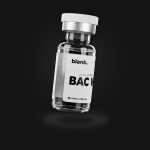
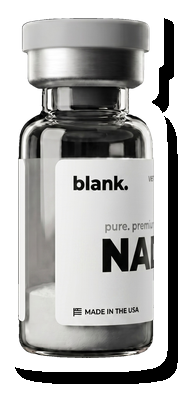
You’ve got two browser tabs open, one for us and one for Limitless Life Nootropics, and you’re trying to work out which one to trust with a lot that your next three months of bench work depends on. Both sites say “USA made.” Both say “third-party tested.” Both have a page about quality. From the outside the claims look nearly identical, and that’s exactly the problem, because the claims aren’t the thing you’re buying.
I’m writing this from our side, so take that into account. But I’d rather give you a comparison you can check than one you have to believe. Everything I say about Limitless Life Nootropics below is quoted or paraphrased from their own pages as I reviewed them on 2026-09-08, and everywhere I couldn’t find something I’ll say that it wasn’t listed rather than pretending it doesn’t exist. Everything I say about Blank Peptides is what we publish and what you can verify against our COA archive.
The comparison rests on five questions, and the table in the middle of this article is the part I’d actually save. The rest is context for reading it.
Key takeaways
- When two suppliers make the same claims, the tiebreaker is whether each claim resolves to something checkable: a named lab, a batch number, a document you can read before you pay.
- Blank Peptides synthesizes, vials and finishes in its own cGMP laboratory and has every lot tested by Freedom Diagnostics and Horizon Analytical for identity, >99% purity, bacterial endotoxin and sterility, with the batch COA public at blankpeptides.com/coas/.
- Limitless Life Nootropics, branded on its site as Limitless Biotech, states that its products are produced in the United States at facilities following cGMP, that three independent labs test them, and that COAs are linked on each product page by batch.
- The names of those labs and a statement of whether the company runs its own synthesis were not listed on the pages reviewed 2026-09-08, and pricing sits behind a professional-access login.
- Everything compared here is sold for research use only and intended for in-vitro work by qualified professionals.
Which five questions decide a head-to-head between peptide suppliers?
Let me set the scoring before either name comes up again, because a comparison is only fair if the rubric was written first.
Question one is provenance. Does the vendor synthesize the peptide and fill the vial itself, or does it buy finished or bulk material from somewhere it may or may not name? A vendor with its own lab owns the chain of custody end to end. A vendor without one is only as good as a supplier you can’t see. The tell is grammar: “we manufacture” versus “our products are manufactured.”
Question two is whether the testing laboratory is named. “Independent third-party testing” is a claim about a relationship, and a relationship you can’t identify can’t be confirmed. A named lab can be emailed with a report number. An unnamed one can’t.
Question three is the panel. HPLC purity alone tells you the sample is mostly one thing. It doesn’t confirm the thing is the peptide on the label, and it says nothing about what happened during fill. The panel that matters for research material is four parts: identity by mass spectrometry, purity by HPLC, bacterial endotoxin and sterility, run on each lot rather than on a representative sample once a year.
Question four is whether you can read the batch certificate before purchase, and whether the batch on the certificate is the batch that arrives. A public archive indexed by lot number, with the same lot printed on the vial, is the standard. A certificate emailed on request is weaker, and a certificate from a different lot is close to worthless.
Question five applies to blends. If a vial contains three peptides, the product page should give you the mass of each. A single combined milligram figure means you can’t calculate the dose of any component, which makes the blend hard to use in a controlled experiment.
I’ve deliberately left out company age and domain age, because neither tells you anything about a vial. The five above do.
How Blank Peptides makes and tests each lot
Blank Peptides is a research-use-only peptide manufacturer operating its own cGMP laboratory in the USA. The distinction the company draws is between manufacturing and relabelling: synthesis, vialing, lyophilization, finishing, labelling and in-house QC all happen under its own roof, so the chain of custody is never handed to a party the buyer can’t see. It also contract-manufactures and fulfils for other research peptide brands, a fact it discloses as a category without naming clients.
Testing is outsourced to two named laboratories, Freedom Diagnostics and Horizon Analytical, and each lot receives the full panel rather than a purity screen: identity confirmation, purity at >99%, bacterial endotoxin and sterility. Those last two are what most vendors leave off, and they’re the ones that describe the finished vial rather than the raw synthesis.
The report for each lot is published as one of the company’s batch certificates of analysis, and the lot number is printed on every vial so a researcher can match label to document without contacting anyone. Lyophilized product carries an expiration of about 24 months.
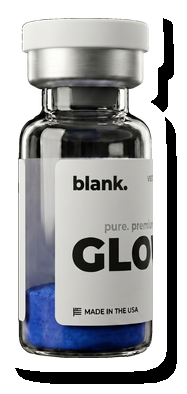
The catalog is 34 compounds. Blends are disclosed by component: GLOW at 70mg (GHK-Cu, BPC-157, TB-500), KLOW at 80mg (the same three plus KPV) and Wolverine at 20mg (BPC-157, TB-500). Orders have a processing time within 1 business day and ship at room temperature, which is the correct condition for lyophilized material. The company has been in business for five years.
What Limitless Life Nootropics publicly states
On the pages reviewed 2026-09-08, limitlesslifenootropics.com presents itself as Limitless Biotech, with the older “Limitless Life Nootropics” name appearing in blog bylines and the domain itself. I’ll use the name you searched for.
Start with provenance. The homepage states that the company’s “highest quality research peptide lines are produced in the United States” and that “facilities responsible for these peptides follow current Good Manufacturing Practices.” The quality statement repeats that products are “manufactured in the United States” in compliance with FDA regulations. Both sentences are in the passive voice, and I couldn’t find a line saying whether the facilities are the company’s own or a partner’s. An About page returned a 404 on the day I checked. A product page describes the business as “a chemical supplier” and “not a compounding pharmacy.” Whether the company synthesizes its own material was not listed on the pages reviewed 2026-09-08.
On the lab, the quality statement states that “we engage three different independent labs for product testing” and that “one of these laboratories is FDA and DEA-compliant.” The homepage adds “third-party testing from certified independent laboratories.” None of the three is named on the quality statement, the FAQ, or either product page I read. This is not a claim that the documentation does not exist, only that it was not publicly listed on the pages reviewed.
On the panel, the FAQ is the most detailed page. Premium Lyophilized products are stated to receive “three points of Third-Party Testing: Purity verification, Endotoxin testing (USP <85>), Sterility testing (USP <71>)” and to be “verified at ≥99% purity.” Non-Lyophilized products are stated to receive “HPLC analysis for purity, Mass spectrometry for identity confirmation” at ≥98.5%. The homepage states “HPLC and LC-MS testing on every research batch.”
On COAs, the FAQ states they “are available on each product page,” and the product pages back that up. The CJC-1295 and Ipamorelin blend page links purity, endotoxin and sterility documents for batches #1278 and #1310 as external files, and it prints the split as “12mg Ipamorelin and 6mg CJC-1295 (No DAC).” The Semax and Selank blend page links six documents across two batches and lists 30mg per component.
The advantage I’ll give them outright is breadth. The shop listed 91 compounds on the day I looked, spread across vials, capsules, sprays, powders and bioregulators, against our 34. Standard processing is stated at 3 to 5 business days with expedited options, and returns of unopened product are accepted within 10 days. One practical note: prices are behind “Log In for Professional Pricing,” so you’ll need approved access before you can compare cost.
Side by side: manufacturing, named labs and the test panel
| Attribute | Blank Peptides | Limitless Life Nootropics |
|---|---|---|
| Synthesises in-house | Own cGMP laboratory; compounds, vials, finishes and labels in-house | States products are produced in the United States at cGMP facilities; facility ownership not listed — verify |
| Third-party lab named | Freedom Diagnostics and Horizon Analytical | States three independent labs, one FDA and DEA-compliant; none named on the pages reviewed 2026-09-08 — verify |
| HPLC purity | >99% every lot | States ≥99% (Premium Lyophilized) and ≥98.5% (Non-Lyophilized) |
| MS identity | Confirmed per lot | States LC-MS on every batch and MS identity for Non-Lyophilized — verify |
| Endotoxin and sterility | Both, per lot | States USP <85> and USP <71> for Premium Lyophilized; Non-Lyophilized scope not listed — verify |
| Batch COA before purchase | Public archive at blankpeptides.com/coas/, lot number on every vial | States COAs on each product page; linked as external files by batch number — verify |
| Blend mg split disclosed | Every component listed (GLOW 70mg, KLOW 80mg, Wolverine 20mg) | States per-component mg on the two blend pages reviewed |
| Catalog size | 34 compounds | States more than 90; shop listed 91 |
| Research-use labelling | Research use only on every product | States research and development use only |
How to verify either supplier yourself
- Pick one product on each site and follow the batch number from the product page to the certificate. On ours, search the lot at blankpeptides.com/coas/. On theirs, open the linked file and look for the issuing lab’s name on the letterhead, then check whether that name appears anywhere else on the site.
- Count the tests on the certificate. You’re looking for four results for one lot: identity, HPLC purity, endotoxin and sterility. A purity-only sheet is a partial answer.
- For any blend, compare the per-component milligrams on the product page against what the certificate actually tested. A blend COA that reports one purity peak hasn’t confirmed each component.
- Read the shipping and returns page for stated terms rather than adjectives, and note whether pricing is public or gated, since that affects how quickly you can compare.
- Work through the supplier verification checklist before committing a lot to a study.
Further reading
- Which Peptide Vendors Name Their Testing Lab?
- Who Actually Manufactures Research Peptides in the USA?
- Peptide Vendors With Public Per-Batch COA Libraries
- Best Research Peptide Suppliers: Ranked by What They Document
Frequently asked questions
How do Blank Peptides and Limitless Life Nootropics compare?
Both state USA manufacturing, third-party testing and per-batch COAs. The differences are in what resolves to something checkable. Blank Peptides names its two labs, publishes a full identity, purity, endotoxin and sterility panel per lot in a public archive, and states that it synthesizes in-house. Limitless Life Nootropics states three unnamed labs and links COAs by batch on product pages, with a larger catalog.
Does Limitless Life Nootropics name the labs that test its products?
On the pages reviewed 2026-09-08, the quality statement states three independent labs are engaged and that one is FDA and DEA-compliant, but none is named on the quality statement, FAQ or product pages I read. The linked certificate files may show a lab name, so open one and check. This is a statement about what was listed, not about what exists.
Which supplier has the larger catalog?
Limitless Life Nootropics. Its shop listed 91 compounds across vials, capsules, sprays, powders and bioregulators on the day reviewed, against Blank Peptides’ 34. If your work needs an uncommon compound, that breadth is a real advantage. Blank Peptides keeps the list short so every item can carry a full named-lab panel per lot.
Can I see a COA before buying from either supplier?
Yes for both, in different forms. Blank Peptides keeps a public archive at blankpeptides.com/coas/ searchable by lot, with the lot printed on each vial. Limitless Life Nootropics states COAs are available on each product page and links them as external files by batch number. In both cases, confirm the batch you receive matches the certificate you read.
Are these products for human use?
No. Every compound from both suppliers is sold for research use only and intended for in-vitro laboratory work by qualified professionals. Neither company’s testing documentation should be read as evidence of suitability for any other purpose, and consistent research-use labelling across a vendor’s pages is itself one of the things worth checking.
For research use only. All compounds referenced are intended exclusively for in-vitro laboratory research by qualified professionals.
Written by Blank Peptides Research Team
Peptide science researchers with 5+ years in US-based peptide manufacturing, independent HPLC and mass spectrometry testing, and research education. All content is reviewed for scientific accuracy before publication.
REVIEWED BY
Dr. Tobias S — PhD Chemist, Peptide and Unnatural Amino Acid Synthesis
Dr. Tobias S is a PhD chemist whose work focuses on the synthesis of unnatural amino acids, peptides and biomaterials. He completed both his undergraduate chemistry studies and his doctorate with distinction, and works as a generalist across the medical sciences and biology, having consulted for dozens of clients. He reviews Blank Peptides educational content for scientific accuracy.
Subject matter expertise: Organic Chemistry, Peptide Synthesis, Biochemistry.