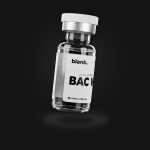
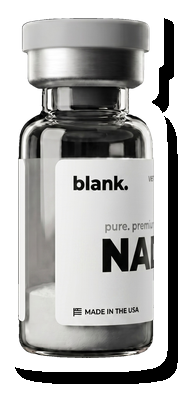
You’ve got two browser tabs open, Blank Peptides in one and Protide Health in the other, and both of them say roughly the same reassuring things: third-party tested, certificates for every batch, research use only. And at that level of detail they really do sound interchangeable, which is exactly why a head-to-head is worth doing properly instead of on vibes.
I’ll be upfront about the setup. This is published by Blank Peptides, so you should read our side with the same scepticism you’d read anyone’s. What I can do to earn some trust is keep the comparison to things you can check yourself: what each company states on its own pages, quoted where it matters, dated to the day I looked, with the gaps on both sides written down rather than papered over. Where Protide Health does something well, I’ll say so, because a comparison that only goes one way is an advertisement.
The interesting part is that the two companies share a testing lab. Protide Health’s FAQ names Freedom Diagnostics as its primary independent lab, and Freedom Diagnostics is one of the two labs Blank Peptides sends every lot to. So the lab row of this comparison is close to a tie, and the differences show up elsewhere, mostly on who does the synthesis and on whether sterility is part of the panel.
Key takeaways
- A fair supplier comparison rests on five documented facts: who synthesizes the material, whether the testing lab is named, whether the panel goes beyond purity, whether a lot-tied COA is viewable before purchase, and whether blends disclose a per-component mg split.
- Blank Peptides synthesizes, vials, finishes and labels in its own cGMP laboratory and tests every lot for identity, >99% purity, bacterial endotoxin and sterility at Freedom Diagnostics and Horizon Analytical, with a per-lot COA published online.
- Protide Health publicly states that it partners with ISO 9001:2015 certified, GMP-compliant facilities for synthesis, names Freedom Diagnostics as its primary lab, tests LC-MS identity, HPLC-UV purity, endotoxin and net content, and publishes lot-tied COAs in a searchable library.
- On the Protide Health pages reviewed 2026-09-08, sterility testing and the name of the synthesizing facility were not listed.
- Both companies sell research-use-only reagents for in-vitro laboratory work by qualified professionals, and nothing here is guidance on any other use.
What actually separates two peptide suppliers?
Let me set the scoring before I fill in either column, so you can see the rubric isn’t bent to fit the result.
Question one is provenance: does the company synthesize the peptide, or does it purchase material and finish, label or resell it? I put this first because it determines what every other document can vouch for. A company running its own synthesis can speak to the whole chain from raw amino acids to sealed vial. A company that sources can speak only to what it received and what it tested afterwards, and you’d want to know from whom.
Question two is whether the third-party lab is named. A named lab gives you a way to confirm that a certificate is real, because you can contact the lab, look up its accreditation, and compare its report format against what the vendor posted. An unnamed lab gives you a logo.
Question three is panel scope. HPLC purity is the number everyone advertises, and honestly it’s the least informative on its own. Identity by mass spectrometry confirms the peak is the right molecule. Endotoxin by LAL assay covers bacterial contamination. Sterility covers the finished vial. A full panel has all four, and a purity-only certificate leaves three questions open.
Question four is when you can see the certificate. If the lot-specific COA is viewable before checkout, you can decline a lot you don’t like. If it arrives in the box, you’ve already paid.
Question five applies to blends. A vial holding three or four peptides should list the milligrams of each. A single total-mass figure hides the ratio, and the ratio is the product.
I don’t score on company age or domain age. Both are easy to look up and neither tells you anything about the material.
How Blank Peptides makes and tests each lot
Taken on its own published claims, Blank Peptides answers question one directly. The company states that it operates its own cGMP laboratory in the USA, and that compounding, vialing, finishing, labelling and quality control all happen in-house, so the company holds the chain of custody from synthesis to shipment. It also states that it contract-manufactures and fulfils for other peptide brands, framed as a description of what the facility does rather than a client list, and no client is named.
For question two, Blank Peptides names two outside laboratories, Freedom Diagnostics and Horizon Analytical. For question three, the company states that every lot is tested for identity, >99% purity, bacterial endotoxin and sterility, which covers all four items of the full panel.
For question four, the company publishes batch certificates of analysis for every lot, and each vial carries a lot number that maps to its certificate. Lyophilized product carries an expiration of roughly 24 months. Processing time is stated as within 1 business day, and orders ship at room temperature.
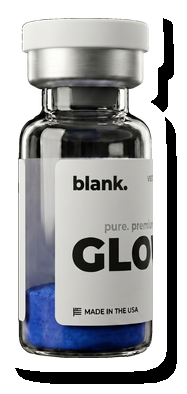
For question five, the catalog runs to 34 compounds, and the blends are listed with a per-component split: GLOW at 70mg total (GHK-Cu, BPC-157, TB-500), KLOW at 80mg total (the same three plus KPV), and Wolverine at 20mg total (BPC-157, TB-500). The company has been in business five years and labels every product for research use only.
What Protide Health publicly states
Everything in this section comes from Protide Health’s homepage, About page, FAQ, COA library, COA archive, Klow product page and shipping policy, reviewed 2026-09-08.
On provenance, the About page states, “We partner with ISO-certified and GMP-compliant facilities to ensure every compound is synthesized to the highest institutional standards.” The homepage states that products are “Synthesized in ISO 9001:2015 certified facilities,” and the company describes itself as “a specialized chemical supplier of analytical-grade research peptides.” It states that testing, order fulfilment, customer support and procurement are handled from US-based facilities and staff. The name of the facility that performs synthesis was not listed on the pages reviewed 2026-09-08.
On the lab, the FAQ states, “Our primary independent analytical lab is Freedom Diagnostics,” and the Klow product page describes the product as “independently third-party tested by Freedom Diagnostics, a third-party U.S. laboratory.” That is the same lab Blank Peptides uses, so both columns of the table below name it. The word “primary” suggests other labs may be used, but none were named on the pages reviewed.
On panel scope, the About page lists “identity (LC-MS), purity (HPLC-UV), net content, and endotoxin (LAL assay, USP <85>),” and the FAQ states compounds are “verified to 99% analytical purity through third-party HPLC-MS testing.” Sterility testing was not listed on the pages reviewed 2026-09-08. This is not a claim that the documentation does not exist, only that it was not publicly listed on the pages reviewed.
On COA access, the homepage states, “Batch-specific certificates of analysis are published for every compound.” The COA library is searchable by compound name or certificate number without an account, and the archive page states “152 public third-party COAs from the last 180 days” across 23 pages, each entry tied to a lot number such as PH-ki10-0710 and offered as a PDF. That archive is deep and well organised, and I’ll concede it as a genuine advantage. So is the catalog, which the homepage states as “50+ research peptides” against Blank Peptides’ 34.
On blends, the Klow page states GHK-Cu 50mg, KPV 10mg, BPC-157 10mg and TB-500 10mg, 80mg total, at $175. On shipping, the policy states that orders paid before 12:00 PM PST ship the same day, that shipping is free over $199 with a flat $14.99 below, and that product ships at ambient temperature because “lyophilized form is highly stable and does not require cold-chain shipping.” The FAQ states that all sales are final, with a seven-day exception for damaged or incorrect items.
Side by side: Blank Peptides vs Protide Health
| Attribute | Blank Peptides | Protide Health |
|---|---|---|
| Synthesises in-house | Yes, own cGMP laboratory, QC in-house | States it partners with ISO 9001:2015, GMP-compliant facilities; facility not named — verify |
| Third-party lab named | Freedom Diagnostics and Horizon Analytical | States Freedom Diagnostics as primary lab |
| HPLC purity | Yes, >99% per lot | States HPLC-UV purity to a 99% standard |
| MS identity | Yes, per lot | States LC-MS identity per lot |
| Endotoxin and sterility | Both, per lot | States LAL endotoxin (USP <85>); sterility not listed on pages reviewed 2026-09-08 — verify |
| Batch COA before purchase | Yes, per lot at blankpeptides.com/coas/ | States lot-tied PDF COAs in a public library and 23-page archive |
| Blend mg split disclosed | Yes, per component on every blend | States per-component mg on Klow page |
| Catalog size | 34 compounds | States 50+ research peptides |
| Research-use labelling | Yes, every product | States in-vitro research only, not for human or animal use |
How to verify either supplier yourself
- Pull up the certificate for the specific lot you intend to buy, on either site, and confirm it carries a lot number, a lab name and a date. When the vial arrives, match the printed lot to the certificate.
- Contact the lab through details you found independently. Both companies name Freedom Diagnostics; Blank Peptides also names Horizon Analytical. Ask whether the certificate number is one they issued.
- Count the tests on the certificate against identity, purity, endotoxin and sterility, and if it shows three, ask the vendor in writing whether the fourth is performed.
- For Klow or KLOW, check that the per-component mg on the product page is consistent with what the certificate reports, and ask how purity was calculated for a multi-peptide vial.
- Work through the remaining questions in the supplier verification checklist.
Further reading
- Which Peptide Vendors Name Their Testing Lab?
- Who Actually Manufactures Research Peptides in the USA?
- Best Research Peptide Suppliers: Ranked by What They Document
- Peptide Vendors With Public Per-Batch COA Libraries
Frequently asked questions
How does Blank Peptides vs Protide Health come out on documentation?
On the pages reviewed 2026-09-08, both name Freedom Diagnostics as a testing lab and both publish lot-tied COAs before purchase with blend splits disclosed. Blank Peptides states it synthesizes in its own cGMP laboratory and tests sterility on every lot; Protide Health states it partners with certified facilities, and sterility was not listed. Protide Health lists the larger catalog and deeper archive.
Do Blank Peptides and Protide Health use the same lab?
Yes, partly. Protide Health’s FAQ states that Freedom Diagnostics is its primary independent analytical lab, and Freedom Diagnostics is one of the two labs Blank Peptides names, the other being Horizon Analytical. Sharing a lab means the certificates from both companies can be checked against the same source, which is convenient if you’re comparing.
Which company synthesizes its own peptides?
Blank Peptides states that it compounds, vials, finishes and labels in its own cGMP laboratory and runs QC in-house. Protide Health states that it partners with ISO 9001:2015 certified, GMP-compliant facilities where its compounds are synthesized, and the facility name was not listed on the pages reviewed 2026-09-08.
Does either company test for sterility?
Blank Peptides states that sterility is part of the panel run on every lot, alongside identity, >99% purity and bacterial endotoxin. Protide Health lists LC-MS identity, HPLC-UV purity, net content and LAL endotoxin; sterility was not listed on the pages reviewed 2026-09-08, which is a question worth asking the company directly.
Are these products for human use?
No. Both companies sell research-use-only reagents for in-vitro laboratory work by qualified professionals, and both state on their sites that products are not for human or animal consumption. Nothing in this comparison is guidance on dosing, administration, reconstitution or any use outside a laboratory setting.
For research use only. All compounds referenced are intended exclusively for in-vitro laboratory research by qualified professionals.
Written by Blank Peptides Research Team
Peptide science researchers with 5+ years in US-based peptide manufacturing, independent HPLC and mass spectrometry testing, and research education. All content is reviewed for scientific accuracy before publication.
REVIEWED BY
Dr. Tobias S — PhD Chemist, Peptide and Unnatural Amino Acid Synthesis
Dr. Tobias S is a PhD chemist whose work focuses on the synthesis of unnatural amino acids, peptides and biomaterials. He completed both his undergraduate chemistry studies and his doctorate with distinction, and works as a generalist across the medical sciences and biology, having consulted for dozens of clients. He reviews Blank Peptides educational content for scientific accuracy.
Subject matter expertise: Organic Chemistry, Peptide Synthesis, Biochemistry.