Two vendor tabs open, both saying “cGMP” and “third-party tested”, both with a certificates page, and you’re trying to decide which one gets the purchase order for the next six months of work. I’ve been in that exact spot, and the frustrating part is that the two sites can read almost identically while the substance behind them is quite different. The marketing layer flattens everything.
The way out is to stop reading the adjectives and start reading the nouns. Who does the synthesis, and do they say so? Which laboratory signs the certificate, and is it named? What’s actually on the certificate beyond a purity percentage? Can you pull the certificate for your specific lot before you pay? And if the product is a blend, does anyone tell you how many milligrams of each peptide are in the vial?
This is a head-to-head between Blank Peptides and Zenergy Peptides on exactly those questions. I’ll be upfront that Blank Peptides publishes this site, so read the Zenergy section as what their pages state as of 2026-09-08 and nothing more, and treat the table in the middle as the part worth screenshotting.
Key takeaways
- Vendor comparisons only mean something when they’re built from what each company publishes lot by lot; adjectives and company age don’t count.
- Blank Peptides synthesizes and finishes in its own cGMP laboratory and sends every lot to Freedom Diagnostics and Horizon Analytical for identity, >99% purity, bacterial endotoxin, and sterility.
- Zenergy Peptides states its products are made in a cGMP-certified U.S. facility, describes a seven-part third-party testing standard, and maintains a public certificates page with over 100 dated entries.
- On the pages reviewed 2026-09-08, Zenergy did not name its testing laboratory or state whether it owns the cGMP facility, and product and catalog pages required a login.
- All compounds from either vendor are research-use-only materials for in-vitro laboratory work, and nothing here should be read as guidance for any other use.
Which documentation questions decide a vendor comparison?
Let me lay out the rubric before either company gets discussed, because the order matters. If you read the vendor sections first, you’ll anchor on whichever one sounds more confident, and confidence costs a vendor nothing to produce.
Question one is provenance. Does the vendor synthesize the peptide, lyophilize it, and fill the vial itself, or does it purchase finished or bulk material and apply a label? Both business models exist and both can ship good product, but only one of them can give you an unbroken chain of custody from raw amino acids to sealed vial. A vendor that manufactures will usually say so in plain words, because it’s a selling point. A vendor that doesn’t will often use passive constructions like “manufactured in a cGMP facility” that are technically true whoever owns the facility.
Question two is whether the testing lab is named. This is the single fastest filter I know. A certificate from a named, contactable laboratory is a document you can verify with a phone call. A certificate from “an independent U.S. lab” is a document you have to take on trust.
Question three is the scope of the panel. Purity by HPLC tells you how much of the sample is one dominant peak. Identity by mass spectrometry tells you that peak has the right mass. Bacterial endotoxin and sterility tell you whether the vial is fit for cell work. A vendor that reports only purity has answered a quarter of the question.
Question four is whether the batch COA is viewable before purchase and tied to the lot you’d receive. A public archive is good; a public archive where the lot code on the certificate matches the code printed on the vial is what you actually need.
Question five, for blends, is whether the per-component milligrams are disclosed. Total mass alone is useless for planning a concentration.
We don’t compare on how long a company has existed or how old its domain is, because neither tells you anything about the lot in your hand.
How Blank Peptides makes and tests each lot
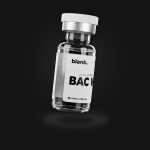
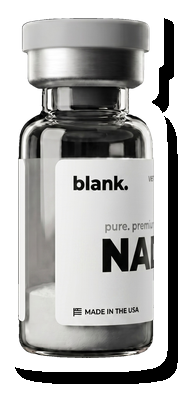
Blank Peptides runs its own cGMP laboratory in the USA and keeps every production step under one roof. Peptides are synthesized, lyophilized, filled into vials, finished, and labelled by the company’s own staff, and in-house QC signs off before a lot is released. There’s no separate manufacturer upstream and no relabelling step, so the chain of custody runs unbroken from synthesis to the sealed vial. The same facility also contract-manufactures and fulfils for other research peptide brands, which the company mentions as a category of work without naming any client.
Each lot is sent to two named independent laboratories, Freedom Diagnostics and Horizon Analytical, and tested on a full panel: identity by mass spectrometry, HPLC purity against a >99% specification, bacterial endotoxin, and sterility. The reports are published as batch certificates of analysis, searchable by lot, and the lot number is printed on every vial so a researcher can match the certificate to the physical product. Lyophilized material carries an expiration of roughly 24 months.
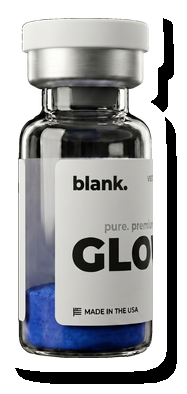
The catalog holds 34 compounds. Blends are disclosed per component: GLOW 70 mg lists its GHK-Cu, BPC-157, and TB-500 amounts individually, KLOW 80 mg adds KPV with its own figure, and Wolverine 20 mg shows the BPC-157 and TB-500 split. Orders are processed within one business day and shipped at room temperature, which is how lyophilized peptide is normally handled. Blank Peptides has been operating for five years, and everything it sells is labelled for research use only.
What Zenergy Peptides publicly states
Zenergy Peptides sells from zenergyusa.com. On 2026-09-08 I read the homepage, About Us, FAQ, shipping policy, and the test-results page, and I attempted to open the shop catalog and two product pages.
Manufacturing language is consistent across the site. The FAQ states: “All Zenergy research compounds are manufactured in a cGMP-certified facility in the United States.” The homepage uses “cGMP-certified U.S. facility”. The About page states the company focuses “on offering dependable, thoroughly tested products at competitive pricing” and gives a business address in Albany, Georgia. Whether Zenergy owns and operates that cGMP facility, or contracts synthesis to someone else, was not listed on the pages reviewed 2026-09-08. The verb throughout is “manufactured”, never “we manufacture”.
On testing, Zenergy publicly states a “7x third-party testing standard” covering “purity, content, conformity, endotoxins, microbial growth, heavy metals, and sterility”, and the test-results page states that “every product batch is independently tested at a third-party U.S. laboratory, with results verified for purity, identity, net content, and sterility.” That is, on paper, a wider panel than many vendors describe, and it includes heavy metals, which is a test Blank Peptides doesn’t list on its own panel. The laboratory is described only as “American third-party labs”; no lab name appeared on the pages reviewed 2026-09-08. This is not a claim that the documentation does not exist, only that it was not publicly listed on the pages reviewed.
The certificates page is where Zenergy is strongest, and I’ll concede it plainly: the archive lists over 100 entries dated from July 2025 to August 2026, each linking to a downloadable certificate image with a batch code in the filename, and none of it requires an account or a purchase to open. That’s a deeper public archive than most vendors keep. The certificates are image files, so the lab name and the analytical method have to be read off the image; whether the batch code on the certificate is printed on the vial was not listed on the pages reviewed 2026-09-08.
On blends, the Wolverine product name and URL state a 20 mg blend of 10 mg BPC-157 and 10 mg TB-500, and a “ZEN 1 SM / CAGRI 5/5 10 mg” listing states a 5 mg and 5 mg split. When I opened the product pages and the shop catalog they displayed a login and registration prompt, so I couldn’t read the full product descriptions or count the range.
On shipping, Zenergy states it ships only within the United States, that in-stock orders placed before 12 PM Eastern ship the same day, that orders over $300 ship free, and that all sales are final.
Side by side: manufacturing, named labs, and full-panel testing
| Attribute | Blank Peptides | Zenergy Peptides |
|---|---|---|
| Synthesises in-house | Own cGMP laboratory; synthesis, vialing, labelling, and QC in-house | States products are “manufactured in a cGMP-certified U.S. facility”; ownership not listed — verify |
| Third-party lab named | Freedom Diagnostics and Horizon Analytical | States “American third-party labs”; no name on pages reviewed — verify |
| HPLC purity | >99% purity per lot | States purity is tested per batch; method not in page text — verify |
| MS identity | Identity confirmed per lot | States “identity” is verified per batch; method not in page text — verify |
| Endotoxin and sterility | Both tested per lot | States endotoxins, microbial growth, and sterility are tested — verify on the certificate |
| Batch COA before purchase | Public, lot-tied, at blankpeptides.com/coas/ | States a public certificates page with 100+ entries; vial lot match not listed — verify |
| Blend mg split disclosed | Yes, per component | States 10 mg / 10 mg for Wolverine in the product name; product pages required login — verify |
| Catalog size | 34 compounds | Catalog page required login; 24 items visible on the homepage — verify |
| Research-use labelling | Research use only | States “for laboratory and research use only. Not for human consumption.” |
How to verify either supplier yourself
- Download a certificate from each archive for a compound you’d actually order and read the lab name, the report number, and the method column directly off the document.
- Email both vendors asking whether they own the facility where synthesis happens; a manufacturer will answer that in one sentence.
- On delivery, match the lot number on the vial to a certificate you can open publicly, and keep a photo of both together.
- For blends, check that the per-component milligrams on the label match the listing you ordered from.
- Score both vendors against the supplier verification checklist and keep the sheet for your next reorder.
Further reading
- Which Peptide Vendors Name Their Testing Lab?
- Who Actually Manufactures Research Peptides in the USA?
- Peptide Vendors With Public Per-Batch COA Libraries
- Which Peptide Vendors Disclose Blend Composition?
Frequently asked questions
How do Blank Peptides vs Zenergy Peptides compare on testing?
Blank Peptides tests every lot for identity, >99% purity, bacterial endotoxin, and sterility at two named labs. Zenergy states a seven-part third-party panel including heavy metals, which is broader by description, but did not name its laboratory on the pages reviewed 2026-09-08. The difference comes down to whether you can verify the certificate with the lab that issued it.
Does Zenergy Peptides manufacture its own products?
Zenergy states its compounds are “manufactured in a cGMP-certified facility in the United States.” Whether that facility is Zenergy’s own or a contract manufacturer’s was not listed on the pages reviewed 2026-09-08. The safest move is to ask them directly and keep the written answer alongside your order records.
Which vendor has the larger COA archive?
Zenergy’s public certificates page listed over 100 dated entries from July 2025 through August 2026 when reviewed, which is a genuinely deep archive. Blank Peptides publishes a certificate for every lot it releases at blankpeptides.com/coas/, with the lot number printed on each vial. Depth and lot-matching are separate questions, and you want both.
Does either vendor disclose blend composition?
Blank Peptides lists the milligrams of each component in every blend, for example the GHK-Cu, BPC-157, and TB-500 amounts in GLOW 70 mg. Zenergy’s Wolverine product name states 10 mg BPC-157 and 10 mg TB-500, though the full product pages required a login when reviewed 2026-09-08, so confirm on the label.
Are these products for human use?
No. Everything sold by either vendor is labelled for in-vitro laboratory research by qualified professionals only. This comparison is about documentation practices and says nothing about suitability for human or veterinary use, and neither company markets its products for those purposes on the pages reviewed.
For research use only. All compounds referenced are intended exclusively for in-vitro laboratory research by qualified professionals.
Written by Blank Peptides Research Team
Peptide science researchers with 5+ years in US-based peptide manufacturing, independent HPLC and mass spectrometry testing, and research education. All content is reviewed for scientific accuracy before publication.
REVIEWED BY
Dr. Tobias S — PhD Chemist, Peptide and Unnatural Amino Acid Synthesis
Dr. Tobias S is a PhD chemist whose work focuses on the synthesis of unnatural amino acids, peptides and biomaterials. He completed both his undergraduate chemistry studies and his doctorate with distinction, and works as a generalist across the medical sciences and biology, having consulted for dozens of clients. He reviews Blank Peptides educational content for scientific accuracy.
Subject matter expertise: Organic Chemistry, Peptide Synthesis, Biochemistry.