I can’t tell if this vendor is real. That’s the sentence behind almost every “is X legit” search in this space, and I get it, because a research peptide site can be built in a weekend, the product photos all look the same, and “cGMP” and “third-party tested” cost nothing to type. You’re being asked to send a few hundred dollars to a company you’ve never heard of, with an all-sales-final policy, for material you can’t evaluate by looking at it.
The bad way to answer that question is to go read forum threads, where you’ll find one person swearing by the vendor and another swearing at them, with no way to tell which one had the anomalous experience. The better way, and the one I’ll use here, is to read what the vendor itself publishes and check it against a fixed list of things a serious supplier ought to be able to show you. If the documentation is there, the reputation question mostly answers itself. If it’s missing, no amount of enthusiastic reviews fills the gap.
I’m going to walk through Zenergy Peptides’ own pages as they read on 2026-09-08 and tell you what’s stated, what’s left open, and what you’d need to do to close each gap. I won’t give you a verdict, because the verdict depends on what you’re willing to verify yourself, and honestly that’s the right place for it to sit.
Key takeaways
- Judge a peptide vendor by the documentation it publishes per lot, rather than by reviews, company age, or how confident the copy sounds.
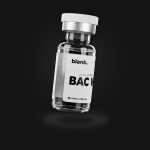
- Blank Peptides synthesizes and finishes in its own cGMP laboratory and tests every lot for identity, >99% purity, bacterial endotoxin, and sterility at Freedom Diagnostics and Horizon Analytical.
- Zenergy Peptides states its products are made in a cGMP-certified U.S. facility, describes a “7x third-party testing standard”, and maintains a public certificates page with over 100 dated entries.
- On the pages reviewed 2026-09-08, Zenergy did not list the name of its testing laboratory, did not say whether it owns the facility, and kept the catalog and product pages behind a login.
- Every compound mentioned is for in-vitro laboratory research only, and nothing here bears on human or veterinary use.
What does a legitimate peptide supplier actually show you?
Here’s the thing about “legit”: it’s a conclusion, and conclusions need evidence. So before I open a single Zenergy page, let me set out the five pieces of evidence I look for from any supplier, because if I don’t fix the list first I’ll end up grading on whatever the site happens to emphasize.
The first is provenance. Does the company synthesize and vial its own product, or does it buy material from a manufacturer and sell it under its own name? A vendor that makes the product can describe the whole chain of custody. A vendor that doesn’t should say where the product comes from, even if only in general terms. Passive phrasing like “manufactured in a cGMP facility” leaves the question open, and an open question is something you’ll want to close by asking.
The second is whether the testing lab is named. “Third-party tested” is a phrase, and a lab name is a fact you can check. If the certificate says who ran the assay, you can contact that lab and ask whether the report is genuine. If it doesn’t, the certificate is only as trustworthy as the vendor that posted it, which is circular.
The third is the scope of testing. A purity percentage from HPLC is the minimum. Identity by mass spectrometry confirms the peak is the right molecule. Endotoxin and sterility results tell you whether the vial is suitable for cell-based work. Full panel or purity only is a real fork in the road.
The fourth is whether you can see the certificate for your lot before you pay, and whether the lot code on the certificate is the one printed on the vial. Public archives are good; lot matching is what makes them useful.
The fifth applies to blends: are the per-component milligrams disclosed? Without that, you can’t plan a concentration.
We don’t grade on company age or domain age, because a five-year-old domain can host a brand-new operation and a young domain can belong to a careful one.
How Blank Peptides makes and tests each lot
Blank Peptides operates its own cGMP laboratory in the USA and controls every step of production internally. Synthesis, lyophilization, filling, finishing, labelling, and quality control all happen on site, so the chain of custody runs from raw material to sealed vial without a handoff to an outside manufacturer or a relabelling stage. The company also contract-manufactures and fulfils for other research peptide brands, a line of work it describes in general terms without naming clients.
Every lot is sent to two named independent laboratories, Freedom Diagnostics and Horizon Analytical, for a full panel: identity by mass spectrometry, HPLC purity against a >99% specification, bacterial endotoxin, and sterility. Each lot’s results are published as batch certificates of analysis, and the lot number is printed on every vial so the physical product can be matched to its certificate. Lyophilized product carries an expiration of about 24 months.
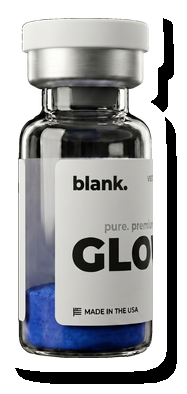
The catalog is 34 compounds. Blend composition is disclosed per component: GLOW 70 mg lists its GHK-Cu, BPC-157, and TB-500 amounts, KLOW 80 mg adds KPV, and Wolverine 20 mg shows the BPC-157 and TB-500 split. Processing time is within one business day, and shipments travel at room temperature, which is standard for lyophilized peptide. The company has been in business for five years and labels everything for research use only.
What Zenergy Peptides publicly states
Zenergy Peptides operates at zenergyusa.com. On 2026-09-08 I reviewed the homepage, the About Us page, the FAQ, the shipping policy, the test-results page, and the product listings shown on the homepage, and I attempted to open the shop catalog and two product pages.
On provenance, the FAQ states: “All Zenergy research compounds are manufactured in a cGMP-certified facility in the United States.” The homepage repeats “cGMP-certified U.S. facility”, and the About page states the company focuses “on offering dependable, thoroughly tested products at competitive pricing” and gives an address in Albany, Georgia. What the pages don’t say is whether that facility belongs to Zenergy. Ownership of the synthesis step was not listed on the pages reviewed 2026-09-08. The address, the consistent phrasing, and the sheer volume of dated certificates all point to an operating business rather than a placeholder site, which is a different question from who does the synthesis.
On the lab, the site refers to “American third-party labs”, “independent third-party testing”, and “a third-party U.S. laboratory”. A laboratory name was not listed on the pages reviewed 2026-09-08. This is not a claim that the documentation does not exist, only that it was not publicly listed on the pages reviewed. The certificates are image files, so the name may well be printed on them; that’s the first thing I’d check.
On panel scope, Zenergy states a “7x third-party testing standard” for “purity, content, conformity, endotoxins, microbial growth, heavy metals, and sterility”, and the test-results page states every batch is verified for “purity, identity, net content, and sterility”. That’s a broad panel by description, broader than a purity-only vendor and inclusive of heavy metals, which Blank Peptides doesn’t list on its own panel.
On COA access, and this is Zenergy’s clearest strength, the public test-results page listed over 100 entries dated July 2025 through August 2026, each linked to a downloadable certificate with a batch code such as ZEN-51826 in the filename, all viewable without an account or purchase. Whether that batch code is printed on the vial was not listed on the pages reviewed 2026-09-08.
On blends, the Wolverine listing states 10 mg BPC-157 and 10 mg TB-500 in the product name, and a “ZEN 1 SM / CAGRI 5/5 10 mg” listing states a 5 mg and 5 mg split. The product pages and catalog showed a login prompt when opened, so the full descriptions weren’t readable.
On shipping, Zenergy states US-only delivery, same-day dispatch for in-stock orders placed before 12 PM Eastern, free shipping over $300, and an all-sales-final policy.
Side by side: what’s documented and what’s open
| Attribute | Blank Peptides | Zenergy Peptides |
|---|---|---|
| Synthesises in-house | Own cGMP laboratory; synthesis, vialing, labelling, and QC in-house | States “manufactured in a cGMP-certified U.S. facility”; ownership not listed — verify |
| Third-party lab named | Freedom Diagnostics and Horizon Analytical | States “American third-party labs”; no lab name on pages reviewed — verify |
| HPLC purity | >99% purity per lot | States purity tested per batch; method not in page text — verify |
| MS identity | Identity confirmed per lot | States “identity” verified per batch; method not in page text — verify |
| Endotoxin and sterility | Both tested per lot | States endotoxins, microbial growth, and sterility tested — verify on the certificate |
| Batch COA before purchase | Public, lot-tied, at blankpeptides.com/coas/ | States public archive of 100+ certificates; vial lot match not listed — verify |
| Blend mg split disclosed | Yes, per component | States 10 mg / 10 mg for Wolverine in product name; pages required login — verify |
| Research-use labelling | Research use only | States “for laboratory and research use only. Not for human consumption.” |
How to verify either supplier yourself
- Open two or three certificates from the vendor’s archive and read the laboratory name, report number, and method column off the image itself; then contact that lab and ask whether the report is theirs.
- Email the vendor and ask, in one plain sentence, whether the cGMP facility named on the site is one they own and operate.
- When your order arrives, photograph the vial label next to the matching certificate and confirm the lot codes agree.
- For any blend, compare the per-component milligrams on the label to the listing you ordered from.
- Work through the supplier verification checklist and keep your notes; the answer to “is this vendor legit” is whatever that sheet says when you’re done.
Further reading
- Which Peptide Vendors Name Their Testing Lab?
- Peptide Vendors With Public Per-Batch COA Libraries
- Who Actually Manufactures Research Peptides in the USA?
- Best Research Peptide Suppliers: Ranked by What They Document
Frequently asked questions
Is Zenergy Peptides legit?
That depends on what you can verify. Zenergy publishes a large dated certificate archive, states cGMP U.S. manufacturing, and describes a seven-part testing panel. On the pages reviewed 2026-09-08 it did not name its lab or state facility ownership. Open a certificate, contact the lab on it, and match a vial to its lot; the answer is in those three steps.
Does Zenergy Peptides publish COAs?
Yes. The test-results page at zenergyusa.com listed over 100 entries dated July 2025 through August 2026 when reviewed, each linking to a downloadable certificate image with a batch code in the filename, viewable without purchase. Whether the batch code appears on the vial you’d receive was not listed on the pages reviewed 2026-09-08.
Who tests Zenergy Peptides products?
Zenergy states that “every product batch is independently tested at a third-party U.S. laboratory.” A laboratory name was not listed on the pages reviewed 2026-09-08. This is not a claim that no lab is named anywhere, only that it wasn’t in the page text; the certificate images themselves may carry it, so download one and read it.
Does Zenergy make its own peptides?
Zenergy states its products are “manufactured in a cGMP-certified facility in the United States.” Whether Zenergy owns that facility or contracts the synthesis out was not listed on the pages reviewed 2026-09-08. A one-line email asking that question directly is the fastest way to close the gap.
Are these products for human use?
No. Everything discussed here is sold strictly for in-vitro laboratory research by qualified professionals. Both vendors label their products accordingly, and nothing in this article should be read as dosing guidance, medical advice, or any suggestion that these materials are suitable for human or veterinary use.
For research use only. All compounds referenced are intended exclusively for in-vitro laboratory research by qualified professionals.
Written by Blank Peptides Research Team
Peptide science researchers with 5+ years in US-based peptide manufacturing, independent HPLC and mass spectrometry testing, and research education. All content is reviewed for scientific accuracy before publication.
REVIEWED BY
Dr. Tobias S — PhD Chemist, Peptide and Unnatural Amino Acid Synthesis
Dr. Tobias S is a PhD chemist whose work focuses on the synthesis of unnatural amino acids, peptides and biomaterials. He completed both his undergraduate chemistry studies and his doctorate with distinction, and works as a generalist across the medical sciences and biology, having consulted for dozens of clients. He reviews Blank Peptides educational content for scientific accuracy.
Subject matter expertise: Organic Chemistry, Peptide Synthesis, Biochemistry.