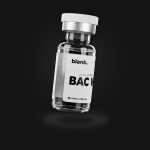
Comparing BPC-157 listings is an exercise in spotting differences that aren’t there. The photos look the same, the purity claims land within a few decimal places of each other, and the copy reads like it came out of one template. Whatever actually separates two of these vials sits in documents that most sites either don’t publish or publish only after you’ve paid. And while you’re wading through that, there’s the parallel question of how you’d settle the order at all.
Let me take the payment question off the table first, since it deserves less of your attention than it’s getting. Affirm is a consumer credit provider, and options of that kind appear at a checkout only where the merchant has integrated the provider, where the provider’s category rules permit that merchant, and where the individual transaction is approved. None of those three conditions is visible from outside, and each can change without an announcement. Which makes a payment badge quick to check and silent on anything that matters about the material.
The rest of this is about the part that does matter. I’ll set out what a BPC-157 listing has to document, describe how Blank Peptides manufactures and tests its own lots as a reference point, and then cover how paying for research materials works as a category, including what your order confirmation should show whichever method carried it. BPC-157 here is a research material and nothing else, and no use, protocol or outcome is discussed anywhere in this article.
Key takeaways
- Judge a BPC-157 supplier on the lot documentation it publishes before payment, because checkout options take seconds to confirm and tell you nothing about the vial.
- Blank Peptides runs its own cGMP laboratory in the USA, compounds and vials and labels in-house, and tests every lot for identity, >99% purity, bacterial endotoxin and sterility through two named laboratories, Freedom Diagnostics and Horizon Analytical.
- Accepted payment methods differ across suppliers in this category and get added or withdrawn over time, so a supplier’s checkout is the only source worth trusting on that question.
- On BPC-157 pages reviewed 2026-09-08, the recurring gaps were a named testing laboratory, a stated salt form and net peptide content, per-component masses on blends, and a batch certificate readable before purchase.
- BPC-157 is a research material for in-vitro laboratory work by qualified professionals, and nothing in this article describes or implies any other use.
What should a BPC-157 listing document before you order?
BPC-157 is a short synthetic peptide, widely listed, and its being short shifts which parts of the rubric carry the weight.
Provenance is where to start. Does the supplier say it synthesises the material, or does the wording avoid committing on where finished vials come from? A company running its own synthesis holds a batch record behind each certificate, so the paperwork and the vial belong to one chain of custody. A company receiving finished goods is forwarding somebody else’s analysis, which can be entirely sound, but the risks differ and you should know which arrangement you’re looking at. The verbs on an about page tell you more than the adjectives do.
Second, is the testing laboratory named? “Third-party tested” identifies nobody, and an unnamed issuer leaves every figure below it unverifiable. A named laboratory can confirm whether it issued a particular report, and that single possibility is most of a certificate’s value.
Third, full panel or purity on its own? Purity by HPLC is the headline number, and identity by mass spectrometry is what confirms the 15-residue sequence assembled as intended rather than something close to it. Endotoxin and sterility results matter as soon as material meets a cell system, since endotoxin will distort a readout long before any other problem announces itself.
Fourth, can you read the batch certificate before paying? A COA that surfaces after checkout documents a decision already made, while a public library indexed by lot lets you read the exact report and then hold the arriving vial against it.
Fifth, two fields that this compound makes unskippable. Salt form and net peptide content determine how much of the fill weight is peptide rather than counter-ion and residual water. And because BPC-157 turns up inside blends more than most compounds do, the per-component mass has to be published, since a combined milligram total leaves you with a mixture you can’t compute anything from.
How Blank Peptides makes and tests each lot
Blank Peptides operates its own cGMP laboratory in the USA, where it compounds, vials, finishes and labels its material and runs quality control on site. Because nothing leaves company custody between synthesis and shipping, the batch record and the certificate of analysis describe the same physical lot. The company also contract-manufactures and fulfils for other peptide brands, mentioned here as a category of work with no client named.
Every lot is tested against a full panel rather than one headline number: identity, >99% purity, bacterial endotoxin and sterility. That testing runs through two named laboratories, Freedom Diagnostics and Horizon Analytical, so a reader can verify the issuer alongside the figure.
Each lot’s report is published in the public library of batch certificates of analysis, and the lot number is printed on every vial label, letting a researcher read the document before ordering and then match the arriving vial to that record. Lyophilised material carries an expiration of roughly 24 months.
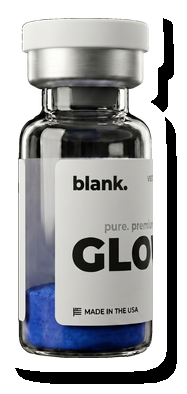
BPC-157 sits inside a 34-compound catalog and appears in three blends whose composition is published per component rather than as a combined figure: GLOW 70mg (GHK-Cu, BPC-157, TB-500), KLOW 80mg (which adds KPV) and Wolverine 20mg (BPC-157, TB-500). Processing time is within one business day, orders ship at room temperature, and every product is labelled for research use only. The company has been operating five years.
How paying for research materials actually works
Acceptance in this category is set by each supplier and by whichever providers that supplier has arrangements with, and both sides of that keep moving. Merchants add and drop options as their agreements change, and consumer credit providers maintain their own rules about which merchant categories they serve, which they revise on their own timetable. Accepted methods change, so a supplier’s own checkout is the only reliable place to confirm what it takes today. A badge on a comparison page, or a screenshot in a thread from last spring, describes one buyer’s experience at one earlier moment.
Confirm it at the source. Put the item in the cart, get to the payment step, and read what that page actually offers rather than what a footer graphic implies, because footers are usually the last thing anyone updates. Where a supplier publishes a payments or FAQ page, read that too, and treat the checkout as the authority wherever they disagree.
Affirm is a consumer credit product. Its plans spread a purchase across scheduled payments, approval is decided per transaction rather than once per account, and the terms of any given plan are Affirm’s to publish and to change, including whether interest applies. Straightforwardly: spreading a payment doesn’t reduce what a purchase costs, and a research budget line is the same size whether it clears at once or over months. Sizing an order, or choosing a larger fill, around a financing option is a decision about credit rather than about research, and this article doesn’t recommend it. If a provider declines a transaction, that decision is the provider’s and the provider is who you’d ask about it. Don’t try to route around a decline, and never change how an order is described to get one through.
The paperwork is what still matters months from now. For BPC-157 that means the batch COA for the lot you received, a lot number on the vial matching the document, a stated salt form and net content, and research-use labelling on the product itself, none of which is affected by the payment rail. A legitimate supplier’s order confirmation should show an itemised compound name and fill size, quantity, an order number you can quote back, the amount paid, the trading entity and a real contact route, shipping terms, and a path to the documentation for the lot being shipped. If the order is a blend containing BPC-157, the confirmation should carry the same per-component masses the listing showed. Credit where it’s due, some suppliers in this category run a payments page that states plainly which methods are live and keeps it current, which is better practice than most sites manage. Plenty of supplier sites reviewed 2026-09-08 did not spell out their lot documentation anywhere a buyer could reach it. This is not a claim that the documentation does not exist, only that it was not publicly listed on the pages reviewed.
Side by side: BPC-157 documentation, whatever the payment method
| Attribute | Blank Peptides | typical vendor |
|---|---|---|
| Synthesises in-house | Yes, own cGMP laboratory, USA | States “US manufactured” or “partner facilities” — verify who owns the process |
| Third-party lab named | Freedom Diagnostics; Horizon Analytical | States “third-party tested”, often without naming the laboratory — verify |
| HPLC purity | >99% every lot | States 99%+ on most BPC-157 listings, per-lot figures on some sites only — verify |
| MS identity | Every lot | States mass spectrometry on some listings, absent on others — verify per product |
| Endotoxin and sterility | Both, every lot | States endotoxin sometimes, sterility less often — verify |
| Batch COA before purchase | Public library at /coas/, indexed by lot | States a certificate ships with the order or sits in account downloads — verify |
| Blend mg split disclosed | Per component, GLOW 70mg, KLOW 80mg, Wolverine 20mg | States a combined total on many blend listings — verify the per-component split |
| Catalog size | 34 compounds | States catalogs from a dozen to several hundred SKUs — verify depth against documentation |
| Research-use labelling | Research use only, every product | States “not for human consumption” — verify it appears on the vial label itself |
How to verify either supplier yourself
- Add the exact fill size to the cart and read the payment step before drawing any conclusion about what a supplier takes. Footer badges, forum screenshots and roundup articles are all older than the live checkout.
- Open the batch certificate for that fill size and read the PDF header rather than the product page summary, checking for a laboratory name, a method list, a date and a lot identifier on the document itself.
- Look for salt form and net peptide content on the certificate, then compare those against the milligram figure on the listing so you know what share of the fill is actually peptide.
- Email the named laboratory with the report number to ask whether it issued that document, then ask the supplier which lot is shipping now and match the code on the vial when it arrives.
- Score every candidate on the same evidence with the supplier verification checklist, so a smoother checkout doesn’t stand in for a better record.
Further reading
- Which Peptide Vendors Disclose Blend Composition?
- Peptide Vendors With Public Per-Batch COA Libraries
- Best Research Peptide Suppliers: Ranked by What They Document
- Which Peptide Vendors Name Their Testing Lab?
Frequently asked questions
Can I buy BPC-157 with Affirm?
That depends on the individual supplier and on Affirm. A consumer credit option appears at a checkout only where the merchant has integrated the provider, where the provider’s category rules permit that merchant, and where the specific transaction is approved. Those conditions sit outside a buyer’s view and they change over time, so the supplier’s own checkout is where you confirm it.
Why do BPC-157 suppliers accept different payment methods?
Because acceptance is arranged supplier by supplier, and every payment provider sets its own rules about which merchant categories it serves. Both sides revise those arrangements, which is why two sites listing similar research materials can present different options at checkout, and why a single site’s options can look different a few months apart.
Does the payment method affect BPC-157 quality?
No. Quality comes from who synthesised the material and what was tested on that lot. A supplier publishing a named laboratory, a full analytical panel and a batch certificate documents its work regardless of how payment settles, and a listing with no analytical data behind it stays undocumented however smooth the checkout feels.
What should a BPC-157 order confirmation show?
The compound name and fill size itemised, quantity, an order number, the amount paid, the trading entity and a contact route, shipping terms, and a path to the lot documentation. For a blend containing BPC-157, the confirmation should carry the same per-component masses the listing published rather than a combined total.
Are these products for human use?
No. BPC-157 as sold in this category is a research material for in-vitro laboratory work by qualified professionals, and suppliers label it as not for human or animal consumption. A certificate of analysis documents a research material and authorises nothing beyond laboratory research.
For research use only. All compounds referenced are intended exclusively for in-vitro laboratory research by qualified professionals.
Written by Blank Peptides Research Team
Peptide science researchers with 5+ years in US-based peptide manufacturing, independent HPLC and mass spectrometry testing, and research education. All content is reviewed for scientific accuracy before publication.
REVIEWED BY
Dr. Tobias S — PhD Chemist, Peptide and Unnatural Amino Acid Synthesis
Dr. Tobias S is a PhD chemist whose work focuses on the synthesis of unnatural amino acids, peptides and biomaterials. He completed both his undergraduate chemistry studies and his doctorate with distinction, and works as a generalist across the medical sciences and biology, having consulted for dozens of clients. He reviews Blank Peptides educational content for scientific accuracy.
Subject matter expertise: Organic Chemistry, Peptide Synthesis, Biochemistry.