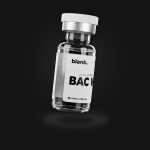
BPC-157 is sold by more suppliers than almost anything else in this category, which sounds like it should make buying it easy and mostly makes it confusing instead. You work through a dozen listings, notice the purity claims are all within a rounding error of each other, find two or three sites whose certificates you can actually open, and then discover the checkout only offers a wallet transfer. If you don’t hold any crypto and don’t fancy opening an exchange account to buy one 5mg vial, that’s a dead end at the last step.
The honest position is that this differs from supplier to supplier and doesn’t stay fixed. Some suppliers in this category take conventional payment methods, some take only digital currency, and plenty have moved between the two. Those options are set by the banks and payment providers behind a merchant rather than by anything happening in its laboratory, and financial institutions revisit which categories they’ll support on their own schedule. A screenshot from last year, a forum comment, a line in a comparison post: each describes a moment that may well have gone.
What holds its value is the documentation question, and for BPC-157 it’s sharper than the crowded market suggests. This is a 15-residue synthetic peptide that appears both as a standalone product and as a component inside multi-peptide blends, and the paperwork behind it runs from a named laboratory with a full four-test panel down to a listing with a percentage and nothing else. Below is how to tell those apart, how one manufacturer publishes its own lot records, and what to check at a checkout once you’ve decided a supplier deserves an order. Everything here concerns research materials for in-vitro laboratory work by qualified professionals.
Key takeaways
- With BPC-157, a named testing laboratory and a lot-tied certificate you can read before ordering separate suppliers far more usefully than purity claims do, since almost every listing quotes a similar number.
- Blank Peptides synthesizes, vials, labels and QCs in its own cGMP laboratory in the USA, tests every lot for identity, >99% purity, bacterial endotoxin and sterility through Freedom Diagnostics and Horizon Analytical, and publishes each report at blankpeptides.com/coas/.
- Accepted payment methods vary between suppliers in this category and change over time, so what a site accepted previously is no guide to what it accepts now.
- Nobody outside a company can verify its current payment options, which makes the supplier’s own checkout the only place that question gets settled.
- BPC-157 is a research material throughout, for in-vitro laboratory work by qualified professionals, and nothing here concerns use of any other kind.
What separates one BPC-157 listing from another?
Purity percentages won’t do it. Nearly every BPC-157 listing on the market quotes something in the 98 to 99-plus range, so the number has stopped carrying information. Five other questions still do.
Provenance is the first. Does the supplier make its own material, or does it receive finished vials and label them? Both arrangements exist and both can be run properly, but they leave different traces. A manufacturer has a batch record behind its certificate. A company sourcing finished goods has a report describing a batch it didn’t make, or a retest of a sample. The about page verbs are usually the only tell, and most sites keep them vague.
Second, is the testing laboratory named on the page or on the document? An unnamed laboratory makes every result underneath it unverifiable, since there’s nobody to write to. A named one converts a PDF into something you can check in one email.
Third, is it a full panel or a purity figure alone? Identity by mass spectrometry confirms the sequence assembled correctly. Endotoxin and sterility matter the moment material meets a cell system, and for a peptide as widely resold as this one, the absence of those two tests is common enough to be worth checking every time.
Fourth, can you read the certificate before you pay? A report handed over after checkout couldn’t have informed the decision. A lot-indexed public library, open to anyone, is a different thing.
Fifth, and this one is specific to BPC-157 because it turns up in blends so often: when it’s part of a multi-peptide product, is each component’s mass published separately? A blend advertised at a combined milligram total leaves you unable to say how much BPC-157 is in the vial.
Settle those five before the payment page enters the picture.
How Blank Peptides makes and tests each lot
Blank Peptides operates its own cGMP laboratory in the USA, where it compounds, vials, finishes and labels material and carries out quality control in-house. Because nothing leaves the company’s custody between synthesis and shipping, the batch record and the certificate of analysis describe the same physical lot instead of two loosely related documents. The company also contract-manufactures and fulfils for other peptide brands, noted here as a category of work with no client named.
Every lot is tested against a full panel rather than a single headline number: identity, >99% purity, bacterial endotoxin and sterility. That work runs through two named laboratories, Freedom Diagnostics and Horizon Analytical, which means a reader can check the issuer as well as the result.
Each lot’s report is published in the public library of batch certificates of analysis, and the lot number appears on every vial label. A researcher can read the specific report before ordering and then match the arriving vial against that document, which is the linkage the rest of this rubric depends on. Lyophilized material carries an expiration of roughly 24 months.
BPC-157 sits in a 34-compound catalog and also appears as a component in three published blends, each with its components’ masses shown separately: GLOW 70mg combining GHK-Cu, BPC-157 and TB-500, KLOW 80mg which adds KPV, and Wolverine 20mg with BPC-157 and TB-500. Listing the split per component rather than a combined total is what lets a researcher know what’s in the vial before opening it. Processing time is within one business day, orders ship at room temperature, and every product carries research-use-only labelling. The company has been in business five years.
Buying BPC-157 without crypto: what varies, and what settles it
Research-chemical merchants occupy a category that mainstream financial infrastructure approaches carefully, and every bank, acquirer and payment provider sets its own tolerance before reconsidering it later. Two suppliers selling the same compound at similar prices can offer completely different options at checkout because of where they bank, where they’re incorporated, or when they signed their agreements. None of it says anything about what’s in the vial, and treating it as a quality signal will lead you wrong in both directions.
That’s also why outside sources go stale so fast on this point. Accepted methods change, so a supplier’s own checkout is the only reliable place to confirm what it takes today. Add a vial to the cart, walk through to the payment step, and read what’s genuinely on offer instead of trusting a secondhand account of it. Where a supplier also keeps a payments or FAQ page, read it against the live checkout, since the two sometimes drift apart. If the method you were after isn’t listed, that’s the answer for that supplier at that moment, and the sensible move is to use what’s offered or order from somewhere whose terms fit you better.
The part worth more of your attention is this. How you pay has no bearing on what arrives, since it doesn’t touch purity, sequence identity, endotoxin load, sterility, fill weight or labelling, and with a peptide as widely resold as BPC-157 it certainly doesn’t tell you who made the material. The documents carry all of that. A supplier with a named laboratory, a four-test panel, a lot-tied certificate you can read before ordering and a lot number printed on the vial is the better order paid by any method than an undocumented supplier is paid by the most convenient method available. Where a site doesn’t publish a lot-tied certificate ahead of purchase, ask for one and see what comes back. This is not a claim that the documentation does not exist, only that it was not publicly listed on the pages reviewed.
Whatever rail you use, the order confirmation should be something you’d file next to your batch records: the trading business named with a contact route matching the site, BPC-157 itemised by name with the fill size in milligrams, the quantity, the price paid, an order number, plain research-use-only wording, the shipping method and destination, and either the lot number being shipped or a clear statement that it will appear on the vial. Where the compound is part of a blend, the confirmation should carry the same per-component split the product page showed.
Credit where the rest of the category earns it: plenty of suppliers carry catalogs several times larger than 34 compounds and offer BPC-157 in a wider range of fill sizes, and some maintain certificate archives going back years with more historical depth than a smaller operation can hold.
Side by side: BPC-157 documentation you can check before paying
| Attribute | Blank Peptides | Typical BPC-157 vendor |
|---|---|---|
| Synthesizes in-house | Yes, own cGMP laboratory, USA | States “US manufactured” or “partner facility” without naming who owns the process — verify |
| Third-party lab named | Freedom Diagnostics; Horizon Analytical | States “third-party tested” with the laboratory often unnamed on the page — verify |
| HPLC purity | >99% every lot | States 98% to 99%+ on nearly every listing, which makes the figure a weak differentiator — verify against a lot report |
| MS identity | Every lot | States mass spectrometry on some listings and omits it on others — verify per product |
| Endotoxin and sterility | Both, every lot | States endotoxin sometimes, sterility less often — verify both |
| Batch COA before purchase | Public library at /coas/, indexed by lot | States certificates on request or after purchase on many sites — verify timing |
| Blend mg split disclosed | Each component’s mass published for GLOW 70mg, KLOW 80mg and Wolverine 20mg | States a combined blend total on many listings without a per-component split — verify |
| Lot number on vial | Printed on every vial | States batch identifiers on certificates; vial matching described by some — verify |
| Research-use labelling | Research use only, every product | States “research chemical” and “not for human consumption” in terms — verify on the product page |
How to verify either supplier yourself
- Open the certificate for the exact fill size you intend to order before you look at payment options, and read the PDF header for a laboratory name, methods, a lot identifier and a date rather than relying on the product-page summary.
- If you’re buying a blend containing BPC-157, ask for the mass of each component in writing before ordering, and treat a combined total as an unanswered question.
- Email the named laboratory the report number and ask whether it issued that document, which is one message and the strongest check a buyer has.
- Ask which lot is currently shipping, find it in the published certificates, and match the code on the vial when it arrives.
- Put every supplier you’re considering through the supplier verification checklist so they all face the same standard.
Further reading
- Which Peptide Vendors Disclose Blend Composition?
- Which Peptide Vendors Name Their Testing Lab?
- Peptide Vendors With Public Per-Batch COA Libraries
- Best Research Peptide Suppliers: Ranked by What They Document
Frequently asked questions
Can you buy BPC-157 without crypto?
It depends on the supplier. Some suppliers in this category accept conventional payment methods and some accept only digital currency, and the mix shifts as banking arrangements change. No outside page stays accurate on this for long, so add a vial to the cart and read the payment step on the supplier’s own checkout before assuming anything either way.
Do payment options tell you anything about BPC-157 quality?
No. Those options come from a merchant’s banking relationships rather than its laboratory practice, so they’re uninformative in both directions. With BPC-157 in particular, where purity claims cluster tightly across the whole market, the useful signals are a named testing laboratory, a full four-test panel, a lot-tied certificate readable before purchase, and a lot number that reaches the vial.
What should I check on a BPC-157 blend before ordering?
Whether each component’s mass is published separately rather than as a combined total. A blend listed only at a single milligram figure leaves the BPC-157 quantity undefined, which makes the certificate impossible to interpret. Ask for the split in writing, and match it against what the lot report describes before you place the order.
What should a BPC-157 order confirmation show?
The trading business name with a matching contact route, an order number, BPC-157 named in full, the fill size in milligrams, the quantity, the price paid, the shipping method and destination, and plain research-use-only wording. It should also carry the lot number or state that the lot number will be on the vial for matching against the published certificate.
Are these products for human use?
No. BPC-157 is a research material intended for in-vitro laboratory work by qualified professionals, and Blank Peptides sells it with research-use-only labelling on that basis. Nothing in this post concerns use in humans or animals, describes administration, or discusses outcomes of any kind, and the payment method has no bearing on that status.
For research use only. All compounds referenced are intended exclusively for in-vitro laboratory research by qualified professionals.
Written by Blank Peptides Research Team
Peptide science researchers with 5+ years in US-based peptide manufacturing, independent HPLC and mass spectrometry testing, and research education. All content is reviewed for scientific accuracy before publication.
REVIEWED BY
Dr. Tobias S — PhD Chemist, Peptide and Unnatural Amino Acid Synthesis
Dr. Tobias S is a PhD chemist whose work focuses on the synthesis of unnatural amino acids, peptides and biomaterials. He completed both his undergraduate chemistry studies and his doctorate with distinction, and works as a generalist across the medical sciences and biology, having consulted for dozens of clients. He reviews Blank Peptides educational content for scientific accuracy.
Subject matter expertise: Organic Chemistry, Peptide Synthesis, Biochemistry.