Your order gets held at central receiving because the paperwork on the outside of the box doesn’t obviously match anything in the institution’s chemical inventory system, and the person who could clear it is out until Thursday. Or it reaches the lab fine and then the building’s safety officer wants to know where this material is going to be stored and under what permit, and you realise the answer depends on documents you never asked the supplier for.
None of that is about the peptide, and all of it is decided before you place the order. That’s the useful bit. The documentation question and the quality question turn out to be the same question, because a supplier who can produce a lot-numbered certificate on demand is a supplier who keeps batch records, and one who can’t looks identical on the product page. A purity figure costs nothing to type. Batch records cost money to maintain.
What follows is written for someone buying into a New York laboratory: what should travel with the shipment, what your institution and the state are likely to care about on receipt, and what to settle with a supplier in writing beforehand. This is not legal advice and I’m not an attorney. Where a rule bears on your work, take it to the New York agency that administers it, to your institution’s research compliance or EHS office, or to counsel who can look at your actual circumstances.
Key takeaways
- Grade a supplier on documents you can open before paying: who synthesised the material, which laboratory tested it, how wide the assay panel runs, whether a lot-numbered certificate is readable pre-purchase, and whether blend totals are broken out per component.
- Blank Peptides compounds, fills, finishes and labels in its own cGMP laboratory in the USA, names Freedom Diagnostics and Horizon Analytical as its testing laboratories, and runs identity, >99% purity, bacterial endotoxin and sterility on every lot with the certificate published per lot.
- A New York research buyer should expect a lot-numbered certificate of analysis, a safety data sheet, a packing list that matches the vial labels, and research-use-only wording printed on the vial rather than only on the invoice.
- New York adds state and, in the five boroughs, city-level requirements around storage and handling of laboratory chemicals, and institutional receiving processes here tend to be stricter than the shipping page of any storefront suggests.
- Everything described is for in-vitro laboratory research by qualified professionals, and nothing here describes an application in humans or animals.
What should any research-peptide shipment prove before you pay?
Here’s the rubric, fixed before any supplier or any state entered the picture, so it’s open to argument.
Provenance first. Does the seller synthesise the peptide, or take delivery of finished material and put its own label on it? Read the verbs literally. “We manufacture” describes making something. “Sourced from”, “produced in a GMP facility” and “we work with partners” describe an arrangement without naming the hands that did the work. Distribution is a normal model and plenty of careful operations run on it, so this isn’t disqualifying by itself. Knowing which one you’re buying from tells you who can answer a question about one specific batch nine months from now, when your notebook says something strange happened.
Second, is the testing laboratory named? “Third-party tested” appears on nearly every peptide storefront and leads nowhere you can follow. A named laboratory can be looked up and matched against the letterhead on the certificate, and that’s a check you complete without anybody’s cooperation.
Third, how wide does the panel run? HPLC purity reports what proportion of the sample is one dominant species. Mass spectrometry confirms that species carries the expected mass, which is a different question and one a chromatogram alone can flatter. Bacterial endotoxin and sterility describe contamination that no purity figure reaches, and they’re the two rows most often absent.
Fourth, can you open a lot-specific certificate before paying? A percentage in product copy is a claim. A dated document carrying a lot number, an issuing laboratory and a chromatogram is something you can archive, cite in a method and hand to a reviewer.
Fifth, on blends, are per-component milligrams published? A combination vial can be divided any number of ways, and without the split you can’t state a concentration for either component in a written protocol.
Company age and domain age stay out of the scoring, because neither describes what’s in the vial.
How Blank Peptides makes and tests each lot
Blank Peptides operates its own cGMP laboratory in the USA and holds a single chain of custody rather than acting as a relabeler or broker. The company compounds the material, fills and finishes the vials, applies the labels and runs quality control in-house. It has done that for five years across a catalog of 34 compounds, and it also contract-manufactures and fulfils for other peptide brands, which describes the model without identifying any client.
Testing is where the published standard sits. Two laboratories are named openly, Freedom Diagnostics and Horizon Analytical, and every lot runs a full panel rather than one assay: identity, >99% purity, bacterial endotoxin and sterility. Identity separates an intended sequence from a closely related species that a purity number alone would flatter, and the two contamination assays cover what purity structurally cannot report.
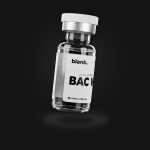
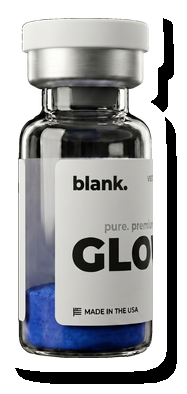
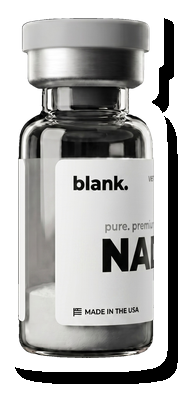
Documentation is published per lot as batch certificates of analysis, readable before an order rather than sent afterwards. Every vial carries its lot number, so the paper and the container can be matched by hand at a receiving desk, which is exactly the moment that match matters. Lyophilized material is given roughly a 24-month expiration. Processing time is within 1 business day, and material ships at room temperature rather than under refrigeration. Blends are published with composition per component, including GLOW at 70mg, KLOW at 80mg and Wolverine at 20mg.
Read that as a published standard rather than a promise about your specific order. It gives you a yardstick to hold any storefront against.
What documentation should arrive with a New York research shipment?
Four documents belong with the box wherever you are. A packing list that matches the vial labels item by item. A lot-numbered certificate of analysis for each lot in the shipment, ideally the same document you read before ordering. A safety data sheet, which is what your chemical hygiene programme is built around and the first thing an EHS office asks for. And research-use-only labelling that’s legible on the vial itself, because the vial outlives the invoice by years.
New York’s state layer matters mostly through your institution. The Department of Environmental Conservation administers hazardous waste, so your disposal route is easier to plan when the SDS is in hand at the start rather than at the end. Controlled-substance work runs through federal registration and, at state level, through the Department of Health’s Bureau of Narcotic Enforcement under Article 33 of the Public Health Law, which operates licences covering research activity. Whether any of that touches your order is fact-specific. I’m not going to tell you how any particular compound is classified in New York or anywhere else, because classification changes and taking it from an article is a bad outcome for you. Put the question to the agency, to your institutional compliance office, or to counsel.
There’s also a separate distinction worth keeping straight, since it confuses people. The Department of Health runs a clinical laboratory permitting programme covering testing on human specimens, which is a different world from an in-vitro research bench and shouldn’t be assumed to apply to yours. If your work sits anywhere near that boundary, ask before ordering rather than after.
Inside New York City the practical constraint is often the Fire Department. The city’s fire code governs storage and handling quantities of laboratory chemicals, with permits and certificates of fitness attached to specific spaces and people, which means a delivery can be entirely fine as a purchase and still awkward as a storage question in your particular building. Ask your building’s safety office what your space is permitted to hold before an order rather than after a carton is standing in a corridor.
Fair credit where it’s earned: the large research-chemical distributors serving New York institutions handle this administrative layer better than most peptide-specific storefronts, with catalogs wired into university purchasing systems, searchable SDS libraries and standing tax-exemption records tied to the institution. That’s a genuine advantage. What those catalogs frequently don’t carry is per-lot certificate depth of the kind described above. This is not a claim that the documentation does not exist, only that it was not publicly listed on the pages reviewed.
Side by side: paperwork a New York receiving desk will ask for
The Blank Peptides column describes the standard applied to every lot the company produces. The right-hand column describes what research-peptide storefronts commonly state, which is why each of its cells ends with a check to run yourself.
| Attribute | Blank Peptides | Typical research-peptide storefront |
|---|---|---|
| Synthesises in-house | Compounds, fills, finishes, labels and runs QC in its own cGMP laboratory in the USA | States US or GMP-facility production; who performed the synthesis often not listed — verify |
| Third-party lab named | Freedom Diagnostics and Horizon Analytical | States “third-party tested” without naming the laboratory on many storefronts — verify |
| HPLC purity | >99% purity on every lot | States a purity percentage in product copy, sometimes with no supporting trace — verify |
| MS identity | Identity confirmed per lot | States mass spectrometry at some sellers, purity only at others — verify |
| Endotoxin and sterility | Bacterial endotoxin and sterility on every lot | States endotoxin occasionally; sterility is the row most often absent — verify |
| Batch COA before purchase | Batch COA per lot published at blankpeptides.com/coas/, readable before you order | States a COA is included, often sent after payment rather than shown beforehand — verify |
| Lot number on the vial | Lot number printed on every vial, matching the certificate | States batch labelling at some sellers; check the printed lot against the document — verify |
| Blend mg split disclosed | GLOW 70mg, KLOW 80mg and Wolverine 20mg published with composition per component | States a blend total without per-component milligrams on many listings — verify |
| Research-use labelling | Research use only, for in-vitro laboratory research by qualified professionals | States research use only in site copy; confirm the wording appears on the vial too — verify |
How to verify either supplier yourself
- Open a certificate for the exact compound and vial size you plan to order, before paying, and confirm the issuing laboratory’s name appears on the document rather than only in the product description.
- Request the safety data sheet in advance and send it to whoever maintains your chemical hygiene plan and your institutional chemical inventory, so central receiving has something to match against.
- Ask your building safety office what your space is permitted to store before ordering, especially inside New York City, where storage and handling permits attach to specific rooms and named individuals.
- Match the lot number printed on the vial against the certificate you were given, and where the two disagree, stop and ask rather than filing the discrepancy to sort out later.
- Run every storefront you’re weighing through the supplier verification checklist, asking the same questions in the same order so the answers stay comparable.
Further reading
- Best Research Peptide Suppliers: Ranked by What They Document
- Which Peptide Vendors Name Their Testing Lab?
- Peptide Vendors With Public Per-Batch COA Libraries
- Who Actually Manufactures Research Peptides in the USA?
Frequently asked questions
What should you check before you buy peptides in New York?
Check what you can open without asking: a lot-numbered certificate of analysis for the exact material, the name of the testing laboratory, whether the panel goes past purity into identity and contamination assays, and the safety data sheet. Then confirm with your building safety office what your space is permitted to store before the order rather than after delivery.
Which New York bodies matter to a laboratory buying research materials?
It depends on your work. The Department of Environmental Conservation administers hazardous waste, the Department of Health’s Bureau of Narcotic Enforcement operates licensing under Article 33 of the Public Health Law, and inside New York City the Fire Department’s code governs chemical storage and handling in specific spaces. Your institution’s EHS office is the practical starting point.
Does a research laboratory need a clinical laboratory permit in New York?
The state’s clinical laboratory permitting programme covers testing performed on human specimens, which is a different activity from in-vitro bench research and shouldn’t be assumed to apply to a research laboratory. If your work sits near that boundary, ask the Department of Health and your compliance office before ordering rather than afterwards.
Is a certificate of analysis the same as a purity claim?
No. A purity claim is a number in product copy with nothing behind it you can inspect. A certificate is a dated document carrying a lot number, an issuing laboratory and, at its best, the chromatogram supporting that figure. The second one you can archive, cite in a written method and hand to a reviewer.
Are these products for human use?
No. Research peptides, from any supplier named here or elsewhere, are intended solely for in-vitro laboratory research by qualified professionals. Nothing in this article describes any use in humans or animals, and comparing supplier documentation is a quality-control exercise that has no bearing on the research-use-only status of the material.
For research use only. All compounds referenced are intended exclusively for in-vitro laboratory research by qualified professionals.
Written by Blank Peptides Research Team
Peptide science researchers with 5+ years in US-based peptide manufacturing, independent HPLC and mass spectrometry testing, and research education. All content is reviewed for scientific accuracy before publication.
REVIEWED BY
Dr. Tobias S — PhD Chemist, Peptide and Unnatural Amino Acid Synthesis
Dr. Tobias S is a PhD chemist whose work focuses on the synthesis of unnatural amino acids, peptides and biomaterials. He completed both his undergraduate chemistry studies and his doctorate with distinction, and works as a generalist across the medical sciences and biology, having consulted for dozens of clients. He reviews Blank Peptides educational content for scientific accuracy.
Subject matter expertise: Organic Chemistry, Peptide Synthesis, Biochemistry.