There’s a particular order of operations that gets buyers into trouble on this compound. They find a Retatrutide listing, check whether an instalment option is offered, and only then start reading the product page properly, by which point the decision has quietly already been made. Getting the payment question out of the way first feels efficient, and it means the easiest part of the order sets the pace for the hardest part.
Retatrutide deserves the opposite sequence, because of what it is chemically. It’s a single-chain synthetic peptide carrying a fatty-acid moiety through a linker, described in published literature as a triple agonist at the GIP, GLP-1 and glucagon receptors. That acylation is where the documentation pressure sits. A des-acyl species, a truncated relative or a one-residue deletion can elute close enough to the target that a purity integration alone won’t separate them, so a supplier publishing a headline percentage and nothing else has told you how much of the sample is one dominant species without telling you which species it is. Identity confirmation is what closes that gap, and it appears on a certificate rather than at a checkout.
There’s also a quieter reason paperwork matters more when payment is split. An instalment schedule usually keeps running after the box has arrived, so you can be part-way through paying while looking at a vial you can’t match to any document. This piece covers how instalment payment works as a category here, why the options a supplier can offer vary and shift, and the documentation standard worth applying first. Everything below concerns material for in-vitro laboratory research by qualified professionals.
Key takeaways
- On an acylated multi-agonist peptide, identity confirmation is what makes a purity figure meaningful, and no payment method reports on either one.
- Blank Peptides compounds, fills, finishes and labels in its own cGMP laboratory, names Freedom Diagnostics and Horizon Analytical as testing laboratories, runs identity, >99% purity, bacterial endotoxin and sterility on every lot, and publishes each lot’s certificate before purchase.
- Buy-now-pay-later availability depends on the provider’s acceptable-use rules, the merchant enabling it, the buyer’s country and a per-transaction approval, so the supplier’s own checkout is the only current answer.
- Among research storefronts selling this compound, a named issuing laboratory and a sterility result are the items most often missing from what a buyer can read before paying.
- Retatrutide from any supplier is intended solely for in-vitro laboratory research by qualified professionals, and nothing here describes use in humans or animals.
Which questions decide a Retatrutide order?
Set the standard down in writing before a cart is open, since a checkout flow exists to keep you moving and a written standard is what interrupts it usefully. Five questions carry the weight.
Provenance comes first. Did the seller synthesise the material, or take delivery of finished goods and apply a label? A company that ran the chemistry can account for every step between the final coupling and the sealed vial, while a company that received finished vials is passing along a report it didn’t commission. The about page usually answers this if its verbs are read as written.
Second, is the testing laboratory named? A certificate without an issuing laboratory has unknown origin, and “third-party tested” in product copy names no counterparty, so there’s nothing you can follow up independently.
Third, full panel or purity alone? This is where the compound’s structure matters most. HPLC purity reports proportion, mass spectrometry reports identity, and on an acylated peptide the second assay is what confirms the acyl chain sits on the species being measured. Bacterial endotoxin and sterility then cover contamination no chromatogram detects, and they are the results most often left unpublished.
Fourth, is the batch certificate readable before payment? A document that arrives afterwards is a record of a decision already taken, while a certificate carrying a lot number matching your vial is evidence about your material rather than about somebody else’s favourable batch.
Fifth, on blends, are per-component milligrams published? A multi-peptide vial with one stated total can be split many ways, and without the breakdown you cannot put a concentration for any component into a written method.
Company age and domain age tell you nothing about any of this, so they stay out.
How Blank Peptides makes and tests each lot
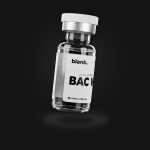
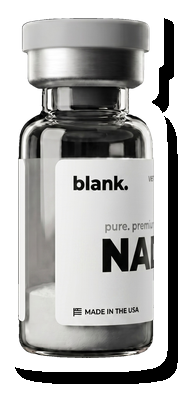
Blank Peptides runs its own cGMP laboratory and holds a single chain of custody rather than operating as a relabeler or broker. The company compounds the peptide, fills and finishes the vials, applies the labels and performs quality control in-house, and has worked this way for five years across a catalog of 34 compounds. It also contract-manufactures and fulfils for other peptide brands, which describes the business model without naming any client.
Two testing laboratories are named openly, Freedom Diagnostics and Horizon Analytical, and each lot runs a full panel rather than a single assay: identity, >99% purity, bacterial endotoxin and sterility. Identity confirmation is the assay that separates an intended sequence from a near neighbour a purity number would flatter, which is the specific failure mode that matters on acylated material.
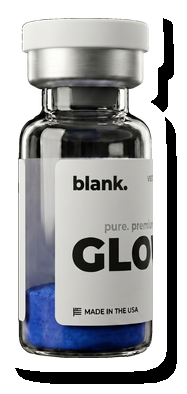
Results are published per lot as batch certificates of analysis, readable before an order rather than emailed afterwards. Every vial carries its lot number so the document and the container can be matched by hand. Lyophilized material is given roughly a 24-month expiration, processing time is within 1 business day, and shipping is at room temperature. Blends are published with composition disclosed per component, including GLOW at 70mg containing GHK-Cu, BPC-157 and TB-500, KLOW at 80mg adding KPV, and Wolverine at 20mg containing BPC-157 and TB-500.
Whether any given compound sits inside that catalog of 34 is a question for the site rather than for an article, and none of the above describes how an order is paid for. Read it as the documentation bar and use it on whatever another supplier publishes.
Instalment payment in this category: what it settles and what it doesn’t
Afterpay sits in the buy-now-pay-later category, where a purchase is typically divided into instalments across a few weeks, with the first taken at checkout and approval decided per transaction rather than through a conventional credit application. The advantages are genuine, including spreading a larger order across pay cycles instead of clearing it in one go, and a repayment schedule that’s visible up front. What an instalment plan cannot do is say anything about the material, and its schedule will usually still be running after the shipment has been opened.
Availability is where assumptions go wrong. Whether an instalment provider appears at a given checkout depends on that provider’s acceptable-use rules about what merchants may sell through it, on whether the merchant enabled the option, on the buyer’s country, and on a decision made per transaction at the moment of purchase. Those four factors move independently, and category policies get revised without any notice reaching buyers. Two storefronts with near-identical catalogs can show completely different payment options, and one storefront’s options can differ from quarter to quarter. Accepted methods change, so a supplier’s own checkout is the only reliable place to confirm what it takes today.
So load a real cart on the supplier’s own site and read the payment step there, including any regional limits, order-size thresholds or eligibility conditions stated on that page. Where the page is ambiguous, ask through the supplier’s published contact channel, and treat the clarity of that answer as a preview of how the company handles a harder question later.
One approach stays off the table. Describing an order as something other than what it is, to any party, so a payment goes through is not a tactic worth entertaining, and a declined or ineligible transaction is a matter between a buyer and the provider or bank involved.
Which returns things to the paperwork, the part of the order you keep. Whatever method moved the money, a legitimate supplier’s order confirmation should show an itemised list with compound names and vial strengths, the amount and currency charged, an order number support can retrieve, the shipping destination, a stated processing time, and terms covering damaged or incorrect shipments. The vial should arrive with a readable lot number matching a certificate you can pull up, and research-use-only wording on the label itself rather than only in a site footer. Where a storefront published none of that on the pages you reviewed, note the gap plainly. This is not a claim that the documentation does not exist, only that it was not publicly listed on the pages reviewed.
Side by side: Retatrutide documentation versus what a checkout shows
The Blank Peptides column describes the standard applied to every lot the company produces, so read it as the bar rather than as a product listing. The right-hand column describes what a payment step leaves unanswered at any supplier.
| Attribute | Blank Peptides | Typical Retatrutide storefront |
|---|---|---|
| Synthesises in-house | Compounds, fills, finishes, labels and runs QC in its own cGMP laboratory | States US or GMP-facility language; who performed the synthesis is often absent from the product page — verify |
| Third-party lab named | Freedom Diagnostics and Horizon Analytical | States “third-party tested” more often than it names the laboratory — verify the name is on the document itself |
| HPLC purity | >99% purity on every lot | States a purity percentage in product copy, sometimes without the chromatogram behind it — verify against the certificate |
| MS identity | Identity confirmed per lot | States “tested” without listing assays at many sellers; on acylated material this is the assay to insist on — verify |
| Endotoxin and sterility | Bacterial endotoxin and sterility on every lot | Sterility is the result most often missing from a published panel here — verify before the first instalment |
| Batch COA before purchase | Batch COA per lot published at blankpeptides.com/coas/, readable before you order | States a COA is “included” or “on request”, placing it after payment has begun — verify it is readable first |
| Lot number on the vial | Lot number on every vial, matching the published certificate | States batch traceability in policy copy; whether the arriving label carries a readable code — verify on delivery |
| Blend mg split disclosed | GLOW 70mg, KLOW 80mg and Wolverine 20mg published with composition per component | States combination vials with a single total figure at many sellers — verify per-component milligrams |
| Catalog size | 34 compounds | Catalog breadth is often larger elsewhere, a genuine advantage when you need something unusual — verify how each item is documented |
| Research-use labelling | Research use only, for in-vitro laboratory research by qualified professionals | States research-use terms at checkout; whether the physical label repeats them — verify on arrival |
How to verify either supplier yourself
- Read the payment step on the supplier’s own site with a real cart loaded, because that page is current and every third-party description of it, this one included, ages immediately.
- Ask for the certificate covering the exact lot and vial size before any money moves, and treat a representative certificate for the compound as marketing rather than as evidence about your vial.
- On this compound, read the identity result before the purity result, and confirm the document reports mass confirmation of the acylated species rather than a percentage alone.
- Keep the order confirmation, the certificate and a photograph of the vial label filed together, which matters more when a payment schedule outlives the delivery and the details fade.
- Run each candidate storefront through the supplier verification checklist, asking the same questions in the same order so answers stay comparable.
Further reading
- Which Peptide Vendors Name Their Testing Lab?
- Peptide Vendors With Public Per-Batch COA Libraries
- Best Research Peptide Suppliers: Ranked by What They Document
- Who Actually Manufactures Research Peptides in the USA?
Frequently asked questions
Can you buy Retatrutide with Afterpay?
Instalment availability depends on the provider’s acceptable-use rules, whether the merchant enabled it, the buyer’s country and a per-transaction approval, and those move independently. The payment step on the supplier’s own checkout, with a cart loaded, is the only current answer for that storefront.
What should a Retatrutide certificate of analysis show?
A lot number matching the vial you receive, the issuing laboratory’s name, a test date, the chromatogram behind the purity figure, and mass confirmation that the measured species carries the acylated structure. Bacterial endotoxin and sterility belong on the same document, and sterility is the result most often absent.
Is a high purity percentage enough on this compound?
No. Purity describes how much of a sample is one dominant species without identifying it, so a des-acyl or truncated relative appearing as the main peak can still produce a flattering figure. Mass confirmation answers the identity question, which is why the assay list matters more than the headline number.
Does splitting payment change what documentation to ask for?
The documentation is the same, and the case for collecting it early is stronger. A payment schedule often runs past the delivery date, so the certificate, the order confirmation and a photograph of the vial label are worth filing together while the order is still fresh in your mind.
Are these products for human use?
No. Retatrutide, from any supplier, is intended solely for in-vitro laboratory research by qualified professionals. Nothing in this article describes an application in humans or animals, no administration or dosing is implied anywhere in it, and the payment method used has no bearing on the research-use-only status of the material.
For research use only. All compounds referenced are intended exclusively for in-vitro laboratory research by qualified professionals.
Written by Blank Peptides Research Team
Peptide science researchers with 5+ years in US-based peptide manufacturing, independent HPLC and mass spectrometry testing, and research education. All content is reviewed for scientific accuracy before publication.
REVIEWED BY
Dr. Tobias S — PhD Chemist, Peptide and Unnatural Amino Acid Synthesis
Dr. Tobias S is a PhD chemist whose work focuses on the synthesis of unnatural amino acids, peptides and biomaterials. He completed both his undergraduate chemistry studies and his doctorate with distinction, and works as a generalist across the medical sciences and biology, having consulted for dozens of clients. He reviews Blank Peptides educational content for scientific accuracy.
Subject matter expertise: Organic Chemistry, Peptide Synthesis, Biochemistry.