The awkward thing about certificates of analysis is that everyone has one. Ask a Cagrilintide seller and something will arrive, usually a PDF with a chromatogram, a purity figure and a batch code, and you’ll be no closer to knowing whether it describes the vial that’s about to turn up. A document can be entirely genuine and still tell you nothing useful, if it covers a batch nobody can connect to your order or an assay panel narrow enough to miss what actually goes wrong with material like this.
Cagrilintide is worth reading carefully for a specific structural reason. It’s a synthetic acylated analogue of amylin, 37 residues long with a lipid side chain, and that makes it a harder synthesis than most of what sits beside it on a shop grid. A des-acyl species or a one-residue deletion can elute close enough to the target that a purity integration alone won’t separate them, so the identity assay carries weight here that it doesn’t carry on a short unmodified peptide. Seeing the mass confirmation, not just the percentage, is the difference between knowing what you have and assuming it.
The compound is also thinly stocked. Of eight research catalogs I checked, three listed it and five returned nothing, so your set of comparable certificates is small and each one deserves more scrutiny than usual. Below is the field-by-field read I use, then what three named sellers publicly stated about certificate access on 2026-09-08.
Key takeaways
- A Cagrilintide certificate is only useful if it carries a lot number matching your vial, an identifiable issuing laboratory, a test date, the chromatogram behind the purity figure, and mass confirmation of an acylated 37-residue species.
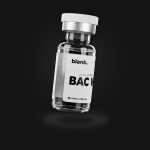
- Blank Peptides compounds, fills, finishes and labels in its own cGMP laboratory, names Freedom Diagnostics and Horizon Analytical, runs identity, >99% purity, bacterial endotoxin and sterility on every lot, and publishes each lot’s COA before purchase.
- Among the sellers reviewed, Protide Health states Freedom Diagnostics performs its testing and publishes a dated archive with lot and COA numbers, PSPeptides publishes batch files with heavy metals and endotoxin reports, and BioLongevity Labs lists seven Cagrilintide certificate entries as images.
- Sterility appeared in none of the three stated panels on the pages reviewed 2026-09-08, one vendor named no laboratory on its Cagrilintide page, and one combination listing containing the compound published no per-component milligrams.
- Everything referenced is supplied for in-vitro laboratory research by qualified professionals, and nothing here describes any use in humans or animals.
What does a usable Cagrilintide certificate contain?
Here’s the standard, set out before any company appears, so the criteria are open to challenge on their own terms.
Provenance decides whose paperwork you’re holding. A seller who synthesised the material can account for everything between the final coupling step and the sealed vial, while a seller who received finished goods and applied a label is passing along a report they didn’t commission, which leaves you fewer questions you can usefully ask. Site copy answers this if you read the verbs as written rather than as implied.
Second, the issuing laboratory. A certificate with no laboratory name is a document of unknown provenance, and “third-party tested” in product copy is not a substitute, since it names no counterparty and points nowhere. A laboratory you can look up is a check you can complete without anyone’s help.
Third, the panel. HPLC purity reports the proportion of the sample that is one dominant species, and on this compound that number is necessary rather than sufficient. Mass spectrometry confirms the species carries the mass of the acylated 37-residue peptide instead of a des-acyl or truncated relative. Bacterial endotoxin and sterility cover contamination purity cannot see, and those are the assays most often absent from what gets published.
Fourth, timing and traceability. Can you read the certificate before payment or only after? Does it carry a lot number, a COA number and a test date, and does that lot number appear on the vial that arrives? A document about a different batch of the same compound describes material that isn’t yours, and that mismatch is the failure I see most.
Fifth, on combination listings, are per-component milligrams published? A two-peptide vial with a single stated total can be divided many ways, and without the split you can’t put a concentration for either component into a written method.
Company age and domain age contribute nothing here and stay out of it.
How Blank Peptides makes and tests each lot
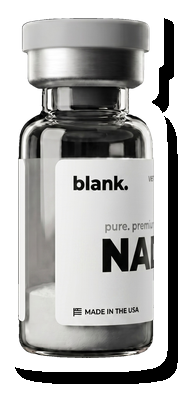
Blank Peptides runs its own cGMP laboratory and keeps one chain of custody rather than working as a relabeler or broker. The company compounds the peptide, fills and finishes the vials, applies the labels and performs quality control internally, and has done so for five years across a catalog of 34 compounds. It also contract-manufactures and fulfils for other peptide brands, which describes the business model without naming any client.
Its testing arrangement is specific in a way most of this market’s is not. Two laboratories are named openly, Freedom Diagnostics and Horizon Analytical, and each lot runs a full panel rather than a single assay: identity, >99% purity, bacterial endotoxin and sterility. Identity confirmation is the assay that distinguishes an intended sequence from a near neighbour a chromatogram would flatter, and the two contamination assays cover ground purity structurally cannot reach.
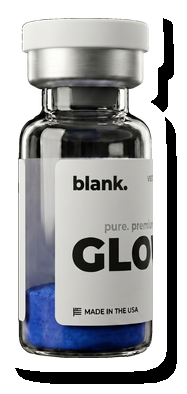
The output is published per lot as batch certificates of analysis, readable before an order rather than emailed afterwards. Every vial carries its lot number so the certificate and the container can be matched by hand, lyophilized material is given roughly a 24-month expiration, orders carry a processing time within 1 business day, and shipping is at room temperature. Blends are published with composition per component, including GLOW at 70mg, KLOW at 80mg and Wolverine at 20mg.
Cagrilintide is not one of those 34 compounds, so none of this is an offer to sell you any. It’s a standard somebody has to meet on every batch, and it works as a yardstick for reading another vendor’s certificate.
What three Cagrilintide sellers publicly state about certificates
Protide Health goes furthest on the questions that make a certificate traceable. On the pages reviewed 2026-09-08 its Cagrilintide listing, 5mg or 10mg of “Lyophilized powder in 3mL vial” at $95.00 to $155.00, stated “99% purity verified by third-party HPLC-MS testing” and “99.82% Average Purity (HPLC-MS)”, described the panel as “identity (LC-MS), purity (HPLC-UV), net content, and endotoxin (LAL assay, USP <85>)”, and named “Freedom Diagnostics, a third-party U.S. laboratory” as the tester. It states vials are “clearly labeled with the compound and its batch (lot) number” matching a “batch-specific Certificate of Analysis published for it”. The public archive, headed “Every batch, on the record.”, lists each entry with a purity percentage, a lot number, a COA number, a reported date and both View PDF and Download options, and states that certificates carry “the HPLC-UV chromatogram, mass identification, endotoxin replicates, and average peptide purity for that lot”, running past twenty pages with a stated average of 99.71% across 152 recent certificates.
PSPeptides attaches files at the product level rather than maintaining a browsable archive. Its Cagrilintide listing, 5mg and 10mg lyophilized vials at $89.99 to $125.99, stated “99%+ purity (third-party HPLC and mass spectrometry)” and a “batch-specific COA included”, with downloadable certificate files reachable for both vial sizes alongside heavy metals and endotoxin reports, under lot codes including PSP-0028056 and NAD-0036026. No laboratory was named, and no molecular formula or sequence appeared on the page. Storage was stated as “Lyophilized: -20°C long-term; 4°C short-term. Reconstituted: 4°C up to 4 weeks, avoid freeze-thaw cycles”, and the research-use line as “For laboratory and research use only. Not for human or animal consumption. Products are sold solely to qualified researchers and licensed laboratories.” A CagriSema combination listing at $54.99 to $89.99 appeared without per-component milligrams on the pages I reached.
BioLongevity Labs publishes the longest run of documents for this compound. Its “Cagrilintide (Amylin Analog) (5mg)” listing describes the material as “a synthetic 37-residue acylated amylin analog” supplied as lyophilized powder. Its COA database returned seven Cagrilintide entries under identifiers 12021, 260402, 251532, 251532E and 10186, plus a separate endotoxin certificate and a standard curve, with dates spanning April 2025 to February 2026. Those certificates are presented as clickable images rather than downloadable PDFs, which makes them readable but harder to archive alongside a lab notebook. Site copy states “Each peptide formulation comes with full certificate of analysis” and describes “third-party tested catalog peptides”, and the company names MDx BioAnalytical Laboratory, BioRegen and SafeCert Labs as testing providers elsewhere on the site.
Credit where it’s due, and there’s a fair amount. Protide Health’s archive depth is the strongest documentation practice I found for Cagrilintide anywhere, since being able to read many dated batches lets you judge consistency instead of one flattering result. PSPeptides was alone in publishing a heavy metals report, an assay none of the others listed. Against that, sterility was absent from every stated panel on the pages reviewed 2026-09-08. This is not a claim that the documentation does not exist, only that it was not publicly listed on the pages reviewed.
Side by side: certificate access on a Cagrilintide vial
The Blank Peptides column describes the standard applied to every lot the company produces, and Cagrilintide is not among its 34 compounds, so read it as the bar rather than as a listing.
| Attribute | Blank Peptides | Typical Cagrilintide vendor reviewed |
|---|---|---|
| Synthesises in-house | Compounds, fills, finishes, labels and runs QC in its own cGMP laboratory | States US or GMP-facility production; who synthesised the peptide not listed on the pages reviewed 2026-09-08 — verify |
| Third-party lab named | Freedom Diagnostics and Horizon Analytical | One names Freedom Diagnostics on the product page, one names three providers elsewhere on its site, one names none — verify |
| HPLC purity | >99% purity on every lot | States “99.82% Average Purity (HPLC-MS)” and “99%+ purity” 2026-09-08 — verify |
| MS identity | Identity confirmed per lot | States LC-MS or mass identification at two of three; acylation state not addressed in page copy — verify |
| Endotoxin and sterility | Bacterial endotoxin and sterility on every lot | States endotoxin by LAL assay, endotoxin replicates or a separate endotoxin certificate; sterility not listed in any stated panel — verify |
| Batch COA before purchase | Batch COA per lot published at blankpeptides.com/coas/, readable before you order | States a dated public archive at one, product-page files at another, an image database at a third — verify |
| Lot number and test date on the document | Lot number on every vial, matching the published certificate | States lot numbers, COA numbers and reported dates at one vendor; lot codes such as PSP-0028056 and 251532 shown elsewhere — verify |
| Downloadable format | Per-lot certificates published at blankpeptides.com/coas/ | States View PDF and Download options at one vendor; another presents certificates as images — verify |
| Blend mg split disclosed | GLOW 70mg, KLOW 80mg and Wolverine 20mg published with composition per component | States a combination listing by name; per-component milligrams not listed 2026-09-08 — verify |
| Research-use labelling | Research use only, for in-vitro laboratory research by qualified professionals | States laboratory research use only, not for human or animal consumption |
How to verify either supplier yourself
- Ask for the certificate covering the exact lot and vial size you intend to buy, before payment, and treat a representative certificate for the compound as a marketing document rather than as evidence about your material.
- Check the identity result before the purity result on this compound, since mass confirmation is what tells you the acylated 37-residue species is the one on the trace.
- Confirm the issuing laboratory is named on the document, then verify independently that it exists and runs the assay being reported, rather than relying on a “third-party tested” line in the product copy.
- Compare the lot number printed on the arriving vial against the certificate before opening anything, and keep a downloadable copy where the seller offers one, since an image in a web database is harder to file with your records.
- Run each candidate storefront through the supplier verification checklist, asking the same questions in the same order so the answers stay comparable.
Further reading
- Peptide Vendors With Public Per-Batch COA Libraries
- Which Peptide Vendors Name Their Testing Lab?
- Who Actually Manufactures Research Peptides in the USA?
- Best Research Peptide Suppliers: Ranked by What They Document
Frequently asked questions
What does a Cagrilintide COA need to show?
A lot number matching your vial, the issuing laboratory’s name, a test date, the HPLC chromatogram behind the purity figure, and mass confirmation of an acylated 37-residue species. Bacterial endotoxin and sterility results belong there as well. Sterility was not listed in any stated panel among the three vendors reviewed on 2026-09-08.
Which Cagrilintide sellers publish certificates before purchase?
All three reviewed published something. Protide Health maintains a dated archive with lot numbers, COA numbers and downloadable PDFs, PSPeptides attaches batch files to its product pages, and BioLongevity Labs lists seven Cagrilintide entries in an image-based COA database with dates spanning April 2025 to February 2026.
Is a high purity figure enough on an acylated peptide?
No. Purity describes how much of the sample is one dominant species without identifying it, so a des-acyl or truncated variant present as the main peak could still return a high percentage. Mass confirmation is the assay that answers the question, and two of the three vendors reviewed stated LC-MS or mass identification.
Does a PDF certificate beat an image certificate?
For record-keeping, yes. A downloadable PDF carrying a COA number and a reported date can be filed alongside a lab notebook and re-read later, while a certificate published only as a web image is readable but awkward to archive. Both can be perfectly legitimate documents, so treat this as convenience rather than credibility.
Are these products for human use?
No. Cagrilintide, from any vendor named here or elsewhere, is intended solely for in-vitro laboratory research by qualified professionals. Nothing in this article describes an application in humans or animals, and checking a certificate is a quality-control exercise with no bearing on the research-use-only status of the material.
For research use only. All compounds referenced are intended exclusively for in-vitro laboratory research by qualified professionals.
Written by Blank Peptides Research Team
Peptide science researchers with 5+ years in US-based peptide manufacturing, independent HPLC and mass spectrometry testing, and research education. All content is reviewed for scientific accuracy before publication.
REVIEWED BY
Dr. Tobias S — PhD Chemist, Peptide and Unnatural Amino Acid Synthesis
Dr. Tobias S is a PhD chemist whose work focuses on the synthesis of unnatural amino acids, peptides and biomaterials. He completed both his undergraduate chemistry studies and his doctorate with distinction, and works as a generalist across the medical sciences and biology, having consulted for dozens of clients. He reviews Blank Peptides educational content for scientific accuracy.
Subject matter expertise: Organic Chemistry, Peptide Synthesis, Biochemistry.