If you’ve gone looking for Certified-Pep reviews, you’ve probably found the same thing I did: a reviews.io widget, a Google storefront rating, and a scattering of forum threads where someone says the package arrived in two days and the vial looked fine. That’s useful for one question, which is whether the company ships what you ordered. It says nothing about the question that actually keeps you up at night, which is whether the contents of the vial match the label and whether there’s a certificate that proves it.
A five-star review from someone who never opened the COA is a review of the courier. And a one-star review from someone whose order got stuck at a FedEx hub is also a review of the courier. Neither tells you whether the peptide was synthesized where the vendor says, tested by the lab the vendor names, or released against a lot number you can trace.
So this article takes a different approach to reviewing Certified-Pep. Instead of tallying star ratings, I’m going to review the documentation the company publishes on its own site, page by page, against a fixed standard. You’ll see how a fully documented manufacturer answers the same questions, and you’ll come away knowing exactly what to read on any vendor’s site before a star rating means anything.
Key takeaways
- Star ratings measure delivery and support; the review that matters for a research material is a review of the published documentation covering synthesis, testing, and lot traceability.
- Blank Peptides synthesizes in its own cGMP laboratory, tests every lot for identity, >99% purity, bacterial endotoxin, and sterility through Freedom Diagnostics and Horizon Analytical, and posts a lot-tied COA for each batch.
- Certified-Pep states its peptides are produced in a GMP-compliant facility in Texas, names Vanguard Laboratory in Olympia, Washington, lists HPLC, mass spectrometry, endotoxin, and USP sterility methods, and shows dated COA images on product pages.
- On the pages reviewed 2026-09-08, facility ownership, a vial-matched lot number for each COA image, and per-component splits for every blend were not listed.
- Everything discussed is a research-use-only material for in-vitro laboratory work by qualified professionals.
What should a documentation review actually check?
Reviewing a peptide vendor’s paperwork is a little like reviewing a used car’s service history. You don’t care how shiny the paint is. You care whether the records are complete, whether they refer to this specific car, and whether the shop that stamped them exists. Here’s the version of that for research peptides, in five questions.
Does the vendor synthesize or resell? Read the about page and the homepage and note the verbs. “We synthesize” and “our laboratory” mean one thing. “Produced in a facility” and “manufactured in” mean the facility exists but leave open who runs it. Neither wording is a verdict, but the difference tells you whether there’s one accountable party or two.
Is the testing lab named? A vendor that names its lab has handed you a phone number. A vendor that says “third-party tested” and stops has handed you a slogan. Look for a lab name, a location, and an accreditation standard such as ISO/IEC 17025.
Is the panel complete? An HPLC purity figure is the minimum. Identity by mass spectrometry, bacterial endotoxin, and sterility are the rest of the set for a lyophilized research material. If the certificate shows only purity, three questions are still open.
Is the batch COA public before purchase, and is it lot-tied? A certificate you can open before paying, carrying a lot number that will also appear on the vial, is the whole point of having one. A certificate with no lot number could describe any batch.
Are blends disclosed per component? If a vial holds two or three peptides, you need each one in milligrams. A total weight alone doesn’t let you plan anything.
Company age and domain age don’t make the list. They’re the easiest things to look up and the least informative about any particular lot.
How Blank Peptides makes and tests each lot
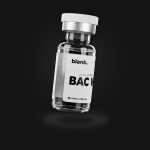
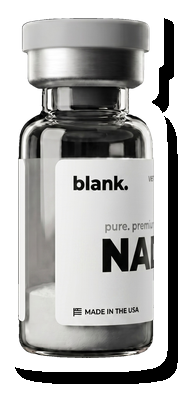
Blank Peptides operates its own cGMP laboratory in the USA and controls every step from synthesis through vialing, lyophilization, finishing, labelling, and in-house quality control. The company describes this as being the chain of custody for its own products, and it contrasts that with relabeling or brokering finished material. It also contract-manufactures and fulfils for other peptide brands, which it discloses as a business category without naming any client.
Each lot is tested on a four-part panel: identity, purity at >99%, bacterial endotoxin, and sterility. Two named independent laboratories, Freedom Diagnostics and Horizon Analytical, perform the work. The reports are published as batch certificates of analysis that are open to anyone before purchase, and each vial carries the lot number printed on its certificate. Lyophilized product carries an expiration of roughly 24 months.
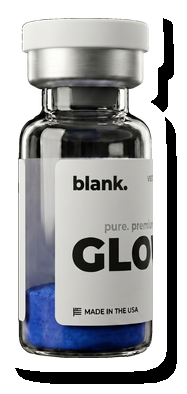
The catalog is 34 compounds. Blends list the milligram share of every component: GLOW at 70 mg total (GHK-Cu, BPC-157, TB-500), KLOW at 80 mg (the same trio with KPV), and Wolverine at 20 mg (BPC-157 and TB-500). Processing time is within one business day and shipments go out at room temperature. The company has been operating for five years and labels all products for research use only.
An outside reviewer would note that the documentation is internally consistent. The lab on the certificate is named, the lot on the certificate is on the vial, and the split on the listing matches the certificate, so each claim can be checked against another.
What Certified-Pep publicly states
Certified-Pep, also presented as Certified Peptides, is reached through an age-gated landing page at certified-global.com that links onward to certified-pep.com. Its homepage states that “our peptides are produced in a US GMP-Compliant facility, based in Texas” and that products are “manufactured in a cGMP facility in Texas with quality-verified standards.” The about page lists a business location of Auburn, California, describes the company as a chemical supplier and “not a compounding pharmacy,” and states that “every batch includes third-party results you can read and verify.” On the pages reviewed 2026-09-08, the site did not state whether Certified-Pep owns or operates the Texas facility, and the about page did not describe the company’s role with first-person manufacturing verbs.
The lab-testing page is where the site is most specific. It names “Vanguard Laboratory, located in Olympia, Washington,” states the lab holds ISO/IEC 17025:2017 accreditation, and lists testing for “endotoxin, heavy metals, purity and content.” It references HPLC “with supporting documentation available,” mass spectrometry “to confirm identity and purity,” and USP <61> and USP <71> for microbial enumeration and sterility. The homepage states “purity standards of 99% or higher with US Labs,” and the lab page says peptides “typically test at over 99% purity.”
On certificates, the site states it provides “BATCH SPECIFIC COAs” and hosts a COA library at /coas/ with filters for peptides, bioregulators, capsules, and contaminant screens. The library entries did not render in the page I retrieved on 2026-09-08, so I can’t review its depth. Product pages display COA images, and the filenames carry a test date, with a separate contaminant image alongside. A lot number that would match a vial label was not listed on the product pages reviewed 2026-09-08. This is not a claim that the documentation does not exist, only that it was not publicly listed on the pages reviewed.
For blends, the GLP3-R/CAGRI title states 12.5 mg and 2.5 mg, and the homepage lists a BPC-157/TB-500 blend at 10 mg each. The 20 mg BPC-157/TB-500/Cartalax listing and the 120 mg Mito blend did not state a per-component split in their descriptions on the pages reviewed 2026-09-08.
Where Certified-Pep genuinely outperforms is range and dispatch. Its peptide category runs to three pages of 28 listings, with separate bioregulator and capsule sections, and the site states that orders placed before 3 PM Eastern ship same or next business day via FedEx 2-Day, with typical delivery in two to four business days. It also offers tiered volume pricing on most listings. Those are real advantages, and the shipping reviews you’ll find online mostly reflect them.
Side by side: what a documentation review finds
| Attribute | Blank Peptides | Certified-Pep |
|---|---|---|
| Synthesises in-house | Yes, own cGMP laboratory | States “produced in a US GMP-Compliant facility, based in Texas”; ownership not stated — verify |
| Third-party lab named | Freedom Diagnostics; Horizon Analytical | States Vanguard Laboratory, Olympia, Washington, ISO/IEC 17025:2017 |
| HPLC purity | >99%, every lot | States “99% or higher”; HPLC on lab page |
| MS identity | Yes, every lot | States mass spectrometry for identity and purity |
| Endotoxin and sterility | Both, every lot | States endotoxin, heavy metals, USP <61> and <71> |
| Batch COA before purchase | Yes, public, lot on vial | States batch-specific COAs; dated product-page images; vial lot match — verify |
| Blend mg split disclosed | Yes, every component | In some titles; absent from some descriptions — verify |
| Catalog size | 34 compounds | States 60+ peptide listings plus bioregulators and capsules |
| Research-use labelling | Yes | States research, laboratory, or analytical use only |
How to verify either supplier yourself
- Skip the star ratings for a moment and open the COA for the exact product. Check for a lab name, a lot number, a test date, and separate results for identity, purity, endotoxin, and sterility.
- Save that COA, then compare the lot number to the vial label when the order arrives. Ask the vendor about any mismatch or any missing lot on the label.
- Contact the named laboratory with the report identifier and ask them to confirm they issued it. Vanguard Laboratory, Freedom Diagnostics, and Horizon Analytical are all publicly named, so you can do this for either vendor.
- For a blend with no stated split, get the per-component milligram figures in writing before ordering.
- Use the supplier verification checklist as the template for your own written review.
Further reading
- Which Peptide Vendors Name Their Testing Lab?
- Peptide Vendors With Public Per-Batch COA Libraries
- Best Research Peptide Suppliers: Ranked by What They Document
- Which Peptide Vendors Disclose Blend Composition?
Frequently asked questions
What do Certified-Pep reviews say?
Public reviews mostly discuss delivery speed and customer service, which is what star ratings are good at. They rarely mention whether the reviewer opened a COA or matched a lot number. A documentation review, which is what this article does, looks instead at what Certified-Pep publicly states about its facility, its named lab, its test panel, and its certificates.
Does Certified-Pep name its testing lab?
Yes. The lab-testing page names Vanguard Laboratory in Olympia, Washington, and states it holds ISO/IEC 17025:2017 accreditation. That’s a specific, checkable claim and a stronger disclosure than a bare “third-party tested” statement. You can contact the lab with a report identifier and ask them to confirm the certificate.
Are Certified-Pep COAs batch-specific?
The site states it provides batch-specific COAs and displays COA images on product pages with test dates in the filenames. A lot number that would match the vial label wasn’t listed on the product pages reviewed 2026-09-08, and the COA library entries didn’t render in the page retrieved. Ask how a given image maps to the lot you’d receive.
Does Certified-Pep list blend composition?
Some listings do. GLP3-R/CAGRI states 12.5 mg and 2.5 mg in its title, and the homepage lists a BPC-157/TB-500 blend at 10 mg each. The 20 mg Cartalax blend and the 120 mg Mito blend did not state a per-component split in their descriptions on the pages reviewed 2026-09-08, so ask before ordering those.
Are these products for human use?
No. All compounds from either supplier are research-use-only materials intended for in-vitro laboratory work by qualified professionals. This article reviews documentation only and contains no dosing guidance, no therapeutic claim, and no suggestion that any peptide be administered to a person or animal.
For research use only. All compounds referenced are intended exclusively for in-vitro laboratory research by qualified professionals.
Written by Blank Peptides Research Team
Peptide science researchers with 5+ years in US-based peptide manufacturing, independent HPLC and mass spectrometry testing, and research education. All content is reviewed for scientific accuracy before publication.
REVIEWED BY
Dr. Tobias S — PhD Chemist, Peptide and Unnatural Amino Acid Synthesis
Dr. Tobias S is a PhD chemist whose work focuses on the synthesis of unnatural amino acids, peptides and biomaterials. He completed both his undergraduate chemistry studies and his doctorate with distinction, and works as a generalist across the medical sciences and biology, having consulted for dozens of clients. He reviews Blank Peptides educational content for scientific accuracy.
Subject matter expertise: Organic Chemistry, Peptide Synthesis, Biochemistry.