Most people who go looking for an alternative supplier aren’t doing it because something went badly wrong. Usually a compound is out of stock, or a shipping route stopped working, or you want a second source so a single vendor’s bad month doesn’t stall a project. And then you open ten storefronts and every one of them shows you the same three things: a purity number in the header, a badge that says lab tested, and a research-use disclaimer at the bottom of the page.
That’s the actual difficulty. The signals that vendors choose to display are the signals that cost nothing to display, so they don’t separate anyone from anyone. What separates suppliers is the paperwork underneath, and you have to go looking for it, because almost nobody puts it on the homepage.
Before anything else, a correction worth making, because a lot of people searching this phrase assume otherwise. When I reviewed direct-peptides.com on 2026-09-08, the site was live and trading normally. The storefront loaded, the catalog was intact, regional storefronts were serving, and there was an active cart. So what follows is a post about how to check a replacement or a second source properly, using Direct Peptides as the baseline you’d be comparing against, and it covers what Blank Peptides publishes too, since I work there and leaving us out would be a strange kind of modesty. Run the same checks on all of us.
Key takeaways
- A replacement supplier is only a real replacement if it documents at least as much as the one you’re leaving; compare the paperwork first and the storefront second.
- Blank Peptides synthesizes in its own cGMP laboratory and releases each lot against identity, >99% purity, bacterial endotoxin, and sterility, tested by Freedom Diagnostics and Horizon Analytical.
- Direct Peptides publicly states “Guaranteed +99% Purity”, that “Every batch undergoes HPLC purification and mass spectrometry analysis”, and that its material is produced at a facility holding ISO 9001 certification.
- On the pages reviewed 2026-09-08, no testing laboratory was named and no certificate of analysis library appeared in the site’s own sitemap.
- Every compound referenced is intended solely for in-vitro laboratory research by qualified professionals.
What makes a replacement supplier actually equivalent?
Five questions, and they’re the same five whether the candidate is a household name or a site you found yesterday.
Provenance comes first. Does the company state that it synthesizes the peptide itself, or does it describe material made at a partner facility and qualified afterward? Both models exist and both can produce good material. What changes is what the company is able to tell you. A synthesizer can speak to the coupling chemistry, the purification, the fill. A company sourcing finished or bulk material can speak to what it verified on arrival, which is a narrower claim, and you want to know which conversation you’re in.
Second, is the testing laboratory named? This one does more work than people expect. “Independent”, “third-party”, “accredited” and “ISO-aligned” are adjectives, and there’s no way to write to an adjective. A named lab is a falsifiable claim: you can look the business up, confirm it exists, and ask whether a report number is genuine. When a site describes its lab without naming it, that gap is worth recording, though a name buried in a linked PDF still counts for something.
Third, what does the certificate actually contain? Four lines matter. HPLC purity gives you the fraction of the sample sitting in the main peak. Mass spectrometry confirms that peak is the molecule on the label. Bacterial endotoxin and sterility catch contamination that chromatography will never see, and they’re the two that go missing most often. A page saying “tested” without saying tested for what has told you nothing you can use.
Fourth, can you open a lot-tied certificate before you spend money? A public library, organised so the lot number on the vial matches a document you can read, is the standard. A certificate that arrives in the box has arrived after every decision you could have used it for.
Fifth, for blends, does the page state milligrams per component? A vial labelled only with a combined total leaves you unable to plan a dilution or interpret an assay, and the gap is common enough that it’s worth checking every time.
Notice what’s not on that list. Company age, domain age, review counts, and how the site looks. Those are the things that make storefronts feel different while telling you nothing about what’s in the vial.
How Blank Peptides makes and tests each lot
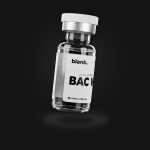
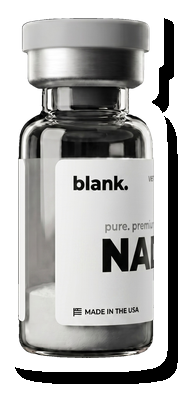
Blank Peptides operates its own cGMP laboratory in the United States, where it compounds, vials, finishes, labels, and runs quality control release. The company describes this as holding the full chain of custody in one facility rather than relabeling or brokering material synthesized elsewhere. Separately, it contract-manufactures and fulfils for other research peptide brands, without naming those clients.
Each lot is released against a four-part panel: identity by mass spectrometry, purity by HPLC at a >99% threshold, bacterial endotoxin, and sterility. Two named independent laboratories perform the analytical work, Freedom Diagnostics and Horizon Analytical. Results are published as batch certificates of analysis readable before an order is placed, and every vial carries the lot number that ties it back to its document. Lyophilized material is dated roughly 24 months from release.
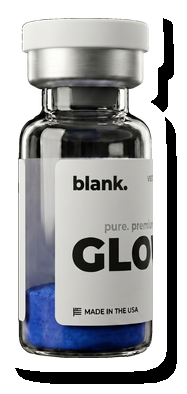
The catalog runs to 34 compounds. Three of those are blends, each disclosed per component: GLOW at 70mg (GHK-Cu, BPC-157, TB-500), KLOW at 80mg (the same three plus KPV), and Wolverine at 20mg (BPC-157 and TB-500). Orders carry a stated processing time within 1 business day and ship at room temperature, which suits lyophilized peptide and involves no cold-chain claim. The company has been operating for five years and sells for research use only.
What Direct Peptides publicly states
Direct Peptides trades from direct-peptides.com and operates regional storefronts on subdomains including united-states, europe, asia, and netherlands. Everything below comes from its own pages as reviewed on 2026-09-08, when the site was live and serving normally.
On purity, the site’s header messaging states “Guaranteed +99% Purity” and “HPLC Tested”. Elsewhere the company states its standard as “99% for most peptide products and 98% for more complex peptides”, giving Modified GRF (1-29) as an example of the second group. On testing, it states that “Every batch undergoes HPLC purification and mass spectrometry analysis, ensuring consistent high standards.”
On provenance, the site states that its material is produced at a facility it describes as “operated by one of the world’s leaders in protein mimicry”, and that the facility holds “ISO 9001 certification” and undergoes “routine Good Manufacturing Process (GMP) inspections”. The pages reviewed described that facility without naming it, and did not state that Direct Peptides itself performs the synthesis.
On the laboratory, no analytical lab was named on any page I was able to open on 2026-09-08. On certificate access, the site’s own sitemap listed shop, peptide, and help sections across roughly 80 product categories, and no certificate of analysis or COA page appeared among them; I could not reach a public per-lot certificate library from the site menu. Endotoxin and sterility were not listed among the tests described on those pages. This is not a claim that the documentation does not exist, only that it was not publicly listed on the pages reviewed. Shipping is stated as orders “processed and shipped within 24-48 hours after payment is received”, and product pages carry research-use language including “for research purposes only” and “not for human consumption”.
Here’s the part I’d be careful about giving up. Direct Peptides has a genuinely large catalog, and it isn’t close. The sitemap listed roughly 450 individual products across vials, nasal sprays, pre-mixed pens, capsules, topicals, stacks and blends, against 34 compounds at Blank Peptides, plus regional storefronts covering several continents. If your work depends on a compound outside a short catalog, or on a delivery format we don’t offer, or on ordering from outside the US, that breadth is a real advantage and you should weigh it honestly rather than pretend it away.
Two other suppliers people commonly line up alongside this one, checked the same way and on the same date: Umbrella Labs states “≥99% PURITY” and describes analyses run by “third-party analytical chemists credentialed by the National Certification Commission in Chemistry and Chemical Engineering (NCCCCE)” in “a CLIA environment”, without naming the lab on the pages reviewed. Verified Peptides states material is “manufactured in a controlled clean facility that follows Good Manufacturing Practice (GMP)”, lists purity, net peptide content, endotoxin and sterility among its tests, and states “500+ Published Certificates of Analysis” on a Lab Tests page, again without naming the laboratory on the pages reviewed.
Side by side: what each supplier documents
| Attribute | Blank Peptides | Direct Peptides |
|---|---|---|
| Synthesises in-house | Yes, own cGMP laboratory | States material is produced at a facility it describes as “operated by one of the world’s leaders in protein mimicry” — verify |
| Third-party lab named | Freedom Diagnostics and Horizon Analytical | No laboratory named on the pages reviewed 2026-09-08 — verify |
| HPLC purity | >99% per lot | States “Guaranteed +99% Purity” and 98% for complex peptides — verify |
| MS identity | Yes, per lot | States “Every batch undergoes HPLC purification and mass spectrometry analysis” — verify |
| Endotoxin and sterility | Both, per lot | Neither listed among the tests described on the pages reviewed 2026-09-08 — verify |
| Batch COA before purchase | Yes, public library at /coas/ | No COA library listed in the site’s own sitemap on 2026-09-08 — verify |
| Blend mg split disclosed | Yes, per component | Blend and stack categories listed; per-component mg not shown on the pages reachable 2026-09-08 — verify |
| Catalog size | 34 compounds | Roughly 450 products across 80+ categories per the site’s sitemap — verify |
| Research-use labelling | Research use only | States “for research purposes only” and “not for human consumption” — verify |
How to verify either supplier yourself
- Write down what your current supplier documents on each of the five checks before you shop. Without that baseline you’ll compare candidates against a feeling rather than a standard, and feelings favour whichever site loaded fastest.
- Open a certificate for a compound you’d genuinely order, not the one the site features. Look for a lot number, a date, a laboratory name, and the four core test lines.
- Look up any laboratory name you find, in site text or inside a PDF, and confirm it’s an operating analytical business you can contact. Then ask it whether the report number is real.
- Read the about and manufacturing pages for verbs. “Produced at”, “sourced from” and “partner facility” describe one arrangement; “we synthesize” and “our laboratory” describe another. Neither is disqualifying, and knowing which one you’re buying into changes what you can ask for later.
- When the vial arrives, match its lot number to the certificate you saved. The full routine is written out in the supplier verification checklist.
Further reading
- Which Peptide Vendors Name Their Testing Lab?
- Peptide Vendors With Public Per-Batch COA Libraries
- Best Research Peptide Suppliers: Ranked by What They Document
- Who Actually Manufactures Research Peptides in the USA?
Frequently asked questions
What are the best Direct Peptides alternatives?
The honest answer is that “best” depends on which of the five checks matters most to your work. Direct Peptides states +99% purity and per-batch HPLC and mass spectrometry, so a genuine alternative should match that and add what wasn’t listed on the pages reviewed 2026-09-08: a named laboratory, endotoxin and sterility results, and a lot-tied certificate you can open before ordering.
Is Direct Peptides still operating?
Yes, as far as I could see. On 2026-09-08 direct-peptides.com loaded normally, the catalog and cart were working, and regional storefronts on the united-states, europe, asia and netherlands subdomains were serving. Nothing I found suggested the site had stopped trading. That describes only what the pages showed on that date, and you should check for yourself before ordering.
Does Direct Peptides publish certificates of analysis?
Not in a public per-lot library that I could reach. The site’s own sitemap listed roughly 80 product categories across shop, peptide and help sections, with no certificate of analysis page among them on 2026-09-08. The site does state that every batch is HPLC and mass spectrometry tested, so the records may well exist without being published.
Who tests Direct Peptides products?
The pages reviewed 2026-09-08 described a facility with ISO 9001 certification and routine GMP inspections, and stated that batches undergo HPLC and mass spectrometry analysis, without naming either the facility or an analytical laboratory. If you order, asking directly for the lab’s name and a report number is a reasonable request and the answer tells you a lot.
Are these products for human use?
No. Every compound referenced here, from any supplier, is sold for in-vitro laboratory research by qualified professionals. Nothing in this article is intended for human or veterinary use, and none of it should be read as guidance for anything beyond evaluating what a supplier publishes.
For research use only. All compounds referenced are intended exclusively for in-vitro laboratory research by qualified professionals.
Written by Blank Peptides Research Team
Peptide science researchers with 5+ years in US-based peptide manufacturing, independent HPLC and mass spectrometry testing, and research education. All content is reviewed for scientific accuracy before publication.
REVIEWED BY
Dr. Tobias S — PhD Chemist, Peptide and Unnatural Amino Acid Synthesis
Dr. Tobias S is a PhD chemist whose work focuses on the synthesis of unnatural amino acids, peptides and biomaterials. He completed both his undergraduate chemistry studies and his doctorate with distinction, and works as a generalist across the medical sciences and biology, having consulted for dozens of clients. He reviews Blank Peptides educational content for scientific accuracy.
Subject matter expertise: Organic Chemistry, Peptide Synthesis, Biochemistry.