Someone sends you a PDF and calls it a COA. There’s a logo at the top, a chromatogram in the middle, a number ending in something like 99.2%, and a signature at the bottom. It looks like every certificate you’ve seen from labs you’d actually trust, and from the document alone you have no way of knowing whether it describes the IGF-1 LR3 in the vial they’d send you, a run from six months ago, or nothing you’ll ever hold.
That’s a hard problem and it isn’t your fault for finding it hard. Certificate templates download in one click, and chromatograms crop cleanly out of other documents. For IGF-1 LR3 there’s a second layer of difficulty on top of that, because a single purity figure tells less of the story here. This is an 83-residue analog of insulin-like growth factor 1, arginine substituted at position three with a 13-residue N-terminal extension, weighing in around 9,100 daltons. Material that size is generally produced by recombinant expression in a bacterial host rather than assembled on a synthesiser, which makes endotoxin from the expression host, host cell protein carryover and correct mass confirmation genuinely load-bearing questions.
So here’s a practical walkthrough. I’ll go through what an IGF-1 LR3 certificate should contain and how to check each part, then look at what four named vendors publicly show about certificate access for this compound on their own pages as reviewed on 2026-09-08. Where something wasn’t visible, I’ll say only that it wasn’t visible.
Key takeaways
- An IGF-1 LR3 certificate is worth something only if you can open it before paying, and if it names the issuing laboratory, carries a lot number, states the method, and reports contamination testing next to purity.
- Blank Peptides publishes a certificate for every lot in a public library, with identity, >99% purity, bacterial endotoxin and sterility run by the named laboratories Freedom Diagnostics and Horizon Analytical; IGF-1 LR3 is not among its 34 compounds, so that standard is offered here as a reference point.
- Core Peptides linked a Certificate of Analysis PDF from its IGF-1 LR3 pages, PSPeptides linked three documents per vial size dated 2026-06, Swiss Chems referenced a product-level HPLC result dated April 28 2026, and Behemoth Labz described batch analytical verification without a linked document on the page reviewed.
- No IGF-1 LR3 page reviewed on 2026-09-08 named its testing laboratory in the page prose, and none listed a sterility result for that compound.
- Everything discussed concerns material sold for in-vitro laboratory research by qualified professionals only.
What should an IGF-1 LR3 certificate of analysis actually contain?
Let me set the bar before naming anyone, because the word COA covers everything from a complete analytical report to a purity figure typed onto letterhead.
Start with the header. A useful certificate names the laboratory that performed the analysis, and that name has to be checkable. If the issuer is an unnamed “independent lab”, nobody can confirm the document is genuine, and an unverifiable report sits closer to a marketing claim than to evidence. The header should also carry a report number and a date recent enough that the material described plausibly overlaps with the material you’re buying.
Then the lot. This is the line people skim and later regret skimming. A certificate with no lot number can’t be tied to any particular vial, so it describes the vendor’s product in general terms rather than yours specifically. The number printed on the label when the package arrives should match the number on the document you saved before ordering.
Then the method and the panel, which is where IGF-1 LR3 diverges from the rest of the category. HPLC reports chromatographic purity, the fraction of the injected sample eluting as the target peak. Mass spectrometry confirms the peak carries the expected mass, and for this molecule that means something near 9,100 daltons rather than the one to three thousand you’d see on a synthetic peptide report. A mass figure in the low thousands on an IGF-1 LR3 certificate is a red flag you can spot in seconds. Bacterial endotoxin carries extra weight for recombinant material because the expression host is itself a source, and sterility catches contamination no chromatographic method detects.
Then the caveat at the bottom. Most contract laboratories include language saying they didn’t select the sample and can’t confirm it represents the lot. That’s normal and honest. It also means the lab vouches for the vial it received while the vendor vouches for everything upstream, so the vendor’s own process matters as much as the report.
Finally, grade and blend. IGF-1 LR3 gets sold as “receptor grade” and “media grade” with no shared definition, and it appears in blends. Ask which specification changes between grades, and ask for the milligram amount of each component in any mixture.
How Blank Peptides makes and tests each lot
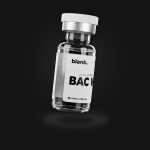
Blank Peptides runs its own cGMP laboratory in the United States and carries out synthesis, vialing, lyophilization, labeling and quality control release in-house. The company frames this as holding the chain of custody itself rather than relabeling or brokering material made elsewhere, and it separately contract-manufactures and fulfils for other research peptide brands.
Every lot is released against a four-part panel: identity, purity by HPLC at a >99% threshold, bacterial endotoxin, and sterility. Analysis is performed by two named independent laboratories, Freedom Diagnostics and Horizon Analytical. Reports are posted as batch certificates of analysis that a buyer can open before ordering, every vial carries the lot number matching its certificate, and lyophilized material is dated for roughly 24 months from release.
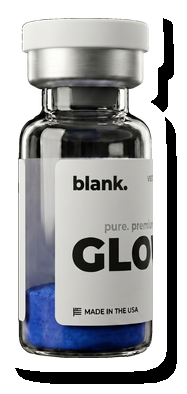
The plain disclosure, since this piece is about IGF-1 LR3: that compound is not one of the 34 in the Blank Peptides catalog, which covers BPC-157, TB-500, GHK-Cu, AOD-9604 and MOTS-C among others, alongside blends itemised per component such as GLOW at 70mg (GHK-Cu, BPC-157, TB-500), KLOW at 80mg (adding KPV) and Wolverine at 20mg (BPC-157, TB-500). The release standard is described because it gives you a fixed shape to hold any IGF-1 LR3 certificate against: a named laboratory on the page rather than buried in a file, a lot number on the vial and the document, four panel lines rather than one, and the whole thing readable before payment. Processing time is within one business day and orders ship at room temperature. The company has operated for five years and sells for research use only.
What four vendors publicly state about IGF-1 LR3 certificates
Taking the four in turn, quoting their pages as reviewed 2026-09-08.
PSPeptides links three documents from each of its IGF-1 LR3 listings, covering HPLC, heavy metals and endotoxin, dated 2026-06, with separate sets for the 0.1mg vial at $24.99 and the 1mg vial at $79.99. The page states “99%+ purity (third-party HPLC and mass spectrometry)” and names electrospray ionization mass spectrometry, heavy metals, endotoxin and microbial sterility among its testing methods, describing the material as “US manufactured · cGMP-compliant facility”. Having the endotoxin report as a separate document rather than a line item is the useful pattern here, particularly for a recombinant protein. No issuing laboratory was named in the page text reviewed.
Core Peptides links a Certificate of Analysis PDF from its Receptor Grade IGF-1 LR3 pages, offered in 100mcg at $28.00 and 1mg at $150.00 with “Purity: >99%” and “Form: Lyophilized powder” in the specifications. The document is reachable before purchase without an account or an application, which is the lowest-friction access of the four. On the pages reviewed, no testing laboratory was named and no analytical method was stated in the page text. The footer states products are “sold for research, laboratory, or analytical purposes only, and are not for human consumption”.
Swiss Chems states that “Certificates of Analysis (COA) are published on the Independent Test Results page and available at product level” and that “All SwissChems products are independently third-party tested at a USA-based HPLC-licensed laboratory prior to distribution”, referencing an HPLC result dated April 28, 2026 for its 1mg IGF-1 LR3 listing. Its Independent Test Results index states “All products are tested by independent, ISO-accredited laboratories” and offers sorting and filters, though IGF-1 LR3 did not appear among the roughly fifty reports displayed on that index when reviewed. The company states it will refund testing costs and the full order amount if an independently conducted HPLC test returns a negative result.
Behemoth Labz lists IGF-1 LR3 Receptor Grade from $13.49, a separate Media Grade listing, and blends pairing IGF-LR3 with BPC-157 and with BPC-157 plus Thymosin Beta-4. The product page states that “each batch undergoes analytical verification to ensure consistency in molecular composition and purity”. On the page reviewed 2026-09-08, no certificate link, laboratory name, analytical method or purity percentage was listed. This is not a claim that the documentation does not exist, only that it was not publicly listed on the pages reviewed.
Where these vendors do better than us: Swiss Chems maintains a browsable, dated archive across its catalog and backs it with a written retest refund pledge, which is a firmer public commitment than most suppliers make, and PSPeptides splits its panel into separate downloadable reports rather than compressing everything onto one page. Both are worth having if you track a supplier’s numbers over time.
Side by side: IGF-1 LR3 certificate access and content
| Attribute | Blank Peptides | typical vendor |
|---|---|---|
| Synthesises in-house | Own cGMP lab; synthesis through QC release under one roof | States “US manufactured” or a cGMP-compliant facility without naming it — verify |
| Third-party lab named | Freedom Diagnostics and Horizon Analytical, named on the page | States “independently third-party tested” or “ISO-accredited” with no lab name on the page — verify |
| HPLC purity | >99% threshold on every released lot | States 99% or >99%; one IGF-1 LR3 page reviewed gave no figure at all — verify |
| MS identity | Confirmed per lot | States ESI-MS on one IGF-1 LR3 page; check the mass reads near 9,100 daltons — verify |
| Endotoxin and sterility | Both tested and reported per lot | States a separate endotoxin report on one page; no sterility result listed on any reviewed — verify |
| Batch COA before purchase | Public library at /coas/, lot-numbered, every lot | States a linked PDF on some IGF-1 LR3 pages, nothing linked on others — verify |
| Lot number on certificate | Printed on every certificate and every vial label | States dated documents; lot linkage varies by listing — verify |
| Blend mg split disclosed | GLOW, KLOW and Wolverine each itemised per component | States blend names; per-component splits not visible on the listings reviewed — verify |
| Research-use labelling | Research use only, stated on every listing | States “not for human consumption” or “laboratory research only” in footer or product text |
How to verify either supplier yourself
- Open the IGF-1 LR3 certificate itself rather than trusting the badge above it, since a graphic reading “Independently Lab Tested” that links nowhere is decoration.
- Check the mass on any MS report against roughly 9,100 daltons, because a figure in the low thousands points at a different molecule entirely.
- Look for a bacterial endotoxin result specifically, which matters more for recombinant material than for a synthetic peptide of the same nominal purity.
- Match the lot number on the certificate against the number printed on the vial when it arrives, and treat any mismatch as a question for the vendor.
- Walk the whole process once using the supplier verification checklist before ordering from any new vendor.
Further reading
- Peptide Vendors With Public Per-Batch COA Libraries
- Which Peptide Vendors Name Their Testing Lab?
- Best Research Peptide Suppliers: Ranked by What They Document
- Which Peptide Vendors Disclose Blend Composition?
Frequently asked questions
What should an IGF-1 LR3 COA contain before you trust it?
The issuing laboratory’s name, a report number, a date, a lot number matching your vial, the analytical method, and results for purity, identity and contamination. For this molecule specifically, look for a mass near 9,100 daltons and a bacterial endotoxin result, since recombinant material carries endotoxin risk that a purity percentage does not address at all.
Can I check whether an IGF-1 LR3 certificate is genuine?
Partly, and the first step is quickest. Call the laboratory named in the header and quote the report number, since a real contract laboratory can confirm whether it issued that document. If no laboratory is named anywhere on the certificate, that route closes, and you’re left comparing the vendor’s documents against each other across lots.
Why does endotoxin matter more on an IGF-1 LR3 certificate?
Because material of this size is generally produced by recombinant expression in a bacterial host rather than by solid-phase synthesis, and the host organism is itself an endotoxin source. Purification is meant to remove it, and the endotoxin assay is what demonstrates that the removal worked. A purity figure by HPLC says nothing about it either way.
How recent does an IGF-1 LR3 COA need to be?
Recent enough that it plausibly describes the lot being packed for you. Documents referenced across the pages reviewed on 2026-09-08 carried dates from April through June 2026. Ask which lot ships today and whether the certificate on the page belongs to it, because a current document for a different production run tells you very little.
Are these products for human use?
No. Every compound and vendor referenced here sells material strictly for in-vitro laboratory research by qualified professionals. Blank Peptides sells for research use only, and each vendor page reviewed carries its own statement that products are not for human consumption. Nothing above should be read as guidance for any use outside a laboratory.
For research use only. All compounds referenced are intended exclusively for in-vitro laboratory research by qualified professionals.
Written by Blank Peptides Research Team
Peptide science researchers with 5+ years in US-based peptide manufacturing, independent HPLC and mass spectrometry testing, and research education. All content is reviewed for scientific accuracy before publication.
REVIEWED BY
Dr. Tobias S — PhD Chemist, Peptide and Unnatural Amino Acid Synthesis
Dr. Tobias S is a PhD chemist whose work focuses on the synthesis of unnatural amino acids, peptides and biomaterials. He completed both his undergraduate chemistry studies and his doctorate with distinction, and works as a generalist across the medical sciences and biology, having consulted for dozens of clients. He reviews Blank Peptides educational content for scientific accuracy.
Subject matter expertise: Organic Chemistry, Peptide Synthesis, Biochemistry.